

Our Verdict
No-dig gardening is a well-supported approach that delivers genuine benefits for soil health, weed control, and long-term garden resilience. However, it asks for upfront investment in organic materials and a willingness to adapt planting strategies — it is not a one-size-fits-all solution.
Homeowners with established garden beds, clay-heavy or compacted soil, or a commitment to low-intervention growing will find this method most rewarding.
What No-Dig Gardening Actually Involves
No-dig gardening — sometimes called no-till gardening — is a method where the soil is never turned, forked, or otherwise mechanically disturbed. Instead of digging compost or amendments into the ground, you layer organic materials directly on the surface and let soil organisms do the work of integrating them over time.
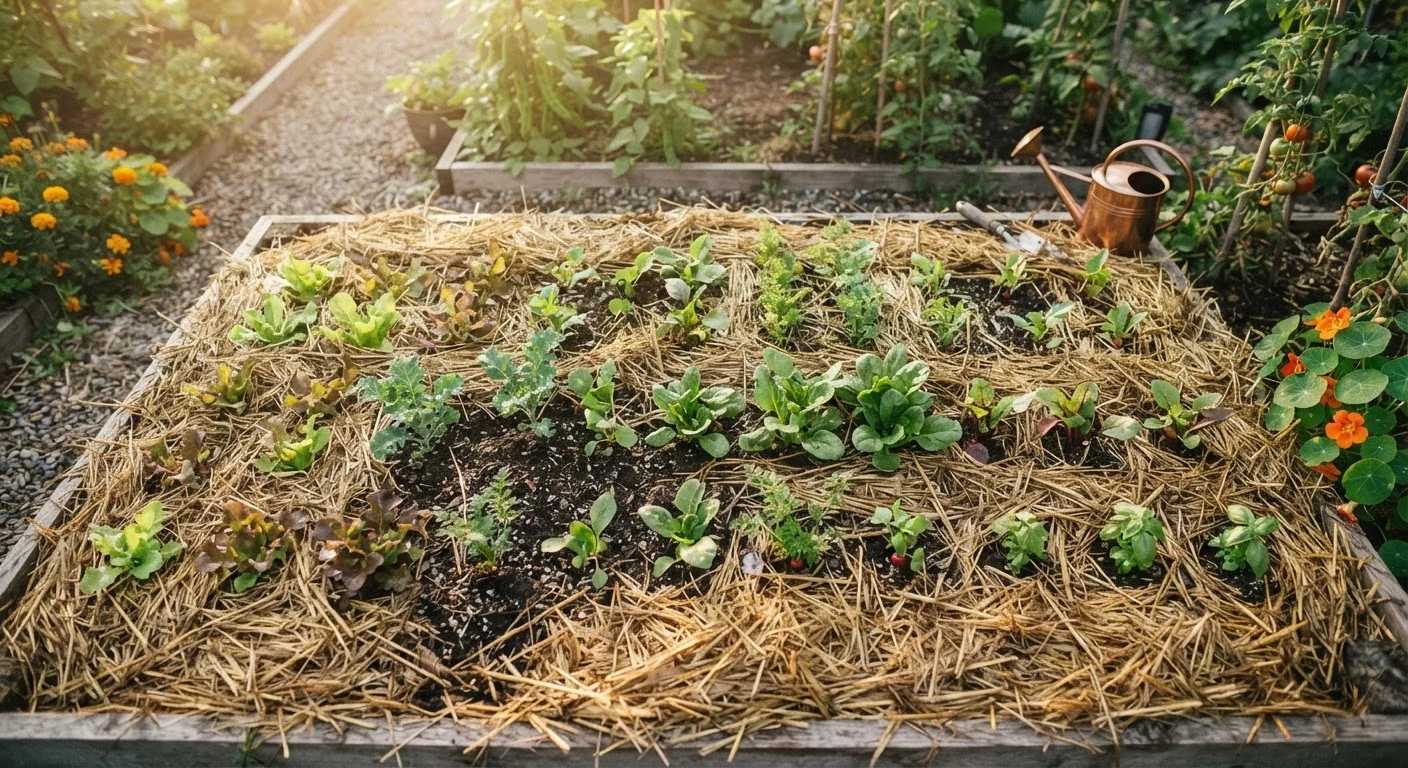
The most common approach involves smothering existing vegetation with cardboard, then topping it with several inches of compost, straw, wood chips, or other organic matter. Plants are set directly into this layered system. For a deeper look at how mulch materials compare, see our guide on mulching coverage, depth, and material choices.
The core principle is preserving the soil food web — the network of bacteria, fungi, earthworms, and other organisms that naturally aerate and fertilize soil when left undisturbed.
The Genuine Advantages
No-dig gardening has a strong track record for good reason. Here is what the evidence and experience of long-term practitioners supports:
Preserves beneficial soil structure and microbial life
Digging disrupts fungal networks and compacts layers that earthworms and microbes depend on. Leaving soil undisturbed allows these organisms to thrive, improving nutrient cycling naturally.
Significantly reduces weed germination over time
A 4–6 inch layer of compost or straw blocks light to dormant weed seeds in the soil. With consistent mulch replenishment, weed pressure tends to decrease markedly after the first year.
Retains soil moisture more effectively
Organic surface layers act as insulation, slowing evaporation particularly during dry summer months. This can reduce how often irrigation is needed in established beds.
Lower physical effort once established
Without annual digging or rotary tilling, the ongoing maintenance load is lighter — especially valuable for gardeners with physical limitations or limited time.
Builds soil fertility gradually over seasons
As organic mulch breaks down, it feeds the soil from the top down — mimicking natural forest floor processes and improving soil structure each year without amendments being dug in.
One area where no-dig consistently shines is weed management. A thick organic layer deprives weed seeds of the light and surface contact they need to germinate. While no system eliminates weeds entirely — as our article on what common garden weeds reveal about your soil explains — no-dig beds tend to produce far fewer of them over successive seasons.
The Real Limitations
No method is without drawbacks, and honest gardeners acknowledge the challenges no-dig can present.
High upfront material cost and sourcing effort
Establishing a no-dig bed requires substantial volumes of compost or wood chip mulch. Sourcing enough material — especially for a large plot — can be expensive or logistically challenging.
Slower results on heavily compacted or degraded soil
When starting on severely compacted ground, improvement takes time as organisms work from the top down. Some gardeners find initial growing seasons disappointing while the soil recovers.
Persistent perennial weeds can break through
Deep-rooted perennial weeds like bindweed or dock can push through even thick mulch layers. These often require targeted hand removal over multiple seasons before they are brought under control.
Mulch replenishment is an ongoing commitment
Organic layers break down over time and must be topped up regularly — typically each autumn or spring. Neglecting this allows weeds to return and soil benefits to diminish.
Not ideal for all root vegetables
Crops like parsnips and carrots that need loose, stone-free soil to develop straight roots may struggle in no-dig beds unless compost quality and depth are carefully managed.
It is also worth noting that no-dig works differently depending on your starting conditions. If you are converting a lawn or heavily compacted area, the initial cardboard-and-compost layers may struggle to suppress vigorous perennial weeds like bindweed or ground elder in the first season. Patience and persistence are required.
Starting on Problem Soil
If your soil has significant pH imbalances alongside compaction, no-dig alone may not resolve nutrient deficiencies. Surface-applied lime or sulfur can adjust pH without digging, but it works more slowly than incorporation. Our article on soil pH and plant health explains how to test and address pH issues in ways compatible with a no-dig system.
When No-Dig Makes the Most Sense
No-dig gardening is particularly well-suited to gardeners who are building on existing garden beds where soil structure is already reasonably good, or those dealing with clay-heavy soils that suffer when repeatedly worked. It also aligns well with low-intervention growing philosophies and is a natural fit alongside natural pest control methods that similarly avoid disrupting the soil ecosystem.
If you are starting completely from scratch on bare ground, you may want to compare this approach against alternatives. Our overview of raised beds versus in-ground planting can help you weigh your options before committing to a system. And if you're beginning a food garden for the first time, starting a vegetable garden from the ground up covers how to approach plot selection and soil prep in detail.
30–50%
Estimated reduction in water use
Research from various university extension programs suggests well-mulched garden beds can reduce irrigation needs by 30–50% compared to bare soil, depending on climate and mulch depth.
4–6 inches
Recommended mulch depth for weed suppression
Horticultural guidance from cooperative extension services generally recommends a minimum 4–6 inch organic layer to meaningfully block light to weed seeds at establishment.
For gardeners who combine no-dig beds with thoughtful plant selection — mixing perennials for structure with seasonal annuals for productivity — the benefits compound over time. See how perennials and annuals can work together to create a more resilient growing space.
The content on this site is for informational purposes only and is not a substitute for professional advice. Always consult a qualified professional for guidance specific to your situation.