

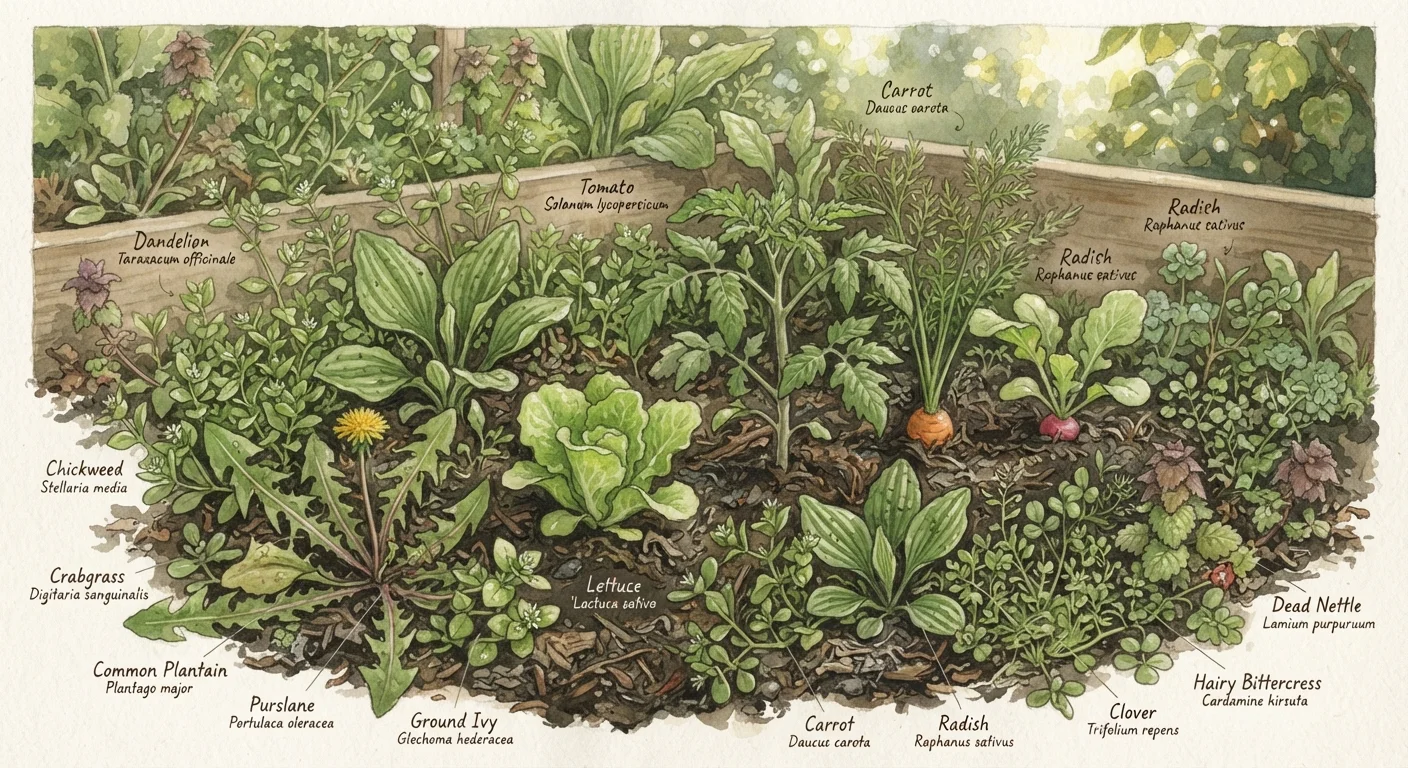
Weeds as Soil Indicators
Before you pull the next weed you see, take a moment to read it. Certain plants thrive in specific soil conditions — compacted ground, poor drainage, low pH, or nitrogen deficiency — and their presence is a reliable signal that something in your soil environment is driving them there. This isn't folk wisdom; it's grounded in plant ecology. Weeds are opportunists, and they succeed where soil conditions favor their particular needs.
Treating weeds as diagnostic tools doesn't mean tolerating them indefinitely. It means pairing removal with corrective action — so the same problems don't keep inviting the same plants back. This reference guide covers the most common US garden weeds and what each one may be telling you. For a deeper look at what drives soil chemistry, see our guide on soil pH and why your plants keep struggling.
| Dandelion soil signal | Compacted, low-calcium soil |
| Clover soil signal | Low nitrogen |
| Horsetail soil signal | Wet, acidic, poorly drained soil |
| Chickweed soil signal | Moist, high-nitrogen, rich soil |
| Sorrel soil signal | Acidic, low-fertility, sandy soil |
| Best diagnostic tool | Soil test (available via county extension services) |
Common Weeds and Their Soil Signals
Use the profiles below as a quick lookup reference. Treat weed patterns across your garden as a whole picture rather than isolated incidents.
Indicator plant
A plant species whose presence reflects specific environmental conditions, such as soil pH, moisture level, or nutrient content. Weeds acting as indicator plants can help gardeners diagnose soil problems without lab equipment.
Taproot
A thick central root that grows straight down into the soil. Plants like dandelion use taproots to access water and nutrients deep below the surface, often penetrating compacted layers.
Rhizome
A horizontal underground stem that sends out roots and shoots. Rhizomatous weeds like horsetail are difficult to remove because pieces left in the ground can regenerate into new plants.
Nitrogen fixation
A biological process by which certain plants — especially legumes like clover — convert atmospheric nitrogen into a form usable by plants through symbiotic bacteria in their root nodules.
Soil amendment
Any material added to soil to improve its physical or chemical properties, such as compost for organic matter, lime to raise pH, or sulfur to lower it. Amendments should be guided by a soil test.
pH (soil)
A measure of how acidic or alkaline your soil is, on a scale of 0–14. Most garden plants prefer a slightly acidic to neutral pH (6.0–7.0); values outside this range can lock up nutrients even if they're physically present in the soil.
Dandelion (Taraxacum officinale)
Signal: Compacted, low-calcium soil. Dandelion taproots penetrate hardpan layers where few other plants can reach, effectively aerating as they grow. Heavy dandelion pressure often means your soil needs organic matter and possibly a calcium amendment like ground limestone — but test your soil before adding anything.
Chickweed (Stellaria media)
Signal: Rich, moist, high-nitrogen soil. Ironically, chickweed thrives where fertility is already good. It germinates in cool, damp conditions and can indicate over-fertilization or poor drainage. If chickweed is taking over a bed you've been feeding heavily, consider easing up on nitrogen inputs.
Plantain (Plantago major)
Signal: Compacted, poorly drained soil with low aeration. Broadleaf plantain is especially common in high-traffic areas — paths, edges, bare patches — where foot pressure has squeezed out air pockets. Its presence is a strong cue to aerate and add compost.
Clover (Trifolium spp.)
Signal: Low nitrogen. Clover is a nitrogen-fixing legume, meaning it draws nitrogen from the air and deposits it into the soil through root nodules. Seeing clover colonize your lawn or beds suggests the soil is nitrogen-deficient. Rather than always removing it, some gardeners allow clover to improve soil naturally before overseeding with grass.
Horsetail (Equisetum arvense)
Signal: Wet, acidic, poorly drained soil. Horsetail is persistent and difficult to eradicate because of its deep rhizomes, but its presence reliably flags drainage problems and low pH. Improving drainage and raising pH with lime (following a soil test) are the corrective steps.
Sorrel (Rumex acetosella)
Signal: Acidic, low-fertility soil. Sheep's sorrel in particular is closely associated with low pH and sandy or gravelly soils that drain quickly and lose nutrients fast. Consistent sorrel patches call for organic matter additions and a soil pH check.
Lamb's Quarters (Chenopodium album)
Signal: Fertile, well-worked soil. Like chickweed, lamb's quarters prefers rich ground — it often pops up wherever you've recently added compost or turned over new soil. This weed is less a warning and more confirmation that your soil is in good shape; it just needs outcompeting with your intended plants.
If you're building new beds and want to understand how soil preparation affects weed pressure from the start, our guide to starting a vegetable garden from the ground up walks through plot selection and soil prep step by step.
Turning Weed Signals Into Action
Identifying what a weed signals is only half the job. The next step is confirming your read with a soil test — available through most county extension services — before making amendments. Guessing at soil corrections can create new imbalances.
Always Test Before You Amend
Weed identification gives useful clues, but it isn't a substitute for a soil test. Applying lime, sulfur, or fertilizer without testing can shift your soil chemistry in the wrong direction. Cooperative extension services in most US states offer affordable or free soil testing, often with region-specific amendment recommendations included.
Once you know your soil's needs, common corrective actions include:
- Compaction: Core aerate in fall or spring; top-dress with compost.
- Low pH: Apply ground limestone at rates guided by your soil test results.
- Low nitrogen: Add balanced compost, plant cover crops, or allow nitrogen-fixing plants like clover to work for you.
- Poor drainage: Raise beds, add organic matter, or address grading issues.
Weed suppression works best when paired with healthy plant competition. Dense planting, mulching, and consistent soil improvement reduce the bare, stressed ground where weeds gain their foothold. The no-dig gardening approach is one method many gardeners use to suppress weeds while building soil health simultaneously. For boosting organic matter without much cost, composting kitchen scraps at home is a practical starting point.
The content on this site is for informational purposes only and is not a substitute for professional advice. Always consult a qualified professional for guidance specific to your situation.