

Start here
Choosing the Right Spot
Next
Preparing and Improving Your Soil
Then
Deciding What to Grow
When you're ready
Planting, Watering, and Ongoing Care
Finish strong
Harvesting and Planning Ahead
Choosing the Right Spot
Sunlight is the non-negotiable foundation of a productive vegetable garden. Most vegetables require a minimum of six hours of direct sun each day — fruiting crops like tomatoes and peppers need even more. Before breaking any ground, spend a day observing how sun tracks across your yard. Areas shaded by buildings, fences, or large trees in the afternoon may look bright in the morning but fail to deliver the hours crops need.
Proximity to a water source matters too. Hauling a heavy hose across the yard every day becomes tedious quickly; siting your plot near an outdoor spigot keeps the routine practical. Also consider drainage — low spots that pool after rain will suffocate roots and invite fungal disease. A gentle slope or flat, raised area typically drains well without being so steep that irrigation water runs off before it soaks in.
Finally, start small. A 4-by-8-foot bed or a 10-by-10-foot plot is plenty for a first season. It is far easier to expand a garden that thrived than to rescue one that overwhelmed you. If space is genuinely tight, our guide to container gardening on patios and balconies shows how much you can grow in pots.
Sunlight Varies More Than You Think
Sun patterns shift noticeably between spring and midsummer as the sun's angle changes. A spot that receives full sun in April may be partially shaded by a fence or tree canopy by July. If possible, observe your chosen plot across several weeks and seasons before committing to permanent raised bed construction.
Preparing and Improving Your Soil
Good soil structure — loose, crumbly, and rich in organic matter — is what separates a struggling garden from a thriving one. Start by removing grass and weeds from your chosen area. If you want to avoid heavy digging, a layer of cardboard covered with several inches of compost can smother existing vegetation over a few weeks; our article on the trade-offs of no-dig gardening walks through this method in detail.
For traditional in-ground beds, loosen soil to a depth of 10 to 12 inches with a fork or spade. Work in 3 to 4 inches of finished compost. Compost improves drainage in clay soils, adds water retention in sandy soils, and feeds soil biology that makes nutrients available to plants. If you want to produce your own amendment, composting at home is a practical and inexpensive approach.
A basic soil pH test — available at garden centers — will tell you whether your soil is too acidic or too alkaline for vegetables. Most thrive in the 6.0–7.0 range. Lime raises pH; sulfur lowers it. Apply any amendments according to test results rather than guessing.
Soil pH
A measure of how acidic or alkaline your soil is, on a scale of 0 to 14. Most vegetables prefer a slightly acidic range of 6.0 to 7.0, which affects how well plants can absorb nutrients.
Hardiness Zone
A USDA map system that divides the US into regions based on average annual minimum winter temperatures. Your zone helps you match plants to your climate and determine planting dates.
Cool-season crop
A vegetable that grows best in cooler temperatures — typically spring or fall — and can tolerate light frost. Examples include lettuce, peas, and spinach.
Organic matter
Decomposed plant or animal material — such as compost — that is mixed into soil to improve its structure, drainage, and nutrient content.
Transplant
A young plant started from seed indoors or in a greenhouse and then moved to the garden once conditions are right. Common for tomatoes, peppers, and other slow-starting crops.
Mulch
A layer of material — straw, shredded leaves, or wood chips — spread on the soil surface to retain moisture, regulate temperature, and suppress weed growth.
Deciding What to Grow
The most important rule for a first vegetable garden: grow what your household actually eats. A bed full of kale is only rewarding if you enjoy kale. Once you have a wish list, narrow it by matching crops to your climate and the time of year.
Cool-season vegetables — lettuce, spinach, peas, radishes, and carrots — tolerate light frost and do best when planted in early spring or fall. Warm-season crops — tomatoes, peppers, cucumbers, beans, and squash — need soil temperatures above 60°F and should go in after your last expected frost date. Your local cooperative extension service publishes planting calendars tailored to your county.
For confidence-building results, consider these beginner-friendly crops:
- Lettuce — quick to germinate, continuously harvestable
- Green beans — bush varieties need no staking and produce abundantly
- Zucchini — prolific and nearly foolproof in summer
- Cherry tomatoes — more forgiving than large slicing types
- Radishes — ready in as little as 25 days, great for impatient gardeners
Weeds will inevitably compete with your crops. Understanding which weeds appear can even tell you something useful about your soil — see our guide to common garden weeds and what they signal about your soil for more.
Planting, Watering, and Ongoing Care
Always check seed packets or plant tags for spacing requirements — crowded plants compete for light, water, and nutrients, and air circulation suffers, raising disease risk. Smaller seeds like lettuce and carrots can be sown directly into the bed. Larger, slower crops like tomatoes and peppers are typically started from transplants purchased at a garden center or grown indoors 6 to 8 weeks before your last frost.
Water consistently and deeply. Most vegetable gardens need roughly one inch of water per week. Rather than light daily watering, aim for deeper sessions two or three times a week that encourage roots to grow downward. Drip irrigation is especially efficient for vegetable beds; our comparison of drip irrigation vs. sprinkler systems can help you choose a watering method that suits your setup.
A 2- to 3-inch layer of organic mulch — straw, shredded leaves, or wood chips — spread around plants keeps moisture in, moderates soil temperature, and suppresses weeds. Pull any weeds that break through promptly, before they set seed or outcompete your vegetables.
Mark Your Planting Dates
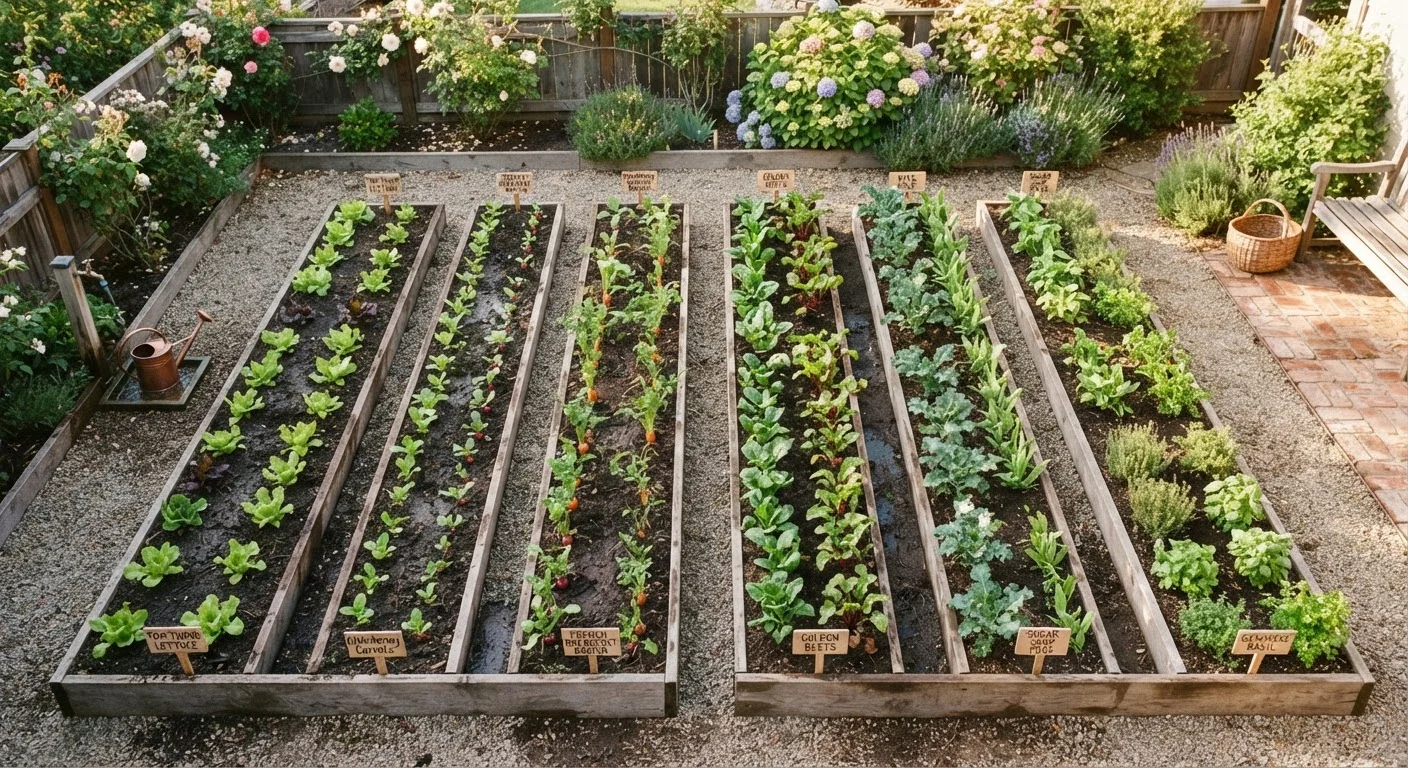
Write the planting date directly on a wooden stake or weatherproof label and place it in the ground next to each crop. Knowing exactly when something went in makes it much easier to estimate harvest windows and troubleshoot slow growth. A simple garden notebook kept indoors works just as well.
Harvesting and Planning Ahead
Timely harvesting is one of the most overlooked aspects of vegetable gardening. Many crops — beans, zucchini, cucumbers, and peppers especially — slow or stop production if fruits are left to mature fully on the plant. Check your garden every two to three days during peak season and harvest regularly to keep plants productive.
After your first season, take notes. Which crops thrived? Which struggled? What would you plant more of next year? A simple garden journal pays off enormously when planning the following season. Rotating crop families to different sections of the bed each year also helps break pest and disease cycles in the soil.
Gardening is a practice that improves with each season. Use our month-by-month garden maintenance checklist to stay ahead of tasks as your garden matures, and don't hesitate to expand your growing knowledge one season at a time.
USDA Plant Hardiness Zone Map
Enter your zip code to find your official USDA Hardiness Zone, which determines which crops suit your climate and when to plant them. Available at planthardiness.ars.usda.gov.
Local Cooperative Extension Service
Every US state has a university-based cooperative extension service that publishes free, region-specific planting calendars, soil testing services, and pest identification guides tailored to local conditions.
Seasonal Garden Maintenance Checklist
Our month-by-month checklist helps you stay on top of pruning, feeding, planting, and seasonal prep tasks so your garden stays productive all year round.
Frequently Asked Questions
Most vegetables need at least six hours of direct sunlight per day to produce well. Leafy greens like lettuce and spinach can tolerate four to five hours, but fruiting crops such as tomatoes, peppers, and squash need six to eight hours. Track sun exposure across your yard before settling on a location.
A loose, well-draining soil rich in organic matter gives vegetables the best start. If your native soil is heavy clay or sandy, mix in several inches of compost before planting. Aim for a soil pH between 6.0 and 7.0, which suits most vegetables.
Most vegetable gardens need about one inch of water per week from rain or irrigation. Water deeply and less frequently rather than a little every day to encourage deep root growth. Morning watering reduces leaf disease by allowing foliage to dry during the day.
Lettuce, radishes, green beans, zucchini, and cherry tomatoes are widely recommended starter crops. They are forgiving, productive, and give quick results that motivate new gardeners to keep going.
Both approaches work well. In-ground growing costs less to set up and suits yards with good native soil. Raised beds offer better drainage and easier weed control. See our <a href="/home-garden/garden-and-outdoors/raised-beds-vs-in-ground-planting-which-works-better-for-your-garden">side-by-side comparison</a> for help deciding.
Timing depends on your USDA Hardiness Zone and what you plan to grow. Cool-season crops like lettuce and peas go in early spring, while warm-season crops like tomatoes and peppers follow after the last frost date. Check your local cooperative extension service for zone-specific planting calendars.
The content on this site is for informational purposes only and is not a substitute for professional advice. Always consult a qualified professional for guidance specific to your situation.