

Summary
24 items · 20–40 minutes to review; ongoing tasks throughout the year
Why a Monthly Maintenance Rhythm Matters
Gardening is not a single-season activity — it's a continuous cycle of preparation, growth, and renewal. Homeowners who approach it with a structured monthly plan consistently see healthier plants, fewer pest problems, and more productive harvests than those who react only when something goes wrong.
This checklist is organized by season to help you anticipate what your garden needs before problems develop. Because conditions vary across the country, use your local frost dates and USDA hardiness zone as the foundation for adjusting timing. If you're growing edibles or ornamentals in pots, see our guide on container gardening on patios and balconies for space-specific maintenance tips that work alongside this seasonal schedule.
Understanding which plants return reliably each year also shapes your maintenance calendar. Planning a mix of perennials and annuals reduces how much replanting and soil prep you need each spring, giving you more time for the tasks that really move the needle.
Tools You'll Need Throughout the Year
Having the right tools clean and ready before each season begins saves significant time and frustration. Dull blades cause ragged cuts that invite disease; cracked hoses create water waste at exactly the moment your garden needs it most. Dedicate an hour in late winter to a full tool audit — it's one of the highest-return tasks in this entire checklist.
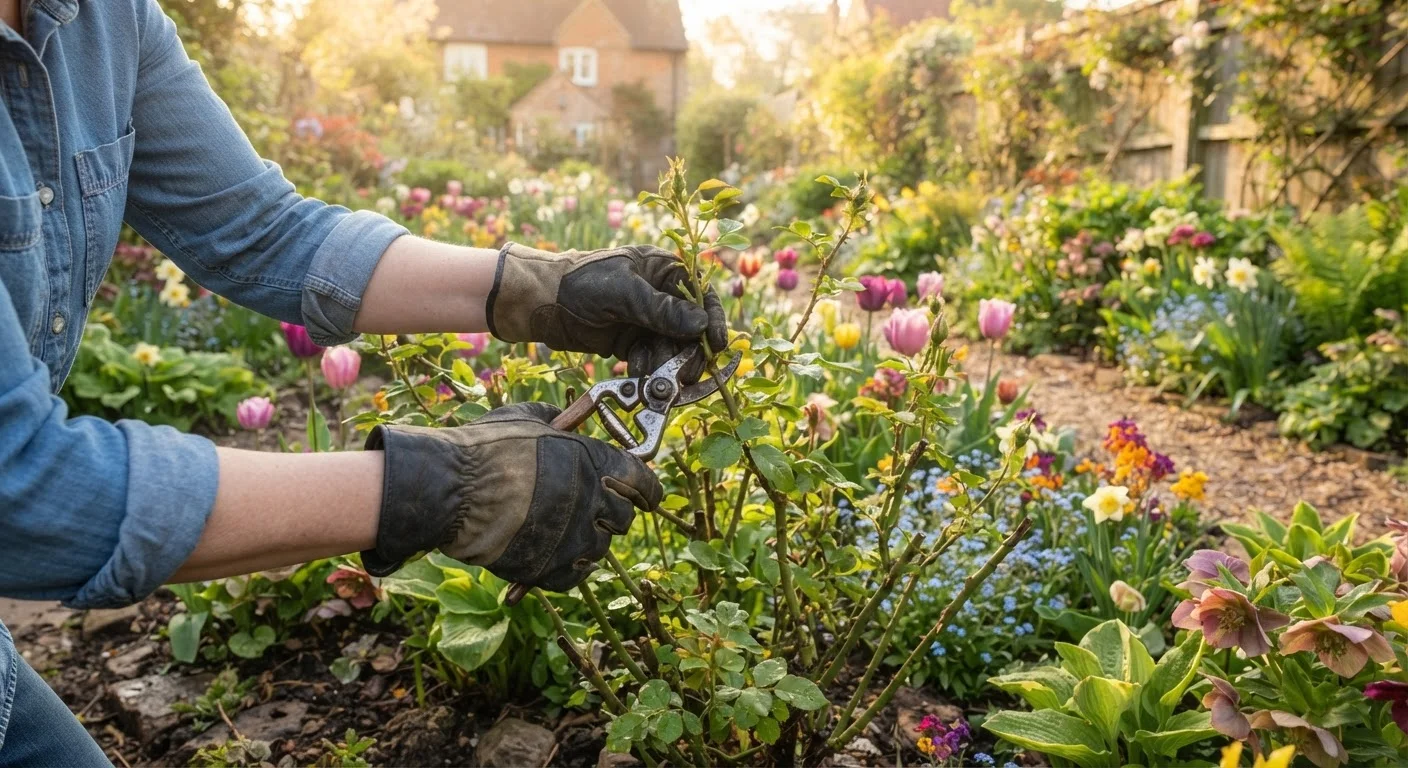
Bypass Pruning Shears
Used for clean cuts on stems and branches up to ¾ inch thick during pruning tasks.
Soil pH Test Kit
Measures soil acidity and alkalinity so you can amend beds appropriately each spring.
Garden Trowel and Hand Fork
Essential for planting bulbs, transplanting seedlings, and working compost into beds.
Soaker Hose or Drip Irrigation
Delivers water directly to the root zone, reducing evaporation and foliar disease risk.
Garden Journal or Planner
Helps track planting dates, bloom times, and observations to improve next season's planning.
Month-by-Month Garden Checklist
Work through these grouped tasks as each season arrives. Check off completed items and note any plants that need follow-up. Some tasks — such as watering and pest scouting — recur weekly during the growing season rather than appearing on a single monthly schedule.
Know Your Last and First Frost Dates
All planting and transplanting recommendations in this checklist should be adjusted to your local frost dates, which vary significantly across the US. Check with your local cooperative extension office or the USDA Plant Hardiness Zone Map for accurate timing. Acting too early in spring or too late in fall can cost you an entire season of plantings.
Don't Over-Fertilize in Late Summer
Applying high-nitrogen fertilizer after midsummer can stimulate tender new growth that is particularly vulnerable to early frost damage. Switch to low-nitrogen, phosphorus-rich formulas by August to encourage root hardening rather than leafy growth. Always follow label directions — more is not better when it comes to garden feeding.
Winter (December–February)
Early Spring (March–April)
Late Spring (May–June)
Summer (July–August)
Fall (September–October)
Late Fall (November)
Diseased Plant Material Must Be Disposed of Correctly
Never compost leaves, stems, or roots showing signs of fungal disease, bacterial blight, or pest infestation. Composting diseased material can spread pathogens throughout your garden the following season. Bag diseased waste separately and dispose of it with household trash or through a municipal green-waste program if accepted.
Making the Most of This Checklist
Consistency matters more than perfection. If you miss a task — say, dividing perennials in early spring — note it for the following year rather than attempting it at the wrong time. Many tasks have a narrow optimal window, and forcing them out of season can stress plants more than skipping a cycle entirely.
Keep a simple garden journal — even a notes app on your phone works — to record what you planted, when it bloomed, what failed, and what surprised you. Over two or three seasons, patterns emerge that make your planning sharper each year. The same principle of structured annual planning applies in other areas of home upkeep too; our DIY home repair guides use a similar seasonal approach for interior and exterior maintenance tasks.
Finally, don't treat this checklist as a rigid prescription. Unusual weather, a new garden bed, or a change in your household's schedule will shift priorities. Use it as a flexible framework — a prompt to stay engaged with your garden month by month — rather than a pass-fail test.
The content on this site is for informational purposes only and is not a substitute for professional advice. Always consult a qualified professional for guidance specific to your situation.