

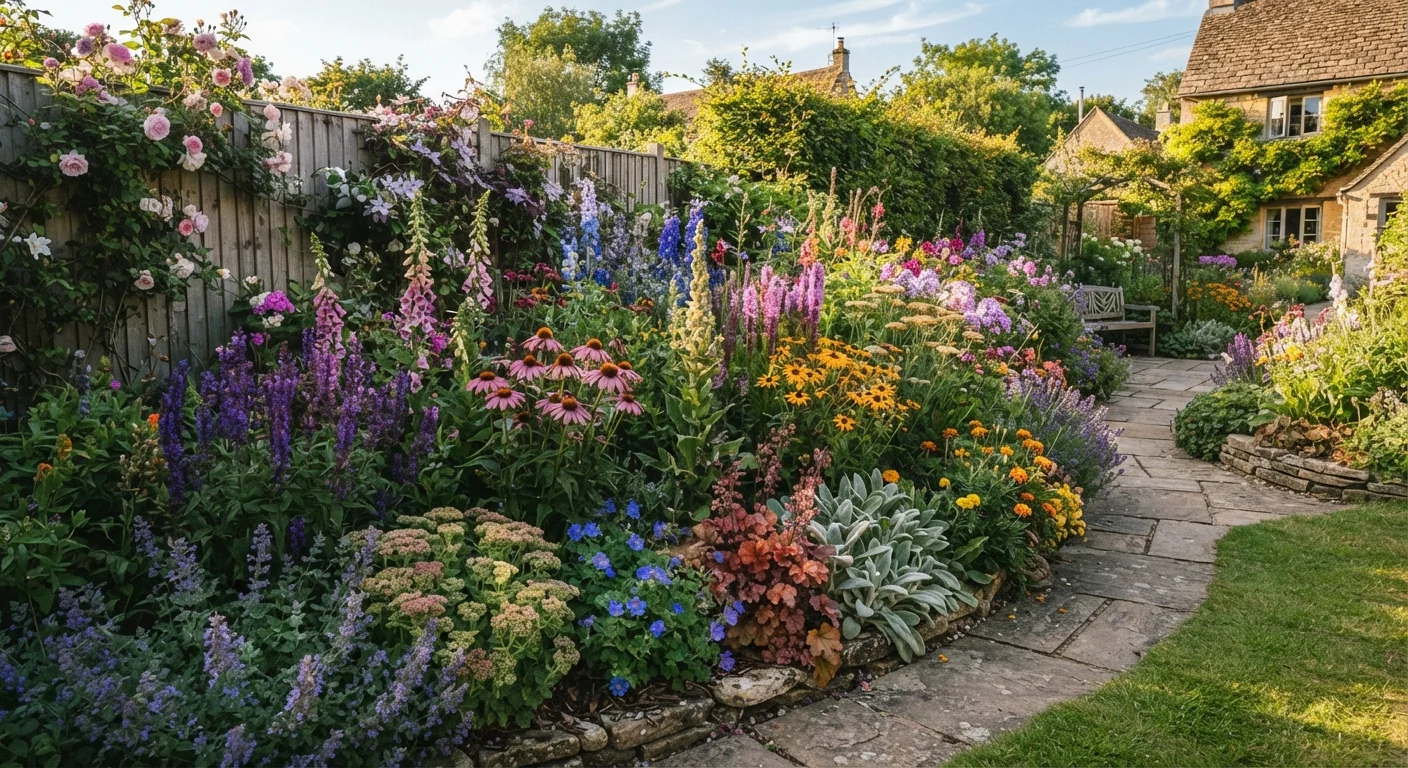
Option A
Perennials
The long-term backbone of a thriving garden.
Best for: Gardeners who want low-replanting effort, structural consistency, and plants that grow stronger each year.
Option B
Annuals
The flexible, season-long color solution.
Best for: Gardeners who want vivid, continuous blooms and the freedom to change their garden design each season.
What Sets Perennials and Annuals Apart
The distinction between perennials and annuals comes down to their life cycles. Perennials are plants that die back to ground level in winter but regrow from their root system each spring, returning for three or more years. Annuals complete their entire life cycle — germination, flowering, and seed production — within a single growing season before dying entirely.
There is also a middle category worth knowing: biennials, which complete their life cycle over two years, and tender perennials, which are perennial in warm climates but treated as annuals in regions with hard freezes. Understanding where a plant falls helps you plan more accurately for what to expect next spring.
Your local USDA Plant Hardiness Zone plays a significant role in how perennials perform. A plant labeled as a perennial is only reliably perennial within its appropriate hardiness range — always check zone compatibility before purchasing. See our month-by-month garden maintenance guide for help timing your planting and seasonal care tasks.
| Criterion | Perennials | Annuals |
|---|---|---|
| Lifespan | 3+ years from same roots | One growing season only |
| Upfront cost | Higher per plant | Lower per plant |
| Long-term cost | Lower (no yearly replanting) | Higher (replanted annually) |
| Typical bloom duration | 3–6 weeks per season | Spring to first frost |
| Maintenance level | Moderate, mostly seasonal | Ongoing through season |
| Design flexibility | Low (fixed placement) | High (change each year) |
| Establishment time | 1–2 seasons to peak | Ready same season |
| Best role in garden | Structural backbone | Seasonal color filler |
The Real Costs: Time, Money, and Effort
Perennials typically cost more per plant at the nursery than annuals, but that upfront cost spreads across many seasons. A clump of black-eyed Susans or coneflowers planted this year may multiply and fill a larger area within two to three seasons without any additional purchase. Over a five-year span, a perennial border can be considerably more economical than replanting annuals every spring.
Annuals, by contrast, require annual purchasing and replanting — but they offer something perennials often cannot: bloom time that stretches from the last frost of spring well into autumn. Many popular perennials bloom for only three to six weeks per season, while annuals like zinnias and marigolds flower continuously when deadheaded regularly.
3–6 weeks
Typical perennial bloom window per season
Most herbaceous perennials have a defined flowering period, after which foliage alone carries the display until fall cutback.
~5 months
Average annual bloom period in temperate US climates
Annuals like zinnias and marigolds flower continuously from late spring until the first hard frost when properly deadheaded.
3–5 years
Time before many perennials need dividing
Dividing overcrowded perennial clumps every few years rejuvenates the plant, improves flowering, and produces free new plants for your garden.
Labor-wise, perennials demand more attention in their first one to two years as they establish. After that, most need only seasonal dividing, cutting back, and occasional feeding. Annuals need regular watering, fertilizing, and deadheading through the season, and the bed must be cleared and replanted each year.
Designing with Both: A Layered Approach
The most productive home gardens use perennials as their structural backbone and annuals as seasonal accent plants. A practical layering approach works like this:
- Start with perennial anchors — choose plants with varying bloom times so something is always flowering. Pair early-season bloomers like salvia with midsummer daylilies and late-season sedums.
- Identify the gaps — observe when and where your perennial border looks bare or flat. These are your annual zones.
- Fill with annuals intentionally — choose annuals that complement the colors and heights of surrounding perennials rather than compete with them.
This strategy also applies beautifully to container gardens. Our guide on container gardening on patios and balconies covers how to mix plant types effectively in limited spaces.
When 'Perennial' Depends on Where You Live
A plant sold as a perennial at a national nursery chain may not survive winter in your specific USDA zone. Always verify the hardiness rating on the plant tag or label against your zone before buying. In colder northern zones, plants like lantana or salvia behave as annuals, while in the South they return reliably each year. Your local cooperative extension office is a reliable free resource for zone-specific plant recommendations.
When choosing which perennials to anchor your design, also consider foliage texture and plant height — not just bloom color. A plant like ornamental grass or hosta provides structure even when nothing else is flowering.
Soil, Feeding, and Long-Term Garden Health
Both plant types benefit from well-amended, well-draining soil, but their nutritional needs differ slightly. Annuals are heavy feeders because they need energy to sustain constant flowering. A balanced slow-release fertilizer at planting, followed by liquid feeding every two to three weeks, tends to keep them performing through the season.
Perennials generally need less fertilizing once established. Overfertilizing perennials — particularly with high-nitrogen feeds — can encourage leafy growth at the expense of flowers. A top-dressing of compost in early spring is often sufficient for most established perennial beds. Our home composting guide explains how to produce reliable compost for this purpose.
Soil pH also matters for both. If your plants consistently underperform despite good care, checking and adjusting your soil pH may help — see our article on soil pH and why plants struggle for practical guidance. Keeping beds mulched reduces moisture loss and moderates soil temperature, benefiting both perennials and annuals through summer heat.
The content on this site is for informational purposes only and is not a substitute for professional advice. Always consult a qualified professional for guidance specific to your situation.