

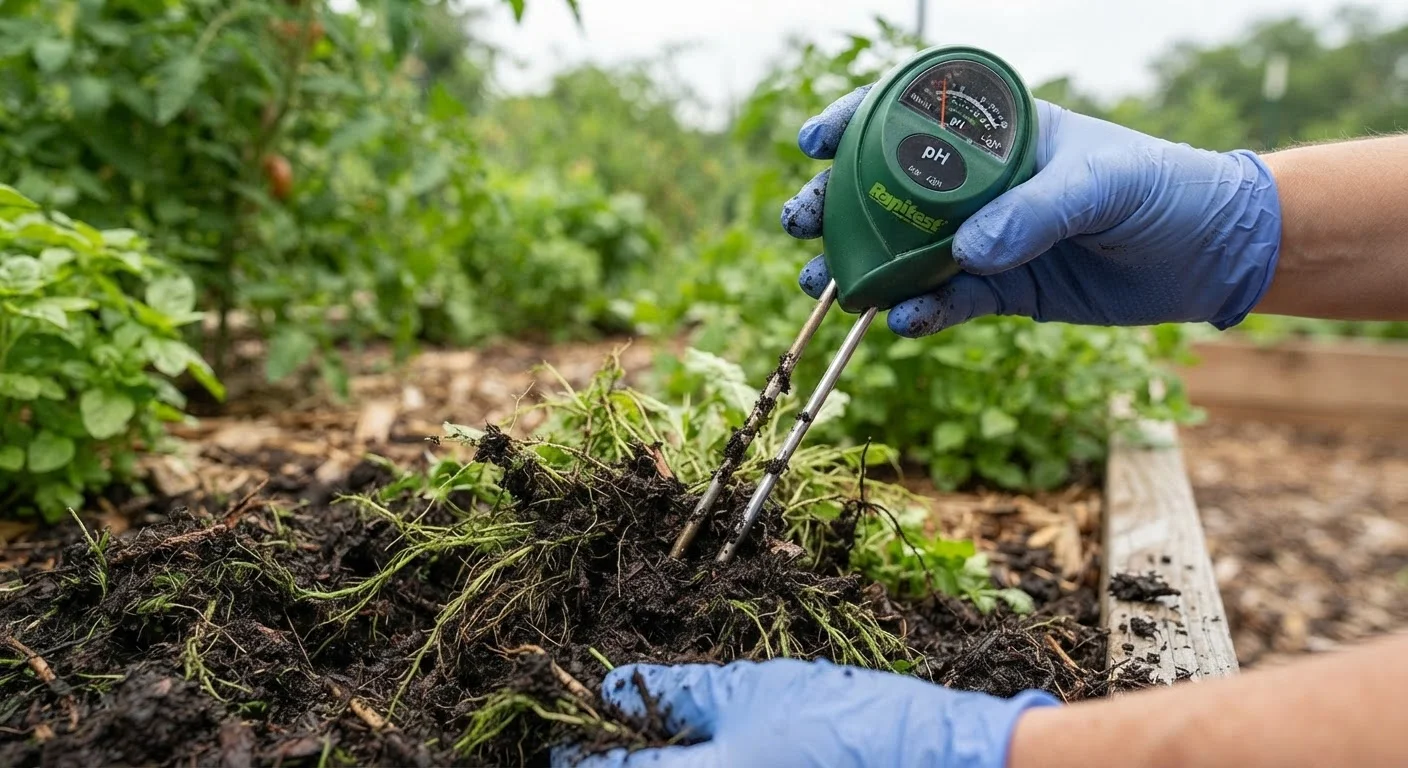
What Soil pH Actually Means
The pH scale runs from 0 to 14, with 7 representing neutral. Soils below 7 are acidic — sometimes called "sour" soil — and soils above 7 are alkaline, or "sweet." Most garden plants function best in a slightly acidic range of around 6.0 to 7.0.
What makes pH so important isn't the number itself but what it controls: nutrient availability. Soil can be packed with nitrogen, iron, phosphorus, and other minerals, yet if pH sits outside the optimal range, those nutrients become chemically locked in forms that plant roots simply cannot absorb. This is known as nutrient lockout, and it's why plants can struggle even in what appears to be rich, well-fertilized soil.
If you've noticed yellowing leaves, stunted growth, or poor fruit set despite regular watering and feeding, a pH imbalance could be the hidden cause. As you plan your growing space, understanding pH is foundational — see our guide to starting a vegetable garden from the ground up for a broader look at soil preparation.
Soil pH Varies Across Your Yard
pH isn't always uniform across an entire garden. Soil near concrete foundations tends to be more alkaline due to lime leaching from the concrete. Areas that receive heavy rainfall may become more acidic over time. Sampling from multiple spots in your yard gives a more accurate overall picture before you amend.
How pH Affects Specific Nutrients
Different nutrients become available or unavailable at different pH levels. Here's what commonly happens at the extremes:
- Too acidic (below 6.0): Phosphorus becomes less available, and manganese and aluminum can reach levels that are toxic to roots. Nitrogen-fixing bacteria in the soil also become less active.
- Too alkaline (above 7.5): Iron, manganese, boron, and zinc tend to become unavailable, leading to visible symptoms like interveinal chlorosis — where leaf tissue turns yellow between still-green veins.
Understanding these patterns helps you read your plants as indicators. Pale, yellowing leaves on newer growth often point to an iron or manganese shortage triggered by high pH. Older leaves yellowing uniformly may suggest nitrogen deficiency linked to acidic soil. Certain weeds can also signal pH imbalances — our guide on what common garden weeds reveal about your soil explores this further.
6.0–7.0
Optimal pH range for most vegetable crops
This range, widely cited by cooperative extension services across the U.S., is where major nutrients are most plant-available.
13
Essential nutrients affected by soil pH
Of the 17 essential plant nutrients, soil pH influences the availability of at least 13, according to established soil science literature.
4.5–5.5
Preferred pH for acid-loving crops like blueberries
Plants like blueberries, azaleas, and rhododendrons thrive in substantially more acidic conditions than most common garden vegetables.
Testing and Correcting Your Soil's pH
Before amending anything, test first. Home test kits and pH strips are widely available and give a reliable ballpark reading. For a more detailed analysis — including nutrient levels — contact your local cooperative extension office, which often offers soil testing services at low cost.
Once you know your pH, you can make targeted adjustments:
- To raise pH (make less acidic): Apply ground agricultural limestone (calcitic or dolomitic lime). Work it into the top several inches of soil and water well. Results take time — retest in 6–8 weeks.
- To lower pH (make less alkaline): Use elemental sulfur, which soil bacteria gradually convert into an acidifying compound. Acidic compost and peat moss can also help over time, though more slowly.
Always apply amendments conservatively, following soil test recommendations. Over-correcting can create new imbalances. If seedlings continue to fail after pH correction, transplant shock or other stress factors may also be involved — our article on why seedlings keep dying after transplanting can help you troubleshoot further.
Test Before You Amend
Amending soil without first testing is one of the most common gardening mistakes. Even well-intentioned applications of lime or sulfur can push pH in the wrong direction. A simple home test kit or cooperative extension soil test takes the guesswork out and helps you act with precision rather than guesswork.
Matching Plants to Your Natural Soil pH
Sometimes the most practical solution isn't to change your soil — it's to grow plants that already suit it. If your soil naturally tends acidic, blueberries, azaleas, rhododendrons, and potatoes are well-matched choices. Naturally alkaline soils support lavender, clematis, and many herbs.
Understanding your native soil pH also helps when planning long-term plantings. Our guide on planning perennials and annuals for a resilient garden touches on how plant selection shapes garden success over multiple seasons.
Regardless of pH, improving overall soil structure with organic compost benefits nearly every garden. Compost buffers pH fluctuations, encourages beneficial microbial activity, and improves water retention — all of which support healthier roots. For related context on how soil disturbance affects these benefits, our overview of the trade-offs of no-dig gardening offers a balanced perspective on managing soil health without excessive disruption.
Frequently Asked Questions
Most vegetables prefer a soil pH between 6.0 and 7.0, with 6.5 often cited as an ideal target. Within this range, essential nutrients like nitrogen, phosphorus, and potassium are most readily available to plant roots. Some crops, like blueberries, are exceptions and prefer more acidic conditions around 4.5–5.5.
You can use an inexpensive soil pH test kit or test strips available at most garden centers. Collect small soil samples from several spots in your garden, mix them together, and follow the kit's instructions. For a more precise reading, consider sending a sample to your local cooperative extension service.
Soil pH adjustments are gradual. Adding lime to raise pH or sulfur to lower it can take several months to show measurable results. Retesting every 4–6 weeks after an amendment helps you track progress without over-correcting.
Organic matter like compost can nudge pH slightly, but it usually isn't sufficient for significant corrections on its own. For meaningful adjustment, materials like ground limestone or elemental sulfur are typically needed. That said, compost improves overall soil health regardless of pH.
Yellowing despite fertilizing is a common sign of nutrient lockout caused by the wrong soil pH. Nutrients may be present in the soil but chemically unavailable to roots if pH is too high or too low. Testing soil pH before adding more fertilizer helps identify the real problem.
The content on this site is for informational purposes only and is not a substitute for professional advice. Always consult a qualified professional for guidance specific to your situation.