

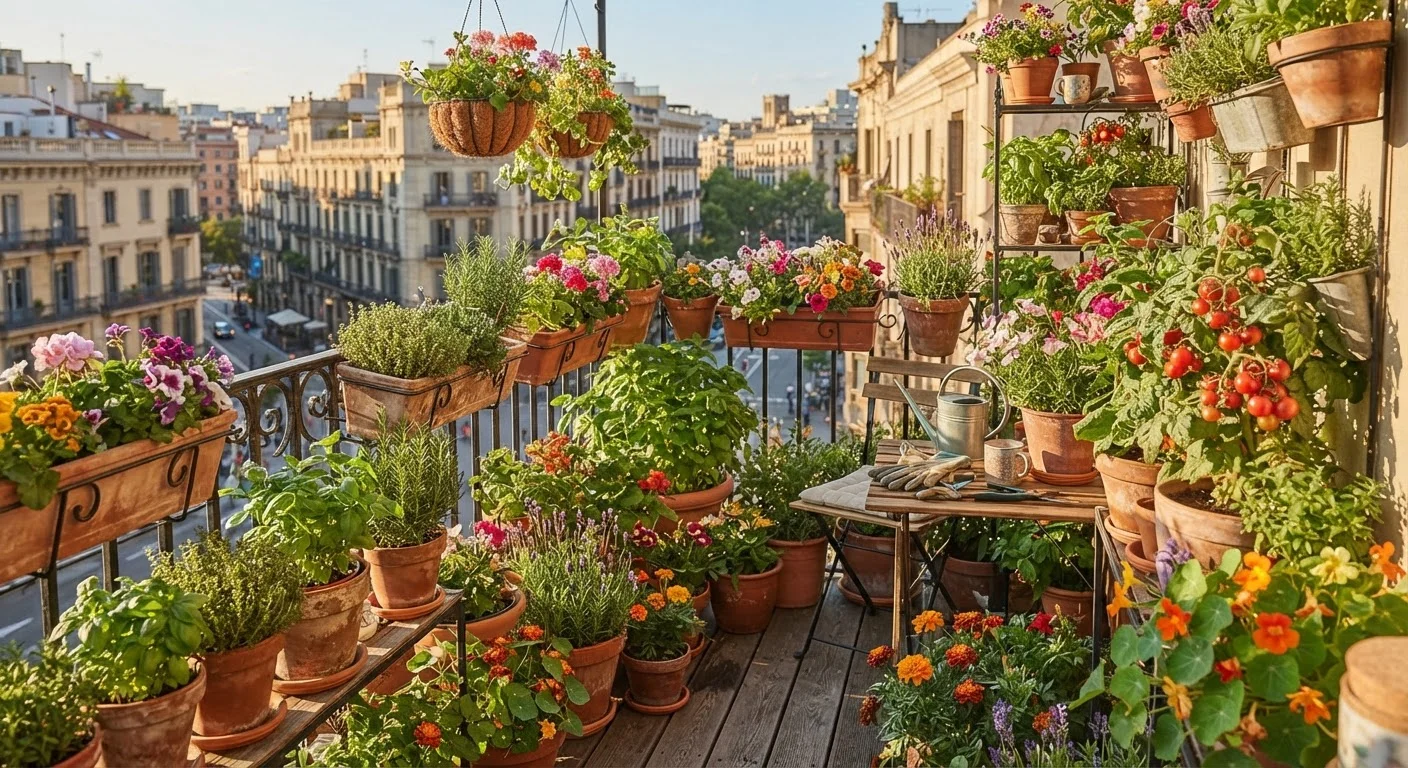
Why Container Gardening Works in Small Spaces
Container gardening gives homeowners and renters with patios, balconies, or small courtyards the ability to grow food and cultivate beauty without a single square foot of open ground. Unlike starting a vegetable garden from the ground up, container growing requires no soil preparation, no tilling, and no large footprint — just thoughtful plant selection and the right setup.
Containers also give you control that in-ground beds can't always offer. You can move pots to follow the sun, shelter them from sudden frost, and tailor the soil mix precisely for each plant type. They integrate naturally into outdoor living design — stacked, clustered, or placed as focal points, containers do double duty as both garden and décor. For design inspiration beyond the garden, explore our home décor ideas hub.
Lighten the Load on Your Balcony
Wet soil is heavy. Before filling large containers, check your balcony's weight rating with your building manager or a structural professional if you're unsure. Choose lightweight containers made from fiberglass or resin rather than concrete or stone for upper-floor spaces. Placing pots near load-bearing walls or posts also helps distribute weight more safely.
If you're weighing container growing against other approaches, our comparison of raised beds versus in-ground planting outlines the trade-offs clearly.
What You'll Need Before You Start
Gathering the right supplies upfront prevents the most common beginner frustrations — containers without drainage, soil that compacts, and plants that outgrow their pots within weeks. Review the prerequisites and tool list below before purchasing anything.
What you will need
Containers (various sizes)
Hold soil and plants; size determines what you can grow and how often you need to water.
Quality potting mix
Provides the aeration, drainage, and nutrient base container plants need to thrive.
Slow-release granular fertilizer
Supplements nutrients that leach out of containers with regular watering.
Drainage saucers
Catch excess water and protect balcony surfaces from staining or damage.
Trowel and hand fork
Used for planting, repotting, and loosening compacted surface soil.
Watering can or hose with gentle nozzle
Delivers water evenly without disturbing roots or washing away soil.
Perlite or coarse horticultural grit
Mixed into potting soil to improve drainage in larger or heavier containers.
Check Balcony Load Limits Before Starting
Large planted containers can become extremely heavy once watered — a single 15-gallon pot with wet soil may exceed 100 lbs. If you live in an apartment or condo, review your lease or building guidelines and consult with building management before placing multiple heavy containers. Exceeding structural weight limits is a genuine safety hazard.
Step-by-Step: Setting Up Your Container Garden
Follow these steps in order for the best results. The process is forgiving — even modest adjustments to pot size or mix ratios can make a measurable difference in how well your plants perform.
Assess your space and sunlight
Before buying a single pot, observe your patio or balcony throughout the day. Track how many hours of direct sun it receives and from which direction. South- and west-facing exposures typically get the most light. Most vegetables and herbs need 6+ hours; leafy greens and some herbs like mint and parsley can manage with 4 hours. Note whether wind is a factor — exposed upper balconies can dry out containers quickly and damage tall plants.
Choose containers appropriate to your plants
Container size directly determines plant health. Herbs like basil, thyme, and chives grow well in 6–8 inch pots. Bush-type tomatoes, peppers, and eggplant need at least a 5-gallon container (roughly 12 inches in diameter). Larger indeterminate tomato varieties benefit from 10–15 gallons. Ensure every container has drainage holes — no exceptions. Shallow bowls work for strawberries and shallow-rooted annuals; deeper pots suit root vegetables like carrots and radishes.
Prepare the right potting mix
Fill containers with a quality potting mix, not garden soil. For large containers or those on weight-sensitive balconies, blend in about 20–25% perlite to improve drainage and reduce overall pot weight. A small amount of well-aged compost (up to one-quarter of total volume) can enrich the mix — see our guide on composting kitchen scraps at home for how to produce your own. Leave about an inch of headspace at the top of each pot to prevent water from running straight off when you irrigate.
Select and plant your crops or flowers
Choose varieties bred for compact growth or labeled 'patio,' 'bush,' or 'dwarf' when available. Reliable container crops include cherry tomatoes, lettuce, kale, radishes, green onions, peppers, bush beans, and most culinary herbs. For flowers, consider trailing petunias, marigolds, or nasturtiums — the latter are also edible. Plant at the same depth the seedling was growing in its nursery pot, firm the soil gently around roots, and water immediately after planting.
Establish a watering and feeding routine
Container plants dry out far faster than in-ground plants. In summer, small pots may need water daily; larger ones every 2–3 days. Test by pressing your finger an inch into the soil — water when it feels dry at that depth. Because nutrients leach out with frequent watering, feed regularly: work slow-release granular fertilizer into the mix at planting, then supplement with a balanced liquid fertilizer every 2–3 weeks through the growing season. Stop heavy feeding about 4 weeks before your first expected frost date.
Monitor, maintain, and adapt through the season
Check plants weekly for pests (aphids, spider mites, whitefly are common on balconies), disease, or crowding. Remove spent blooms to prolong flowering, and trim herbs regularly to prevent bolting. Rotate containers occasionally so all sides receive even light. As the season shifts, replace spent warm-season crops with cool-season options like kale, spinach, or pansies. Refer to a month-by-month garden maintenance checklist to stay on schedule year-round.
Avoid Garden Soil in Containers
Garden soil — even good-quality native soil — compacts severely when used in pots, cutting off oxygen to roots and causing drainage problems. Always use a potting mix labeled specifically for containers. Adding garden compost is fine as a nutrient supplement, but it should not replace purpose-formulated potting mix.
Extending Your Garden's Impact
A thriving container garden can do more than supply fresh herbs and vegetables — it can anchor an entire outdoor living space. Thoughtful arrangement of containers creates zones for dining, relaxing, or growing, reinforcing the function and flow of your patio. Our guide to designing an outdoor living space covers how to integrate planting into a cohesive layout.
Container gardening also pairs naturally with sustainable practices. Finished compost worked into your potting mix improves moisture retention and adds slow-release nutrients — reducing dependence on synthetic fertilizers over time. If you're curious about bringing plants indoors as the season ends, our look at indoor plants as décor offers realistic guidance on what transitions well and what doesn't.
Start with two or three well-chosen containers this season. Once you see how responsive container plants are to good soil, consistent water, and appropriate light, expanding your setup the following year becomes a natural and satisfying next step.
The content on this site is for informational purposes only and is not a substitute for professional advice. Always consult a qualified professional for guidance specific to your situation.