

Our Verdict
Indoor plants are genuinely effective décor tools when chosen thoughtfully for the room's light, size, and lifestyle demands. The benefits — texture, color, and affordability — are real, but so are the maintenance requirements and potential hazards. Success comes from matching plant needs to your actual environment rather than decorating aspirations.
Ideal for homeowners who can commit to consistent basic care and want to add organic warmth to their interiors without a large budget.
Why Plants Work So Well as Décor
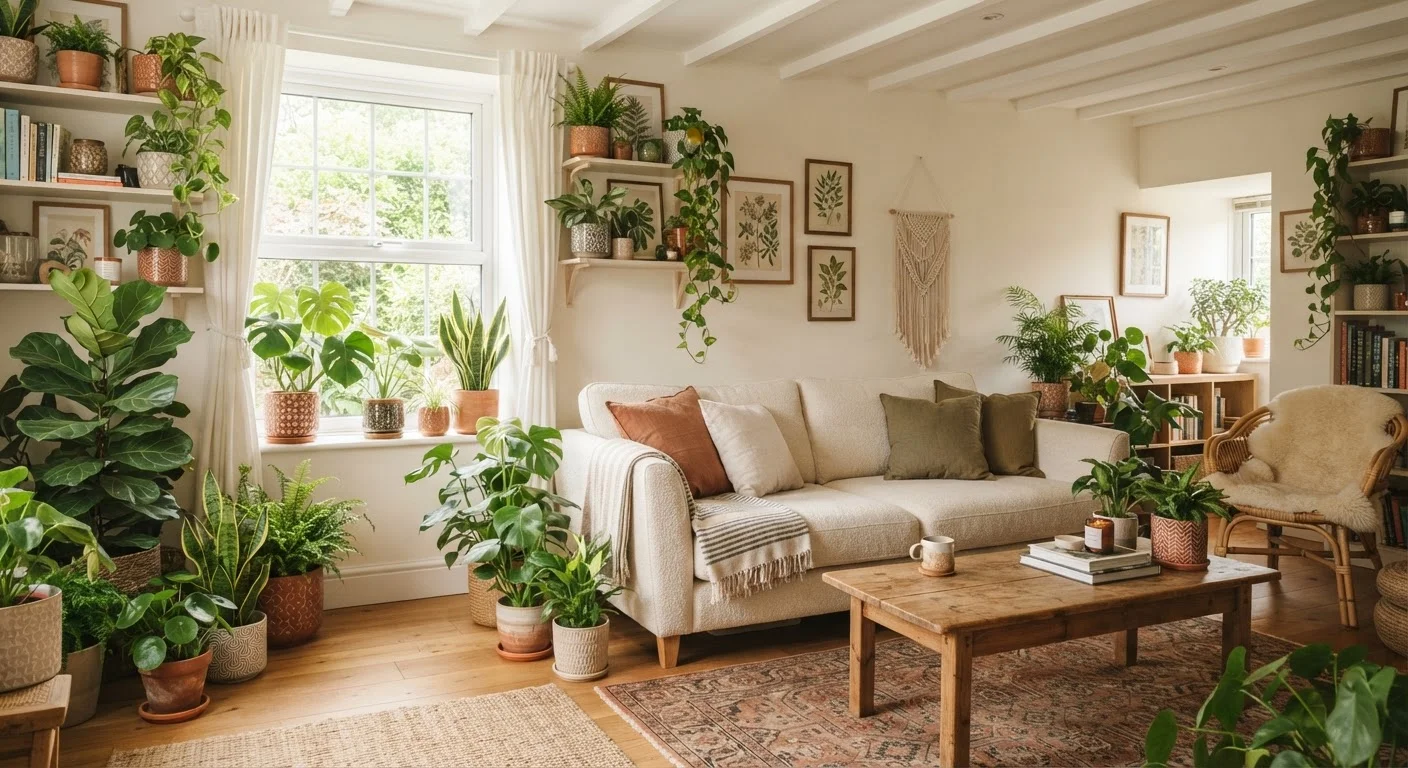
Few design elements pull double duty the way houseplants do. A well-placed fiddle-leaf fig or trailing pothos introduces natural color, varied texture, and a sense of scale that manufactured objects rarely achieve. Unlike artwork or furniture, plants shift with the seasons — new growth, changing leaf density — which keeps a room feeling dynamic without requiring you to redecorate.
Plants also add vertical interest in spaces that might otherwise feel flat. A tall floor plant in a corner draws the eye upward, making ceilings feel higher. Shelving filled with small trailing varieties creates layered depth. For more ideas on working with proportion and visual balance, see our small-space decorating guide.
Adds organic texture no manufactured object replicates
Varied leaf shapes, colors, and growth habits introduce visual complexity that synthetic décor elements cannot easily mimic. This makes even a simply furnished room feel layered and considered.
Affordable way to refresh a room
A single statement plant or a cluster of smaller varieties can transform a corner at a fraction of the cost of new furniture or artwork. Plants remain one of the most budget-accessible décor updates available.
Improves perceived air quality and comfort
While houseplants' air-purifying effects are more modest than popular claims suggest, the presence of greenery is consistently linked in environmental psychology research with improved sense of well-being and reduced stress.
Flexible and reversible décor choice
Unlike paint colors or built-in shelving, plants can be moved, regrouped, or replaced as your taste or furniture arrangement changes — with no lasting commitment to a particular look.
Creates vertical interest in flat spaces
Tall floor plants and cascading shelf arrangements draw the eye upward and downward respectively, adding the kind of dimensional interest that typically requires expensive architectural features.
Where Indoor Plants Fall Short
The appeal of lush indoor greenery is easy to romanticize — the reality of maintaining it is another matter. Most houseplant disappointments stem from a mismatch between a plant's actual needs and what a given space can provide. North-facing rooms with limited natural light simply cannot sustain many popular species, regardless of how well they photograph on social media.
Beyond light, humidity is often overlooked. Many tropical houseplants — common choices like monsteras and calatheas — struggle in centrally heated rooms where humidity regularly drops below 40%. Browning leaf edges are the most visible symptom, and no amount of watering compensates for dry air.
Many popular species have demanding care needs
Plants like fiddle-leaf figs and calatheas that photograph beautifully often require consistent humidity, indirect bright light, and precise watering schedules that busy households cannot reliably maintain.
Overwatering causes more deaths than underwatering
Root rot from excess moisture is the most common cause of houseplant failure indoors. Pots without adequate drainage holes compound the problem significantly, and the symptoms often appear too late to correct.
Some species are toxic to pets or children
Widely popular species including pothos, philodendron, and peace lilies are classified as toxic if ingested by cats, dogs, or young children — a hazard that is easy to overlook when purchasing on aesthetics alone.
Poor light conditions limit your options substantially
Rooms with north-facing windows or heavy shade from buildings or trees simply cannot sustain many popular tropical species. Grow lights are one workaround, but they add cost and change the room's aesthetic.
Ongoing maintenance demands consistency
Unlike a framed print, plants require regular watering, occasional repotting, pest monitoring, and fertilizing. Households with irregular schedules or frequent travel often find this difficult to sustain.
Getting Scale and Placement Right
Scale is where many decorating attempts with plants go wrong. A tiny succulent on a large dining table disappears; an oversized rubber plant crammed into a narrow hallway blocks movement and light. A useful rule of thumb: floor plants generally work best when they reach roughly two-thirds of the ceiling height, while tabletop plants should not exceed the height of surrounding objects.
Grouping plants in odd numbers — threes or fives — tends to look more considered than even-numbered arrangements, which can feel symmetrical to the point of sterility. Mixing heights, pot materials, and leaf shapes within a group adds the kind of layered interest that single-variety displays lack. This same principle of intentional variety, rather than rigid matching, applies across home décor broadly — a topic we explore in our piece on why over-coordination can work against you.
Light Is the Non-Negotiable Factor
Before selecting any plant based on its look, identify your room's actual light level — not how bright it feels, but how many hours of direct or indirect sunlight a given spot receives. Most low-light tolerant plants still need some ambient daylight to survive. A simple light-meter app on a smartphone can give you a useful baseline reading before you commit to a purchase.
Lighting also interacts with plants in ways beyond just growth. The color temperature of your bulbs can alter how foliage looks in the evening — warmer bulbs tend to make green leaves look richer, while cooler daylight bulbs can make them appear washed out. Our article on color temperature and room mood explains this in full.
Practical Considerations Before You Buy
Before purchasing any plant for a specific room, spend a few days observing that space. Note which windows receive direct versus indirect light, and for how many hours. Check whether the room has drafts, heating vents, or air-conditioning units nearby — all of which stress tropical species in particular.
Pet and child safety is a non-negotiable consideration. Pothos, philodendron, and dieffenbachia — all widely sold and easy to grow — are toxic if ingested. The ASPCA maintains a publicly accessible database of toxic and non-toxic plants, which is a practical starting point before any purchase. Non-toxic alternatives like spider plants, Boston ferns, and certain palms provide a similar lush effect without the safety concern.
~30%
Houseplants lost to overwatering annually
Horticulturalists and extension services consistently cite overwatering — rather than neglect — as the primary reason indoor plants fail in US homes.
Top 3
Most toxic common houseplants
The ASPCA lists pothos, philodendron, and peace lily among the most frequently reported toxic plant exposures for household pets in the United States.
If your interest in plants extends to outdoor spaces, the same principles of scale and environmental matching apply. Our container gardening guide covers how to bring that same layered, textured approach to balconies and patios.
The content on this site is for informational purposes only and is not a substitute for professional advice. Always consult a qualified professional for guidance specific to your situation.