

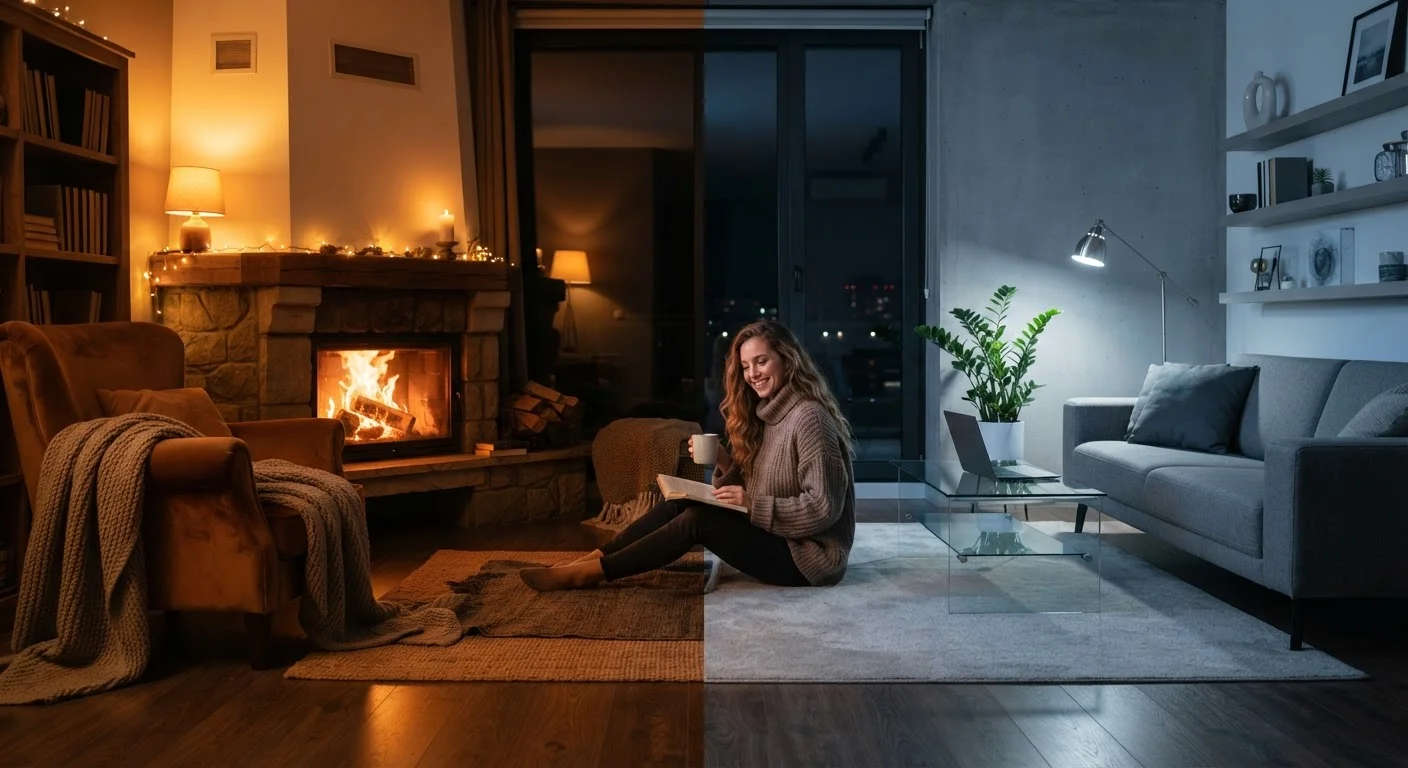
Option A
Warm Lighting (2700K–3000K)
The cozy, intimate classic.
Best for: Living rooms, bedrooms, and dining areas where relaxation and comfort are the priority.
Option B
Cool Lighting (4000K–6500K)
The crisp, energising alternative.
Best for: Kitchens, home offices, bathrooms, and workspaces where clarity and focus matter most.
What Colour Temperature Actually Means
Every light bulb — LED, incandescent, or fluorescent — emits light along a spectrum measured in Kelvins (K). Despite the name, colour temperature has nothing to do with how hot a bulb runs; it describes the hue of the light it produces. Lower numbers sit at the warm, amber end of the scale; higher numbers shift toward crisp, blue-white daylight.
In practical terms, a 2700K bulb produces the kind of soft glow associated with traditional incandescent lamps, while a 6500K bulb mimics overcast daylight. Most household lighting falls somewhere between 2700K and 5000K, and choosing where you land on that range is one of the single most affordable ways to transform how a room feels. As we explore in our guide to core design principles, atmosphere is just as important as furniture arrangement — and lighting directly shapes it.
| Criterion | Warm Lighting (2700K–3000K) | Cool Lighting (4000K–6500K) |
|---|---|---|
| Light colour | Amber to soft white | Neutral white to blue-white |
| Mood effect | Relaxing, intimate, cozy | Energising, alert, clinical |
| Best rooms | Bedroom, living room, dining room | Kitchen, office, bathroom |
| Flatters warm paint tones | Yes | Can wash them out |
| Flatters cool paint tones | Can add unwanted yellow cast | Yes |
| Task visibility | Lower colour accuracy | Higher colour accuracy |
| Common fixture use | Table lamps, pendants, sconces | Under-cabinet, overhead panels, vanity strips |
Warm Lighting: Where It Shines
Warm white bulbs in the 2700K–3000K range produce a honey-tinted light that flatters skin tones, enriches earthy and neutral colour palettes, and signals to the brain that it's time to wind down. This is partly why warm lighting has historically dominated bedrooms and dining rooms — the amber quality of the light mimics firelight and sunset, both of which carry deep psychological associations with rest and safety.
If your walls are painted in warm tones — creams, terracottas, warm greys, or deep greens — a warm bulb will amplify those colours in a pleasing way. Cooler bulbs, by contrast, can make the same paint look slightly washed out or even greenish. This interaction is worth understanding before you finalise a palette; our plain-language guide to colour schemes explains how undertones behave under different light sources.
2700K
Classic incandescent equivalent warmth
The 2700K range closely matches the colour output of traditional incandescent bulbs that many homeowners grew up with.
~5000K
Approximate colour temperature of midday sunlight
Natural daylight varies through the day; midday light typically falls around 5000K–5500K, often used as a reference for 'neutral' lighting.
Cool Lighting: Where Clarity Counts
Cool white and daylight bulbs — broadly 4000K to 6500K — render colours with greater accuracy and create a sense of brightness that feels energising rather than drowsy. This makes them a natural fit for kitchens, bathrooms, laundry rooms, and home offices, where seeing clearly matters more than setting a mood.
In rooms with cool-toned walls — soft blues, crisp whites, or concrete-effect finishes — daylight-range bulbs tend to preserve the intended look of the space. Worth noting: dark paint colours can actually work well with cooler lighting in spaces like bathrooms or offices, where you want the drama of the paint without the space feeling cave-like. Cool light keeps things from feeling too closed in.
One limitation of cool lighting: it can feel clinical or harsh when used throughout a living area. Mixing a cooler overhead source with warmer accent or table lamps in the same room is a practical workaround that preserves functionality while softening the overall effect.
Layering Both for a Balanced Home
Most well-lit homes don't use a single colour temperature throughout — they layer light intentionally. A common approach is to use warmer bulbs in ambient fixtures (overhead lights, floor lamps) and slightly cooler bulbs in task zones (under-cabinet kitchen lighting, desk lamps, vanity mirrors). This mimics how natural daylight behaves: softer and warmer in the morning and evening, brighter midday.
Dimmable LED bulbs add another layer of control. Many dimmer-compatible LEDs shift slightly warmer as they dim, which means a single bulb can adapt to a relaxed evening mood or a brighter reading session. Keep in mind that not all dimmers are compatible with all LEDs — check the bulb's packaging before purchasing.
Lighting works alongside every other decorating decision. If you're also rethinking your soft furnishings, our article on textiles that transform a room without a renovation covers how fabric textures and colours interact with light in ways that can either amplify or undercut your intended atmosphere.
Test Before You Commit
Colour temperature looks different depending on your room's size, wall colour, ceiling height, and existing furnishings. Before replacing all your bulbs, try a single bulb in the space and observe it at different times of day — especially in the evening, when artificial light has the most influence. Many hardware stores sell individual bulbs precisely for this reason.
The content on this site is for informational purposes only and is not a substitute for professional advice. Always consult a qualified professional for guidance specific to your situation.