

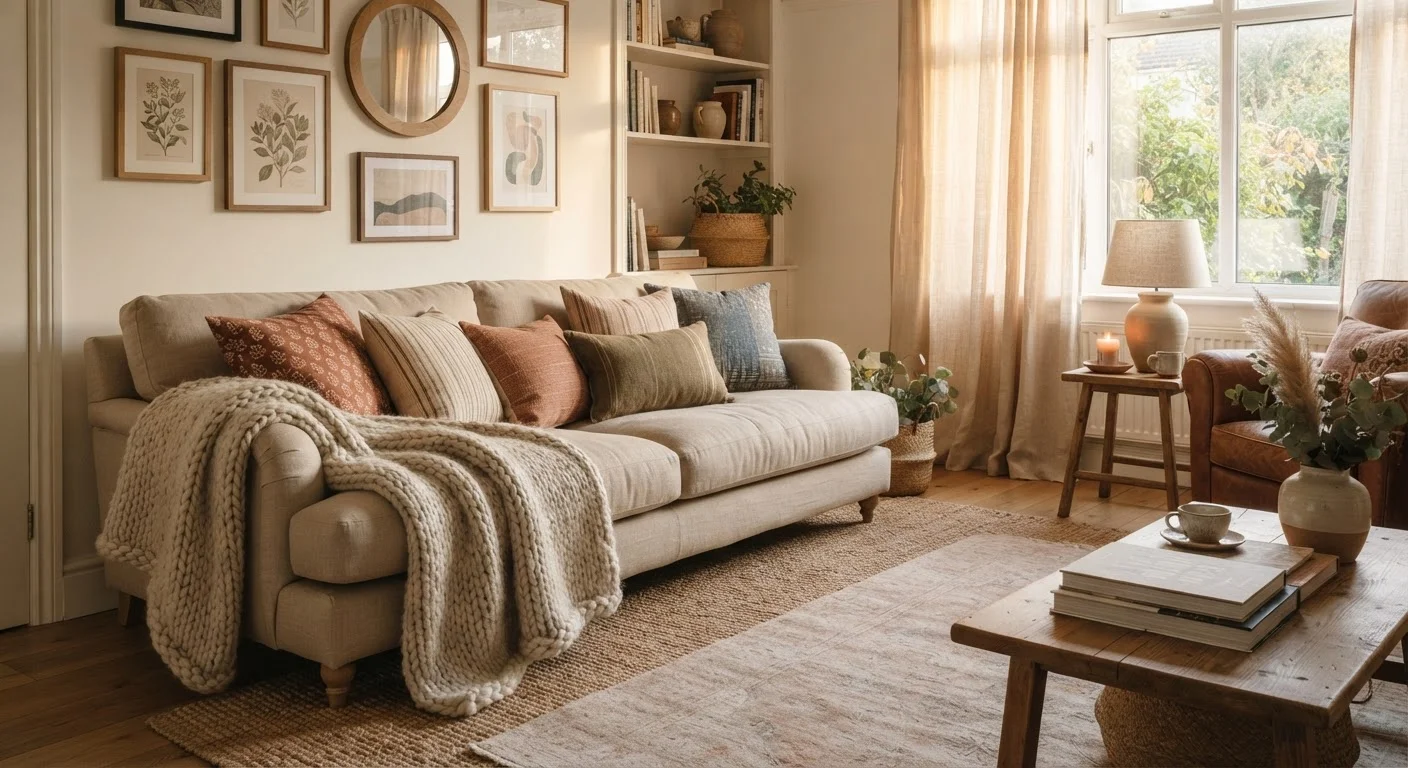
Why Textiles Are a Decorator's Fastest Tool
Paint and furniture get most of the attention in home decorating, but textiles quietly do some of the heaviest lifting. A room with bare floors, thin curtains, and no soft furnishings tends to feel cold and unfinished — not because anything is technically wrong, but because it lacks the tactile and visual layering that makes a space feel inhabited and considered.
The good news is that strategic textile choices require no tools, no permits, and no permanent changes. That makes them especially valuable for renters — see our guide on decorating a rental without losing your deposit for ideas that complement this approach. Understanding a few core principles before you shop will help you choose pieces that work together rather than compete. Our article on the principles behind a well-decorated room covers balance, scale, and contrast in detail.
Start With One Anchor, Then Build
Rather than refreshing all textiles at once, begin with your largest piece — typically the rug or curtains — and let that guide subsequent choices. This prevents costly mismatches and gives each addition a clear reference point. Shopping with a fabric swatch or photo of your anchor piece makes it far easier to coordinate the layers that follow.
The list below covers the key textile moves worth making — from the floor up.
Lay the foundation with an area rug
A well-chosen rug does three things at once: it defines a seating zone, reduces echo, and adds a layer of warmth that hard flooring simply can't provide. For a living room, aim for a rug large enough that the front legs of all major seating pieces sit on it — this visually ties the furniture together rather than leaving pieces floating.
In terms of material, low-pile wool or flat-weave cotton works well in high-traffic areas, while thicker, textured options like boucle or shag are better suited to bedrooms or reading corners. Natural fiber rugs such as jute or sisal add an earthy, organic quality but can feel rough underfoot and may not be ideal for bare feet. Consider a rug pad beneath any area rug to prevent slipping and extend the life of the piece.
A rug sized to anchor all furniture front legs instantly makes a room feel more intentional.
Hang curtains high and wide
Most curtains are hung too low and too narrow, which can make ceilings appear shorter and windows look smaller. A simple adjustment — mounting the rod 4 to 6 inches above the window frame, and extending it 6 to 12 inches beyond each side — immediately gives a room a more generous, elevated feel.
Floor-length curtains almost always look more polished than those that stop at the sill. For light control, consider a double-rod setup with a sheer panel behind a heavier drape, giving you flexibility across times of day. Linen, cotton canvas, and velvet each create very different moods — linen reads as airy and casual, velvet as rich and cocooning. Choose based on the atmosphere you're after, not just the color.
Mounting curtain rods near the ceiling — not the window frame — is one of the easiest visual upgrades available.
Use cushions to introduce pattern and color
Cushions (or throw pillows) are the most swappable element in a room, which makes them ideal for testing colors or patterns before committing to larger purchases. A useful guideline is the 2-3-1 approach: two larger neutral cushions, two or three medium cushions in a coordinating pattern or texture, and one smaller accent in a contrasting hue or material.
Mixing textures matters as much as mixing colors. Pair smooth velvet with a nubby boucle, or a printed cotton with a cable-knit cover. This variety creates visual interest even when your color palette is restrained. Swap covers seasonally — lighter linens and cotton blends in spring and summer, heavier wool or faux-fur covers in autumn and winter — to refresh a room without buying new furniture.
Swapping cushion covers seasonally refreshes a room's entire palette at minimal cost.
Drape throws with intention, not just habit
A throw tossed carelessly over an armchair can look cluttered, while the same throw folded neatly over one arm or draped at a diagonal across a sofa corner looks deliberately styled. The difference is in the placement. Think of a throw as a soft accent piece rather than spare bedding left out by accident.
For texture layering, chunky knit wool, lightweight cotton gauze, and fringed wool blankets each bring something different. Stick to throws that echo a color already present somewhere in the room — in a cushion, the rug, or even an artwork — to keep the look intentional. This principle pairs naturally with the ideas in our guide on mixing old and new pieces, where repetition of detail creates cohesion across varied styles.
A throw folded neatly over one sofa arm reads as intentional styling rather than clutter.
Layer table and bed linens to add depth
In bedrooms, the textile layering principle extends naturally to the bed itself. Start with a fitted sheet in a neutral tone, add a flat sheet or lightweight quilt in a complementary color, and finish with a heavier duvet or coverlet. European shams behind sleeping pillows add a collected, styled quality without requiring any special skill.
For dining or console tables, a simple table runner in a contrasting texture — jute over wood, linen over marble — draws the eye and softens hard surfaces. Placemats in woven cotton or wicker add another layer while being entirely practical. These small textile moments, accumulated across a room, are what create the sense that a space has been carefully considered rather than simply furnished. Pair this approach with thoughtful lighting choices — our piece on warm vs. cool lighting explains how bulb temperature interacts with soft furnishing colors to shape the overall mood.
A simple linen table runner over a hard surface softens the space and anchors the eye.
Putting It All Together
Textiles work best when they're treated as a system rather than individual purchases. Start with the largest anchor piece — usually the rug — and build upward through curtains, cushions, and throws. Repeat at least one color or texture across two or three items to create cohesion without matching everything exactly.
Before your next refresh, use the room-by-room décor refresh checklist to spot gaps in your current setup. And if you're working with a smaller space, our guide on small-space decorating explains how textile scale and placement can make compact rooms feel more considered.
Caring for Natural Fiber Textiles
Wool, linen, and cotton textiles each have specific care requirements that affect their longevity. Always check manufacturer labels before washing, as many natural fiber rugs and cushion covers require spot cleaning or professional care. Rotating rugs periodically and keeping them out of direct sunlight can significantly reduce fading and wear over time.
The content on this site is for informational purposes only and is not a substitute for professional advice. Always consult a qualified professional for guidance specific to your situation.