

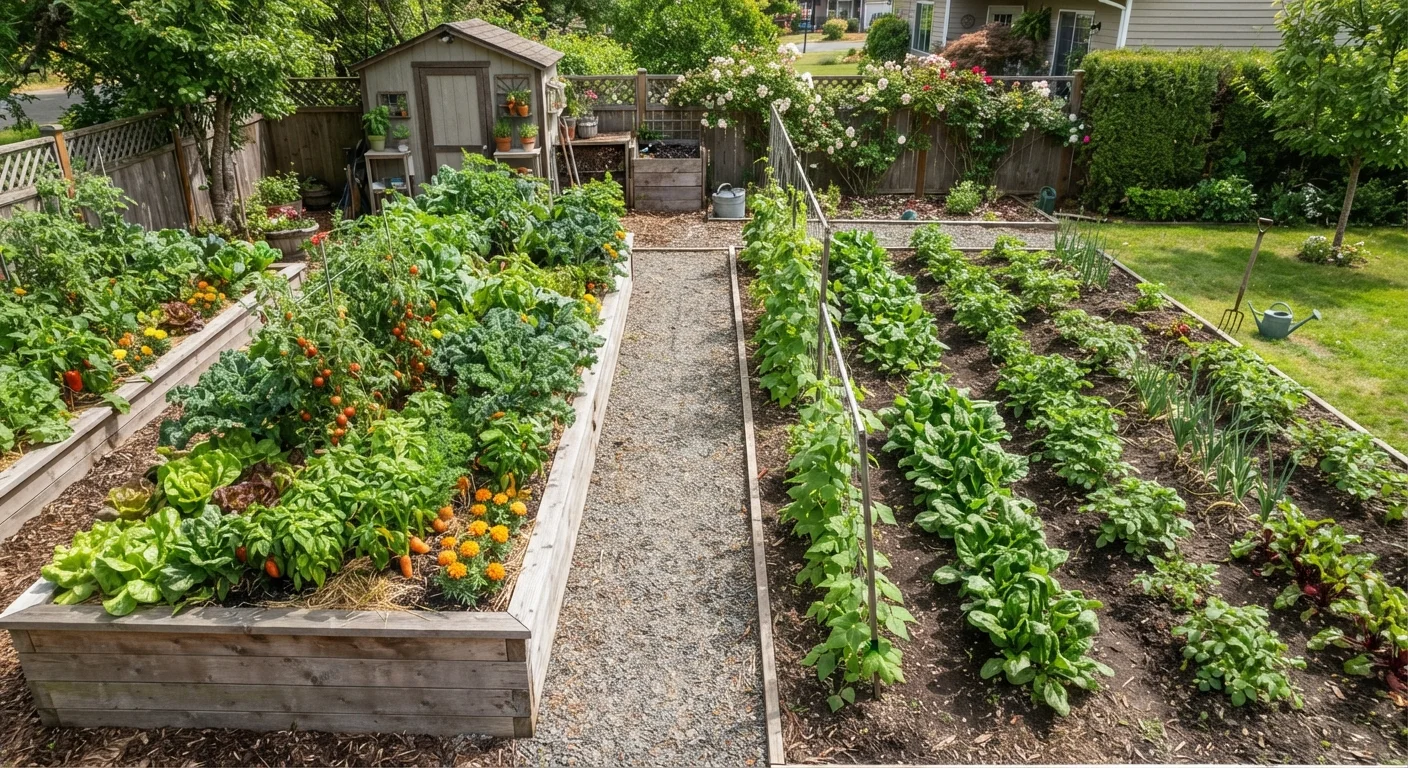
Option A
Raised Beds
The controlled, elevated growing environment.
Best for: Gardeners dealing with poor native soil, limited mobility, or those who want faster warm-up and precise soil control.
Option B
In-Ground Planting
The traditional, low-barrier approach to growing.
Best for: Gardeners with workable native soil who want to grow at scale with minimal upfront cost.
Soil Control and Growing Conditions
The most significant advantage raised beds offer is complete control over what your plants grow in. You fill the bed with a custom mix — typically a combination of topsoil, compost, and amendments — rather than working with whatever the ground provides. This matters enormously if your native soil is clay-heavy, sandy, compacted, or has a history of contamination.
In-ground planting works with the soil already there. In many parts of the US, that soil needs meaningful amendment before it supports productive vegetables or flowers. Regular additions of compost improve structure over time, but this is a multi-season process. If your yard has reasonable loam with decent drainage, in-ground growing can be highly productive with modest preparation.
Raised beds also warm up several weeks earlier in spring because the soil mass is smaller and exposed to air on multiple sides. That head start can add meaningful time to your growing season in cooler climates. For ideas on making the most of that extended window, see our guide on starting a vegetable garden from the ground up.
| Criterion | Raised Beds | In-Ground Planting |
|---|---|---|
| Upfront cost | Moderate to high (materials + soil) | Low (labor and amendments only) |
| Soil control | Complete — you fill with custom mix | Limited — dependent on native soil |
| Drainage | Excellent by design | Varies by site and soil type |
| Spring warm-up | Earlier — extends growing season | Slower — follows ambient ground temp |
| Weed pressure | Lower with fresh soil mix | Higher — existing seed bank present |
| Scalability | Limited by cost and space | Easily expanded across yard |
| Root depth | Constrained by bed height | Unrestricted |
| Accessibility | High — reduces bending at taller heights | Low — requires kneeling or bending |
Cost, Setup, and Long-Term Maintenance
Upfront cost is where in-ground planting holds a clear edge. Preparing an in-ground bed requires little more than a spade, some compost, and time. Raised beds, by contrast, require materials for the frame — typically lumber, galvanized metal, or composite boards — plus enough quality soil mix to fill the structure. A single 4×8-foot bed can cost anywhere from modest to significant depending on material choices and local soil prices.
Over time, raised beds can offset that cost through reduced weeding, less soil compaction (since you never walk in the bed), and easier pest management. Slugs and some soil-dwelling pests find it harder to reach raised beds, and a physical barrier can also help with burrowing animals.
In-ground gardens require more consistent weed management and may compact more easily if foot traffic isn't controlled with defined paths. However, they don't require periodic topping-up with fresh growing medium the way raised beds do as the soil settles and decomposes over seasons.
6–8 weeks
Earlier harvest potential with raised beds
University cooperative extension programs in northern states commonly note that raised beds can warm sufficiently for transplanting several weeks ahead of in-ground sites.
~30%
Less water use reported in raised beds
The denser planting made possible by loose, well-amended raised bed soil can reduce evaporation and irrigation needs compared to row-based in-ground growing.
For gardeners considering drip irrigation to manage watering efficiently in either system, our comparison of drip irrigation vs. sprinkler systems is worth reviewing before you set up.
Plant Suitability and Garden Design
Most annual vegetables and herbs — tomatoes, lettuce, basil, peppers, beans — thrive in raised beds. The well-draining, loose soil suits their root systems, and the defined space makes rotation and companion planting straightforward. Our article on companion planting outlines which combinations actively benefit each other, and raised beds make implementing those pairings easy.
In-ground planting has the advantage when it comes to larger or deeper-rooting plants. Pumpkins, sprawling squash, asparagus, fruit shrubs, and most perennial plants benefit from unrestricted root depth and the moisture reservoir that deep native soil provides. Raised beds impose a physical boundary that can limit truly deep-rooted crops unless the bed is very tall or placed directly over open soil.
From a design standpoint, raised beds add structure and visual definition to a garden space. They work well in yards where a tidy, organized aesthetic is valued. In-ground gardens can look more naturalistic, and they integrate more seamlessly with lawn areas or mixed borders. If you're combining growing approaches with longer-lived plants, our guide on perennials vs. annuals can help you plan which plants belong where.
Combining Both Methods Is Viable
Many experienced gardeners use raised beds for annuals, herbs, and salad crops while reserving in-ground space for perennials, fruiting shrubs, and large sprawling plants. This hybrid approach lets you capture the benefits of each method without fully committing to one. It's also a practical way to start small with a raised bed and expand in-ground as your confidence and space allow. You might also explore no-dig gardening techniques as a complementary approach to improving in-ground beds over time.
The content on this site is for informational purposes only and is not a substitute for professional advice. Always consult a qualified professional for guidance specific to your situation.