

How Companion Planting Actually Works
Companion planting isn't garden folklore dressed up as science — several of its core mechanisms are well understood. The key is knowing which claimed benefits are backed by evidence and which remain largely anecdotal.
The main mechanisms include:
- Nitrogen fixation: Legumes like beans and peas host bacteria in their root nodules that convert atmospheric nitrogen into a form other plants can use. Growing them alongside heavy-feeding crops such as corn or leafy greens is one of the most reliably documented companion planting strategies.
- Pest confusion: Strongly scented plants — think basil, marigolds, or lavender — can mask the chemical signals that attract pest insects. The effect is real but variable; it reduces rather than eliminates pest pressure.
- Beneficial insect attraction: Flowers like borage, dill, and yarrow attract predatory insects such as lacewings and parasitic wasps that prey on common garden pests.
- Space optimization: Pairing tall, upright plants with low-growing ground covers or climbers maximizes light exposure and suppresses weeds between rows.
Understanding these mechanisms helps you evaluate any pairing on its merits rather than just following a list by rote.
Start with one proven pairing
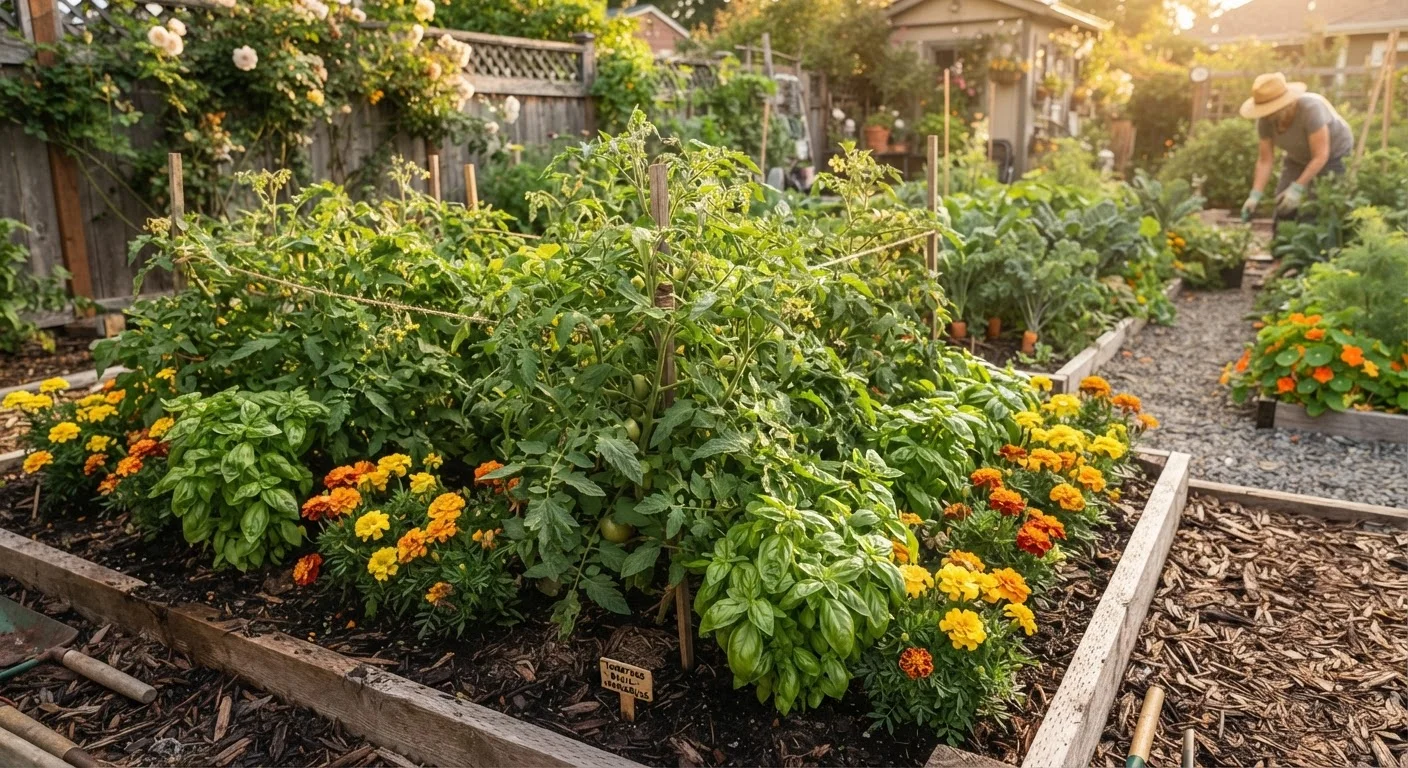
If you're new to companion planting, begin with a single well-documented combination — such as marigolds bordering a tomato bed — before expanding. This makes it easier to observe real results rather than trying to attribute outcomes to multiple variables at once. Build your companion planting strategy incrementally each season.
Pairings That Have Strong Support
Some companion pairings have earned their reputation through consistent results across many gardens and climates.
The Three Sisters — corn, beans, and squash — is the most celebrated example. Indigenous agricultural communities in North America developed this system over centuries. Corn provides a structure for beans to climb; beans fix nitrogen that feeds the corn and squash; squash leaves shade the ground, retaining moisture and suppressing weeds. Each plant contributes something specific.
Marigolds and vegetables represent another well-supported pairing. French marigolds (Tagetes patula) release compounds from their roots that are toxic to root-knot nematodes — a soil pest that damages tomatoes, peppers, and other crops. Research published in horticultural literature has consistently found that dense plantings of French marigolds can reduce nematode populations over a growing season.
Dill and brassicas attract beneficial wasps that parasitize cabbage worms, making dill a practical companion for broccoli, kale, and cabbage — though dill should be kept away from tomatoes, where it can inhibit growth once it matures.
For gardeners weighing how to structure their beds, our guide on perennials vs. annuals can help with broader planting decisions that interact with companion strategies.
Traditional knowledge and modern research
Many companion planting combinations originated in Indigenous and folk agricultural traditions long before formal horticultural research. While not every traditional pairing has been scientifically validated, the underlying mechanisms for many have since been identified. Treating traditional knowledge as a starting point for observation — rather than dismissed or uncritically accepted — is a reasonable approach for home gardeners.
Pairings to Avoid
Companion planting can go wrong when plants release allelopathic chemicals — natural compounds that inhibit the germination or growth of neighboring species.
Fennel is the most widely problematic plant in a home garden. It releases allelopathic compounds that suppress the growth of many vegetables, including tomatoes, peppers, beans, and kohlrabi. It's best grown in a container or isolated bed rather than integrated into a vegetable garden.
Onions and garlic can stunt the growth of beans and peas. Both are alliums that produce sulfur compounds beneficial to human health but disruptive to the root systems of legumes.
Brassicas together — planting broccoli next to cabbage next to cauliflower — may seem space-efficient, but grouping them concentrates the same pest and disease pressures in one area. Rotating brassicas and spreading them out is generally more effective.
30%+
Potential nematode reduction with marigolds
Research in horticultural journals has found that dense plantings of French marigolds can meaningfully reduce root-knot nematode populations in vegetable beds over a single growing season.
3
Core mechanisms behind most companion benefits
The majority of documented companion planting benefits can be traced to three mechanisms: nitrogen fixation, chemical pest deterrence, and beneficial insect attraction.
1,000+ years
Estimated age of the Three Sisters system
The Three Sisters planting combination — corn, beans, and squash — has been used by Indigenous agricultural communities in North America for well over a millennium.
If you notice unexpected poor growth in a bed, soil conditions may also be a factor. Our article on what weeds reveal about your soil can help you read additional signals your garden may be sending.
Putting It Into Practice
A few practical considerations make the difference between companion planting that works and combinations that disappoint.
- Match growing requirements first. No companion effect compensates for plants that have incompatible sunlight, water, or soil pH needs. A drought-tolerant herb placed next to a thirsty vegetable creates problems regardless of any other benefit.
- Think about timing. Some companions benefit each other only during specific growth stages. Dill, for example, is most effective as a pest deterrent when it's young; as it bolts and goes to seed, it begins to compete with neighboring crops.
- Use edge planting strategically. Scented companion plants like basil or marigolds are often most effective as border rows around a vegetable bed rather than intermixed throughout.
- Observe and adjust. Companion planting benefits can be subtle and season-dependent. Keep notes on what you plant where and how each combination performs over time.
Companion planting pairs well with other soil-health practices. If you're working with a no-dig setup, our overview of the trade-offs of no-dig gardening explains how that method can interact with dense multi-species plantings.
Frequently Asked Questions
Some companion planting combinations have solid scientific backing — particularly nitrogen fixation by legumes and pest confusion by strongly scented herbs. Other claimed benefits are based more on tradition and gardener observation than controlled studies. Treating companion planting as one helpful tool among many is a reasonable approach.
Basil is frequently grown near tomatoes and is reported to repel aphids and whiteflies, though research is mixed. Marigolds are better supported — they deter nematodes in the soil. Avoid planting fennel or brassicas like cabbage near tomatoes, as those combinations tend to be counterproductive.
Fennel is one of the most problematic plants in a mixed garden — it releases chemicals that inhibit growth in many vegetables including tomatoes, peppers, and beans. Onions and garlic can stunt the growth of beans and peas. Brassicas like broccoli and cabbage often compete poorly when placed next to each other due to shared pest pressure.
Companion planting can reduce pest pressure but is unlikely to eliminate it entirely. It works best as part of an integrated approach that includes crop rotation, healthy soil, and attracting beneficial insects. For more strategies, see our guide on <a href="/home-garden/garden-and-outdoors/natural-pest-control-methods-worth-knowing">natural pest control methods</a>.
Yes — raised beds can actually make companion planting easier to manage because you have more control over soil composition and spacing. The same pairing principles apply. Our article on <a href="/home-garden/garden-and-outdoors/raised-beds-vs-in-ground-planting-which-works-better-for-your-garden">raised beds vs. in-ground planting</a> explores the broader tradeoffs of each setup.
Spacing depends on the species involved. The goal is close enough for the companion effect to occur — typically within 12 to 18 inches — but not so close that plants compete for light, water, or root space. Always check the mature size of each plant before positioning them.
The content on this site is for informational purposes only and is not a substitute for professional advice. Always consult a qualified professional for guidance specific to your situation.