

Why Natural Pest Control Makes Sense
Managing garden pests without synthetic chemicals isn't just about personal preference — it's about protecting the web of life that makes healthy soil and productive plants possible. Broad-spectrum pesticides frequently harm pollinators, ground beetles, and other beneficial organisms that naturally keep pest populations in check. Once those allies are gone, pests tend to rebound faster than before.
The methods below are grounded in practical horticulture and integrated pest management (IPM) principles, a framework developed to reduce chemical inputs while maintaining effective control. They work best layered together rather than applied one at a time. You'll also notice that some pest problems are symptoms of deeper issues — compacted soil, poor drainage, or stressed plants. Our guide to what common weeds reveal about your soil explains how to think about your garden as an interconnected system.
Start With Observation Before Acting
Before applying any treatment, spend a week observing where pest activity is concentrated, what time of day it peaks, and which plants are most affected. Many infestations are highly localized and can be addressed with targeted hand-picking or a single barrier rather than a garden-wide intervention. This step also helps you avoid disrupting beneficial insects working nearby.
Proven Natural Methods to Try
Attract and Support Beneficial Insects
Predatory insects — ladybugs, lacewings, parasitic wasps, and ground beetles — consume aphids, caterpillar eggs, whiteflies, and other common garden pests. Rather than importing them (purchased beneficial insects often disperse quickly), focus on creating habitat that encourages local populations to stay.
Plant small-flowered nectar sources like dill, fennel, yarrow, and sweet alyssum near vegetable beds. These provide food for adult beneficial insects whose larvae are the voracious pest-eaters. Avoid tilling frequently, since many ground beetles overwinter in undisturbed soil — a point also made in discussions of no-dig gardening and soil ecology.
Local beneficial insect populations outperform purchased ones when habitat is well-established.
Use Physical Barriers and Row Covers
Fine-mesh floating row covers placed over vulnerable crops at planting time are one of the most reliable non-chemical methods available. They exclude aphids, cabbage moths, squash vine borers, and flea beetles without any chemical exposure. Secure edges with soil, rocks, or ground staples so pests can't enter from below.
Copper tape around container rims can deter slugs and snails, though it works best as a preventive measure in dry conditions. Sticky yellow cards hung near plants catch fungus gnats and whitefly adults, giving you an early indicator of population buildup before it becomes a problem.
Row covers placed at planting time prevent most common insect problems before they begin.
Apply Neem Oil and Insecticidal Soaps Selectively
Neem oil, derived from the neem tree, contains azadirachtin — a compound that disrupts insect feeding and reproduction cycles. It is most effective on soft-bodied pests like aphids, spider mites, and young caterpillars, and breaks down relatively quickly in the environment. Apply in the early morning or evening to reduce contact with foraging pollinators and to prevent leaf burn in direct sun.
Insecticidal soap (potassium salts of fatty acids) works similarly, killing soft-bodied insects on contact by disrupting cell membranes. Both products require thorough coverage of leaf undersides where pests congregate, and repeated applications are typically necessary. Neither is entirely without impact on beneficial insects, so targeted application matters.
Apply neem oil and insecticidal soap in the evening to minimize contact with foraging bees.
Practice Strategic Companion Planting
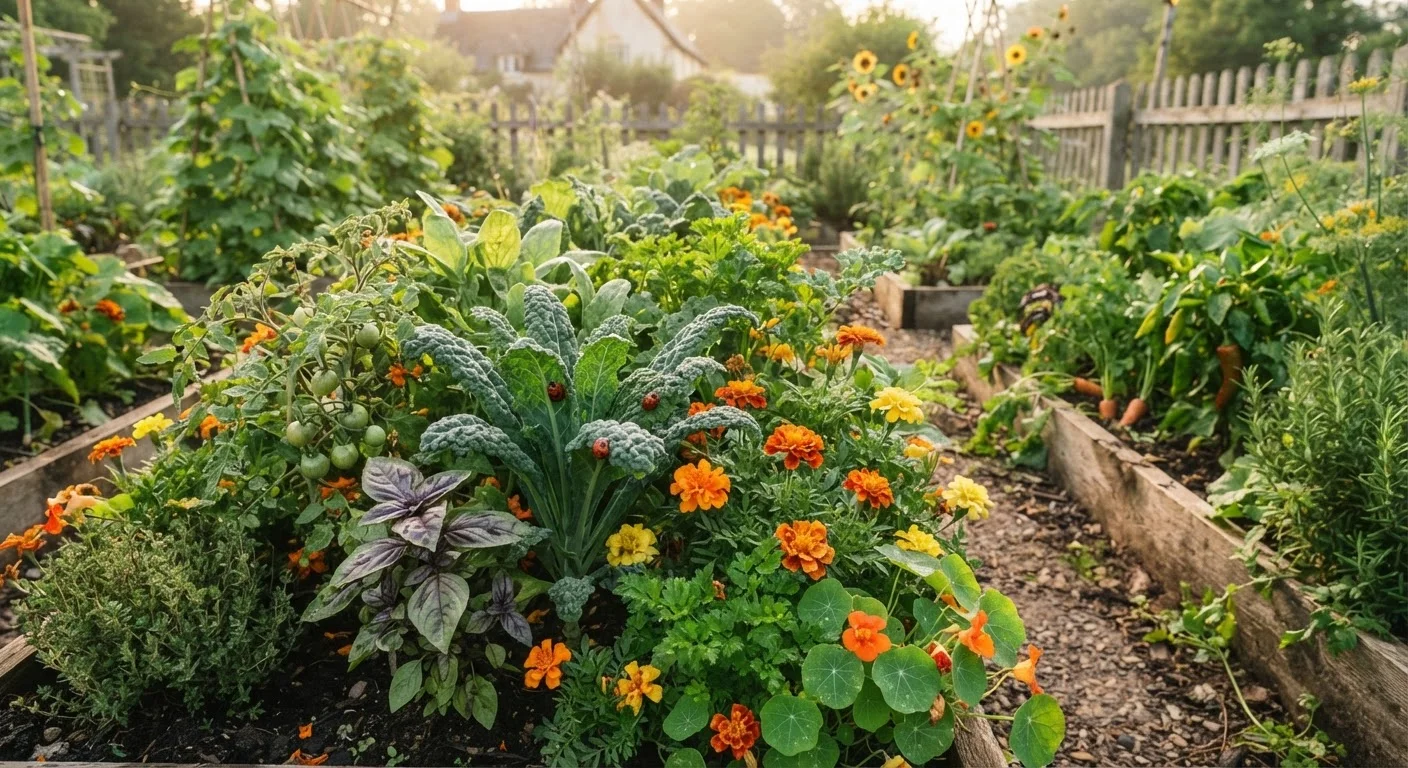
Certain plant combinations have documented evidence of pest-deterrent effects. Interplanting basil with tomatoes may reduce aphid pressure; marigolds (Tagetes species) produce root compounds that suppress soil nematodes when planted densely over a full season. Nasturtiums act as trap crops, drawing aphids away from more valued plants.
Not all companion planting claims hold up equally under scrutiny — some are passed down more by tradition than data. Our detailed guide on which companion plant pairings are evidence-backed helps you distinguish the reliable from the anecdotal so you can plan more effectively.
Dense marigold plantings suppress soil nematodes, but only when maintained for a full growing season.
Hand-Pick and Monitor Consistently
For many home gardens, manual removal remains underrated. Checking the undersides of leaves several times per week during peak season allows you to remove egg masses, caterpillars, and beetles before populations escalate. Drop them into soapy water or relocate them well away from the garden.
Regular monitoring also gives you a clear picture of whether a pest is at a level that genuinely threatens your harvest or is simply present. IPM principles recognize that some pest presence is normal and tolerable — the threshold for intervention should be proportional to actual plant damage, not the mere sight of an insect.
Most home gardens can tolerate low pest levels — intervene when damage, not just presence, is evident.
Improve Soil Health to Reduce Stress on Plants
Plants grown in well-structured, biologically active soil are measurably more resistant to pest and disease pressure. Healthy soil supports robust root systems that help plants better withstand minor damage. Regularly adding compost improves drainage, feeds beneficial soil microbes, and provides a slow, balanced nutrient supply that avoids the kind of lush, soft growth that attracts aphids and other sap-suckers.
Avoiding soil compaction — achieved partly through minimizing foot traffic on beds and reducing unnecessary tilling — preserves the pore structure that roots, earthworms, and beneficial fungi depend on. These same conditions make it harder for soil-dwelling pests to establish and reproduce.
Compost-enriched soil produces plants with stronger natural defenses against pest pressure.
Natural Doesn't Always Mean Risk-Free
Even botanical and mineral-based pest controls can harm beneficial insects, irritate skin, or affect pets if misused. Diatomaceous earth, for example, is non-toxic to humans but lethal to many insects indiscriminately — including ground beetles and pollinators — when applied to flowering plants or disturbed soil. Always read product directions carefully and apply any treatment as narrowly and precisely as the pest problem warrants.
Building Long-Term Pest Resilience
Natural pest control isn't a one-time fix — it's an ongoing practice of observation, adjustment, and ecosystem stewardship. Keep a simple garden journal noting which pests appear, when, and under what conditions. Patterns often reveal correctable root causes: overcrowded plantings, inconsistent watering, or soil that lacks organic matter.
Layering strategies — combining habitat plants for beneficial insects with physical barriers and thoughtful plant pairings — creates redundancy. If one method underperforms in a particular season, others compensate. Our article on companion planting combinations that actually work goes deeper into which plant partnerships genuinely deter pests and which are more folklore than fact.
If you have pets that spend time in the garden, it's worth noting that some natural pest control materials — including certain essential oils and diatomaceous earth — may irritate animals. Review household and garden hazards for pets before applying anything in areas your pets frequent.
The content on this site is for informational purposes only and is not a substitute for professional advice. Always consult a qualified professional for guidance specific to your situation.