

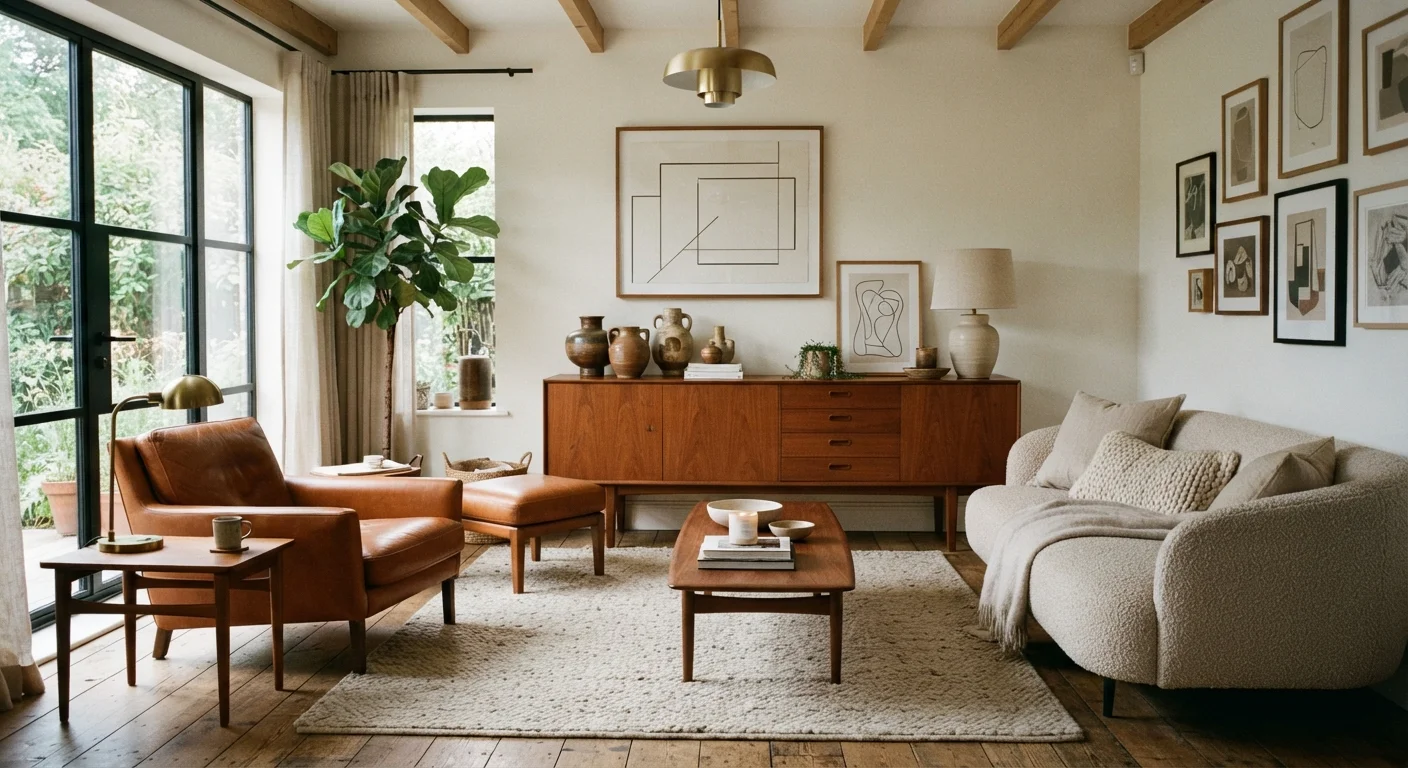
Why Mixing Eras Works
A room furnished entirely from one decade — or one catalog — often feels flat. When every piece was designed to match, nothing surprises the eye. Mixing vintage and contemporary elements solves this by introducing contrast: the worn patina of an old piece next to a clean modern surface, or the ornate profile of a vintage mirror above a minimal console.
The key distinction is between mixing intentionally and simply accumulating. Intentional mixing follows a few guiding principles — color, material, and scale — that keep the room feeling cohesive rather than cluttered. Before adding any piece, it helps to understand the core design principles that make a room feel considered and deliberate. Once you have those anchors, the mixing practically organizes itself.
Best Practices for Blending Vintage and Contemporary
These practices work whether you're starting from scratch or incorporating inherited pieces into an existing room.
Anchor the room with a single unifying color palette before introducing mixed pieces.
Color is the strongest visual thread in any room. When vintage and contemporary pieces share tones — even loosely — the eye reads them as part of the same composition rather than competing elements. Without this anchor, even beautiful individual pieces can feel random.
Repeat at least one material across both vintage and contemporary items.
Material repetition — wood grain, matte ceramic, woven rattan, brushed metal — creates continuity across different design periods. It signals that the mix was deliberate rather than accidental, giving the room a through-line that color alone can't always provide.
Limit standout vintage pieces to one or two per room.
Statement pieces only work as statements when they have breathing room. When every corner holds something visually demanding, nothing stands out — and the room feels busy rather than interesting. Restraint lets your best vintage finds become genuine focal points.
Balance visual weight between old and new items, not just quantity.
A heavy, ornate Victorian armchair can visually dominate a room even if it's the only vintage piece present. Balancing visual weight means pairing visually substantial pieces — regardless of era — with something of equal presence on the opposite side of the room.
Let function guide your vintage selections, not just aesthetics.
Pieces that earn their place through daily use feel at home in a contemporary setting. When vintage items serve a real purpose — a trunk used as a coffee table, an old wooden ladder repurposed as a towel rack — they integrate naturally rather than appearing as props.
Start Here: Quick Wins You Can Apply Today
You don't need to redecorate an entire room to test whether vintage-contemporary mixing works in your home. These actions deliver noticeable results with minimal effort or expense.
For a broader look at what's working and what isn't across every room, the room-by-room décor refresh checklist is a helpful diagnostic starting point.
Common Pitfalls to Avoid
Even experienced decorators run into a few recurring traps when mixing eras.
- Over-matching within each era: If your vintage items all share the same period style and your modern pieces are all from the same collection, the contrast disappears. The goal is an edited mix, not two separate matching groups in one room. See why over-coordinating works against you for more on this.
- Ignoring scale: A small vintage side table next to an oversized contemporary sectional will look accidental. Aim for pieces whose proportions feel considered together, even if their styles differ dramatically.
- Neglecting textiles as connective tissue: Fabrics — rugs, cushions, curtains — are among the most efficient tools for tying disparate pieces together. Layering textiles thoughtfully can bridge a style gap between eras without any structural changes.
- Treating vintage pieces as untouchable: A beautiful old chair that nobody sits in starts to feel like a museum exhibit. Use your vintage pieces — let them earn their place in the room.
When 'Vintage' Means Structurally Unsound
Some older furniture pieces — particularly chairs and sofas — may have weakened joints, brittle webbing, or worn upholstery that makes them unsafe for everyday use without repair. Before integrating a vintage seating piece into your home, check the frame for stability and consult an upholsterer if the structure feels compromised. A beautiful piece isn't worth using if it poses a safety risk.
Displaying Vintage Pieces Without Overcrowding
One of the most common mistakes is adding too many vintage objects until a room starts to feel like an antique shop. The solution is deliberate editing: choose pieces that earn their place either through function, beauty, or personal meaning — ideally more than one of those.
Open shelving is a practical venue for displaying smaller vintage objects alongside books and contemporary items, allowing the mix to breathe. For a practical comparison of display approaches, open shelving versus closed cabinetry covers the style and storage trade-offs well. Similarly, a gallery wall that combines vintage prints with contemporary art is one of the most forgiving formats for mixing eras — the frame acts as a unifying element even when the content varies widely.
Use Frames as a Unifying Device
When mixing vintage prints with contemporary artwork, choose frames in a consistent finish — all black, all natural wood, or all gold — regardless of what's inside them. The consistent framing signals intention and lets the content vary freely without the display looking haphazard.
The content on this site is for informational purposes only and is not a substitute for professional advice. Always consult a qualified professional for guidance specific to your situation.