

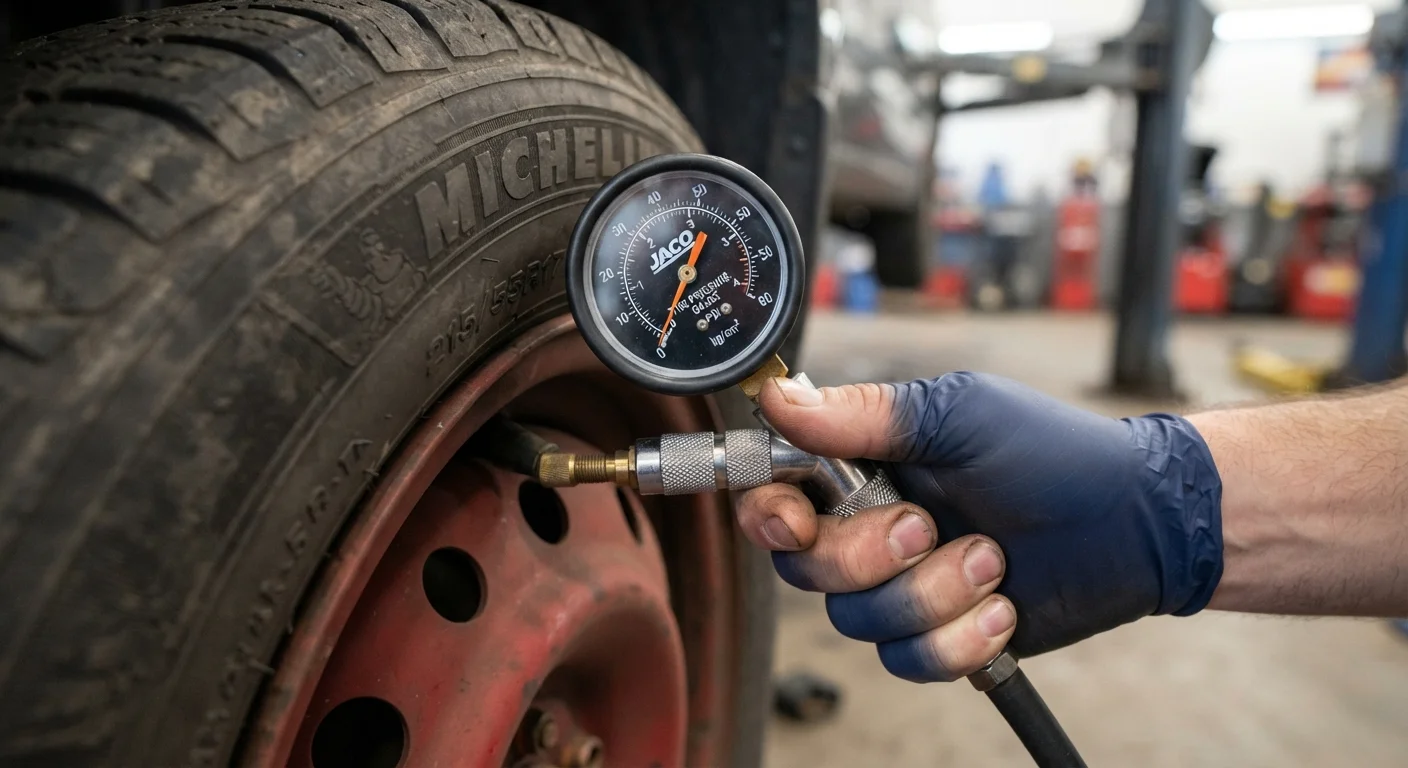
Why Tyre Pressure Is a Safety Issue, Not Just a Maintenance Task
Most drivers think of tyre pressure as a routine chore — something to deal with when a warning light appears. In reality, tyre pressure is one of the most direct influences on how a vehicle actually behaves on the road. It affects braking distances, cornering stability, and the risk of a sudden tyre failure.
The tyre is the only part of the vehicle in contact with the road surface. That contact patch — roughly the size of a hand for each tyre — transmits every braking, steering, and acceleration force your vehicle generates. When pressure is wrong in either direction, the size and shape of that patch changes, and so does how effectively forces are transferred.
Understanding tyre pressure properly connects to a wider picture of vehicle control. For instance, drivers who already account for how wet and icy conditions change vehicle handling are already thinking the right way — tyre pressure is part of the same physics.
~1–2 PSI
Monthly pressure loss in a typical tyre
Tyres lose pressure gradually through natural permeation, making monthly checks a sensible minimum according to automotive safety guidance.
25%
Pressure drop before TPMS warning activates
The U.S. NHTSA standard requires TPMS systems to alert drivers when pressure drops 25% below the placard level — a point already considered significantly unsafe.
~1–2 PSI
Pressure change per 10°F temperature shift
The U.S. Department of Energy notes that tyre pressure drops roughly 1–2 PSI for every 10-degree Fahrenheit decrease in outside temperature.
The Specific Risks of Under-Inflation
Under-inflation is the more common problem and the more dangerous one. When a tyre is soft, its sidewalls flex excessively with every rotation. That flexing generates heat — and heat is the primary cause of tyre structural failure. At highway speeds with a significantly under-inflated tyre, the risk of a sudden blowout becomes real.
Beyond blowout risk, under-inflated tyres extend stopping distances. The deformed contact patch is less effective at converting braking force into deceleration, which matters enormously in emergency situations. Handling also becomes vague and imprecise — something that is particularly hazardous on rural roads with tight bends and limited recovery space.
Finally, under-inflation raises fuel consumption. The increased rolling resistance means the engine works harder to maintain speed. Studies by the U.S. Department of Energy have consistently shown that under-inflated tyres reduce fuel economy, with each PSI drop below the recommended level contributing to measurable losses over time.
Check Pressure Before Long Trips
Before any journey of significant length, check all four tyres — including the spare if your vehicle carries a full-size one. Pressure naturally drifts over time, and a long motorway drive on a marginally soft tyre generates far more heat than typical stop-start driving. A two-minute check before departure is a proportionate precaution.
Over-Inflation: The Less Obvious Risk
Over-inflation is less common but carries its own hazards. A tyre inflated above its recommended pressure becomes rigid and reduces its contact patch size. Less rubber on the road means less grip — the vehicle becomes more prone to skidding, particularly on wet surfaces.
Over-inflated tyres are also more susceptible to damage from impact. A pothole or sharp road debris that a correctly pressured tyre would absorb may instead cause a fracture or sudden deflation in an over-inflated one. The tyre's inability to deform slightly under load means forces are transferred more directly to the wheel and suspension components.
Tread wear is another indicator. Over-inflation causes the centre of the tread band to wear faster than the shoulders, shortening the tyre's effective lifespan. This pattern of uneven wear is one reason monitoring both pressure and tread depth together gives a clearer picture of tyre health than either figure alone.
“Tyres are the most safety-critical components on any vehicle. Everything else — brakes, steering, suspension — ultimately depends on the tyre's ability to maintain contact with the road.”
— NHTSA Vehicle Safety Communications, U.S. National Highway Traffic Safety Administration
How to Check and Maintain Correct Pressure
Checking tyre pressure requires a reliable pressure gauge and a few minutes of time. The measurement must be taken when the tyres are cold — before the vehicle has been driven, or after it has sat for at least three hours. Heat from driving raises tyre pressure by several PSI and will produce an inaccurate reading.
The correct target pressure for your vehicle is not the number on the tyre sidewall. That figure is the tyre's maximum structural limit. The recommended operating pressure is on the door jamb sticker (usually inside the driver's door), inside the fuel filler flap, or in the owner's manual. Some vehicles specify different pressures for front and rear tyres, so check both.
If your vehicle is fitted with a Tyre Pressure Monitoring System (TPMS), remember that the warning light typically activates when pressure drops 25% or more below the recommended level — well into the unsafe range. Treating TPMS as a substitute for regular manual checks misses the point. Pressure can drop significantly before the light triggers. Understanding the markings on your tyres — including load index and speed rating — also helps put pressure specifications in context. See what the numbers on your tyre sidewall mean for a full breakdown.
For overall vehicle readiness, tyre pressure sits alongside checks like wheel alignment. It's worth knowing that wheel alignment and tyre balancing address different problems — but all three work together to keep the car handling predictably.
Frequently Asked Questions
Most automotive safety organizations recommend checking tyre pressure at least once a month and before any long journey. Tyres lose pressure naturally over time, and temperature swings accelerate the process. Monthly checks take only a few minutes and help catch problems before they affect safety.
Under-inflated tyres flex more than intended, generating heat that can weaken the tyre structure and increase blowout risk. They also increase rolling resistance, raising fuel consumption, and reduce the precision of steering and braking responses. At highway speeds, the risks escalate quickly.
Yes. Over-inflation reduces the tyre's contact patch, which reduces grip — particularly in wet conditions. The tyre becomes stiffer and more vulnerable to damage from potholes or road debris. It also causes the centre of the tread to wear faster than the edges.
The manufacturer-recommended pressure is printed on a sticker inside the driver's door jamb, inside the fuel cap, or in the owner's manual. Do not use the maximum pressure stamped on the tyre sidewall — that is the tyre's structural limit, not the recommended operating pressure.
Yes, significantly. For every 10°F drop in ambient temperature, tyre pressure falls by roughly 1–2 PSI. This means a tyre correctly inflated in summer may be noticeably low by winter. Checking pressure when seasons change is especially important.
Not necessarily — some vehicles specify different pressures for front and rear tyres, particularly those with larger rear engines or varied load requirements. Always consult your vehicle's door jamb sticker or owner's manual rather than assuming all four should match.
The content on this site is for informational purposes only and is not a substitute for professional advice. Always consult a qualified professional for guidance specific to your situation.