

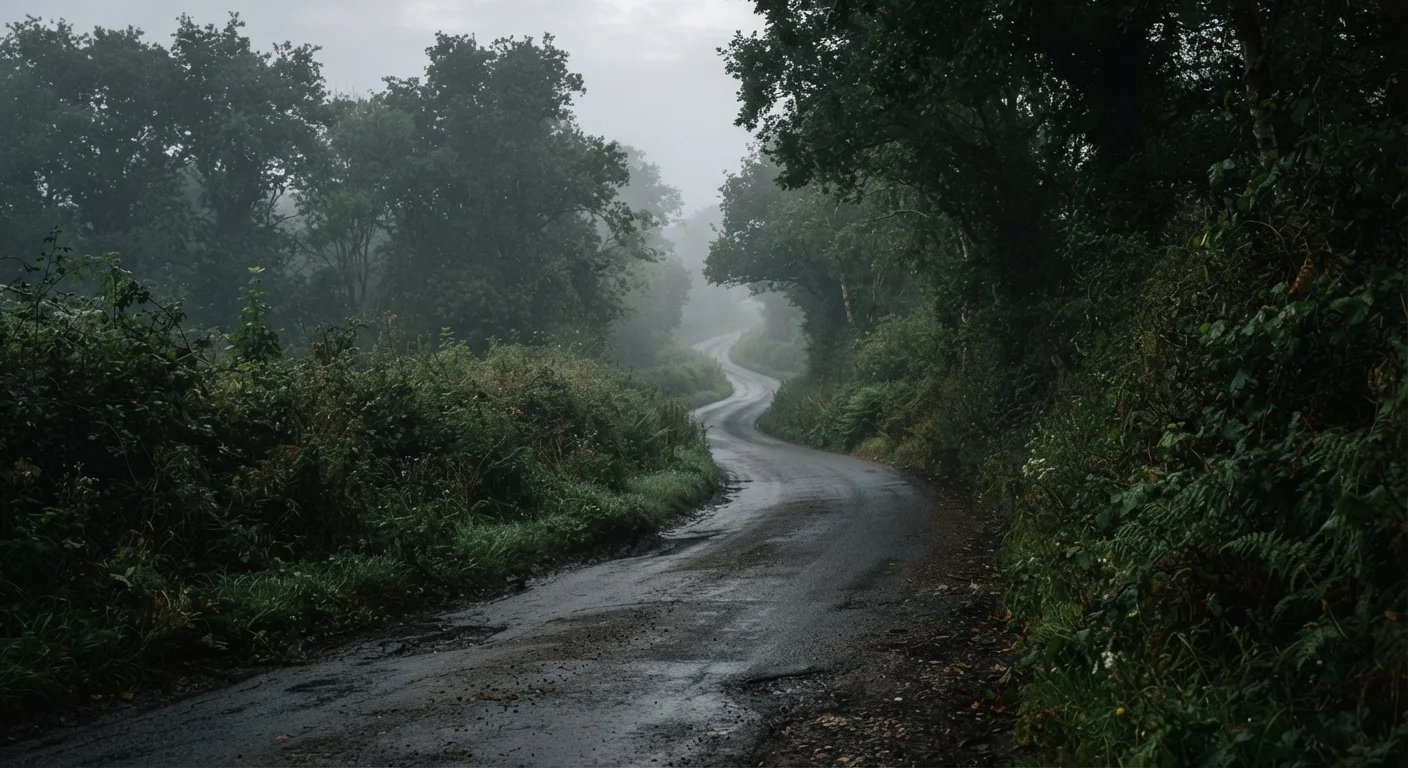
Why Rural Roads Are More Dangerous Than They Look
At first glance, a quiet country road can feel like one of the easier places to drive — light traffic, open scenery, no complex junctions. That perception is misleading and, in some cases, deadly. According to the National Highway Traffic Safety Administration (NHTSA), rural roads consistently account for roughly half of all US traffic fatalities, despite carrying far less than half of total vehicle miles traveled.
Several structural factors explain this gap. Rural roads frequently lack the engineered safety margins built into urban infrastructure: no median barriers, no streetlights, minimal shoulder space, and fewer guardrails. Crash severity is higher because speeds are higher, emergency response times are longer, and trauma centers are often many miles away. The combination means that a collision that might be survivable near a city can be fatal in a remote area.
~50%
Of US traffic fatalities occur on rural roads
NHTSA data consistently shows rural roads account for roughly half of all US traffic deaths despite lower traffic volumes.
270 ft
Minimum stopping distance at 55 mph
Under standard conditions, a passenger vehicle traveling at 55 mph requires approximately 270 feet to come to a complete stop.
+50%
Increase in stopping distance on wet roads
Wet or leaf-covered road surfaces can increase stopping distances by 50% or more compared to dry conditions.
Understanding this risk profile is the foundation of safe rural driving. It's not about fear — it's about calibrating your approach to match the actual hazard level of the environment. As you'll see in our companion piece on collision data patterns, consistent risk factors appear in the statistics again and again, and rural roads feature prominently.
Speed, Sight Lines, and Stopping Distance
Speed limits on rural roads are posted as legal maximums, not recommended targets. On a straight, dry road in good conditions, 55 mph may be perfectly reasonable. Around a blind bend with a hedge-lined ditch on both sides, the same speed could leave you with zero margin if something appears ahead.
Physics is unforgiving here. At 55 mph, a vehicle travels approximately 80 feet per second. A standard passenger car in good condition requires roughly 270 feet to stop from that speed — a distance that far exceeds what most rural bends allow you to see ahead. The practical rule, sometimes called driving within your sight line, means you should always be able to stop within the distance you can see to be clear.
Treat the posted speed limit as an absolute ceiling, not a target. On rural roads, the appropriate speed is whatever lets you stop within your visible sight line — which is often well below the limit.
Most serious rural road collisions involve a driver traveling at a speed that was legal but inappropriate for the road geometry and conditions at that moment.
Before entering a blind bend, position slightly wider within your lane if it is safe to do so — this gives you fractionally more sight line into the curve without crossing the center line.
Small adjustments in lateral position can meaningfully extend how far ahead you can see around a curve, giving critical extra reaction time.
Wet or leaf-covered rural roads compound the problem significantly. Stopping distances can increase by 50% or more on slippery surfaces. Our guide on driving in rain, fog, and snow explains how conditions change the physics of vehicle control in detail.
Posted Limits Are Not Guaranteed Safe Speeds
Speed limits on rural roads reflect the legal maximum under ideal conditions, not a blanket assurance that the road is safe at that speed in all circumstances. On wet roads, at night, or approaching a blind junction, the appropriate speed may be significantly lower. Never treat the speed limit as a target to maintain regardless of conditions.
Farm Traffic, Wildlife, and Unexpected Hazards
Urban driving hazards are largely predictable — pedestrians, cyclists, buses. Rural hazards are often sudden and large. Tractors and combine harvesters may occupy most or all of a single-lane road and cannot pull over quickly. Livestock occasionally stray onto the road following gate failures or herding operations. Deer, elk, and other wildlife are most active at dusk and dawn, precisely when visibility is reduced.
These hazards share a common feature: they offer very little warning. A tractor around a bend, a cow in the roadway, or a deer mid-leap may give you less than a second to react. Travelling at a speed that accounts for these possibilities — rather than assuming the road ahead is clear — is the core discipline of rural driving.
Narrow single-track roads with passing places require an additional skill set. Knowing who has priority, where passing places are, and how to reverse efficiently if needed prevents situations from escalating. Our reference guide on priority rules and give-ways covers right-of-way logic that applies to unmarked rural junctions as well.
Driving at Night on Unlit Rural Roads
No streetlights means your headlights are your only source of forward illumination — and standard low-beam headlights typically illuminate only 160–200 feet ahead. At 55 mph, that coverage is gone in under three seconds. High beams extend useful range considerably, but must be dipped promptly for oncoming traffic to avoid blinding other drivers.
Your eyes also need time to adjust when switching between lit and dark stretches, and oncoming headlights can temporarily impair your night vision. Fatigue is a further multiplier: late-night rural driving, often on familiar roads that encourage complacency, is a well-documented risk scenario. Our dedicated guide on night driving demands covers how reaction times and visual acuity change after dark.
If you regularly drive rural roads at night, ensure your headlights are correctly aligned and clean — a common but overlooked maintenance point. Misaligned or dirty lenses can reduce effective illumination by a significant margin.
Check Your Headlights Before Rural Night Drives
Inspect headlight lenses for cloudiness or dirt before driving rural roads at night. Yellowed or dirty lenses can reduce light output dramatically. Most gas stations and auto parts retailers stock lens cleaning kits. Also verify your headlights are correctly aimed — misalignment is a common and easily overlooked issue on older vehicles.
Practical Habits That Reduce Rural Road Risk
Safe rural driving isn't a single technique — it's a set of consistent habits that collectively reduce exposure to the environment's specific risks.
- Speed to the sight line: Adjust your speed so you can always stop within the distance you can see to be clear ahead.
- Position defensively: On narrow roads, keep left and give as much lateral space as possible to oncoming vehicles and cyclists.
- Anticipate junctions and gateways: Farm gates, concealed driveways, and unsigned intersections can produce emerging vehicles with no warning.
- Watch verge movement: Animals and cyclists near the road edge often telegraph their intentions — scan the verges, not just the road surface.
- Don't assume passing places are free: On single-track roads, slow down well before a passing place rather than arriving at speed.
- Manage fatigue proactively: Long rural drives on monotonous roads are strongly associated with drowsy driving. See our guide on tiredness at the wheel for warning signs and countermeasures.
Rural roads are not inherently hostile — they simply demand a more active and flexible style of driving than controlled urban environments. Drivers who understand the hazard landscape and adjust accordingly navigate them confidently and safely. The contrast with high-speed motorway driving is instructive too: our guide on motorway driving shows how different environments require different mental frameworks entirely.
The content on this site is for informational purposes only and is not a substitute for professional advice. Always consult a qualified professional for guidance specific to your situation.