

Why Fluid Levels Matter More Than Most Drivers Realize
Most dashboard warning lights are reactive — they tell you something has already gone wrong. Fluid checks are one of the few genuinely preventive habits a driver can build, catching problems before they become expensive repairs or roadside failures. A five-minute look under the bonnet every few weeks is one of the highest-return maintenance habits you can develop.
This reference covers the six main fluid reservoirs found in most passenger vehicles: what each fluid does, where to find its reservoir, how to read its level markings, and what a low or contaminated reading signals. For a deeper look at how individual fluids degrade over time, see The Language of Car Fluids.
| Check engine oil | Every 1,000 miles or monthly — whichever comes first (General industry guidance; confirm with your owner's manual) |
| Coolant cap rule | Only open when engine is fully cold (Standard safety practice across all manufacturers) |
| Brake fluid moisture absorption | Fluid absorbs moisture over time, lowering its boiling point (Automotive engineering principle) |
| Washer fluid in winter | Use a concentrate rated for below-freezing temperatures (Prevents reservoir and pipe freeze damage) |
| Sealed transmissions | Many post-2010 vehicles have no user-accessible transmission dipstick (Varies by manufacturer and model) |
| Fluid check frequency | Most fluids benefit from a visual check at every fuel fill-up (AAA general maintenance recommendation) |
The Six Reservoirs — What They Do and Where They Sit
Engine Oil
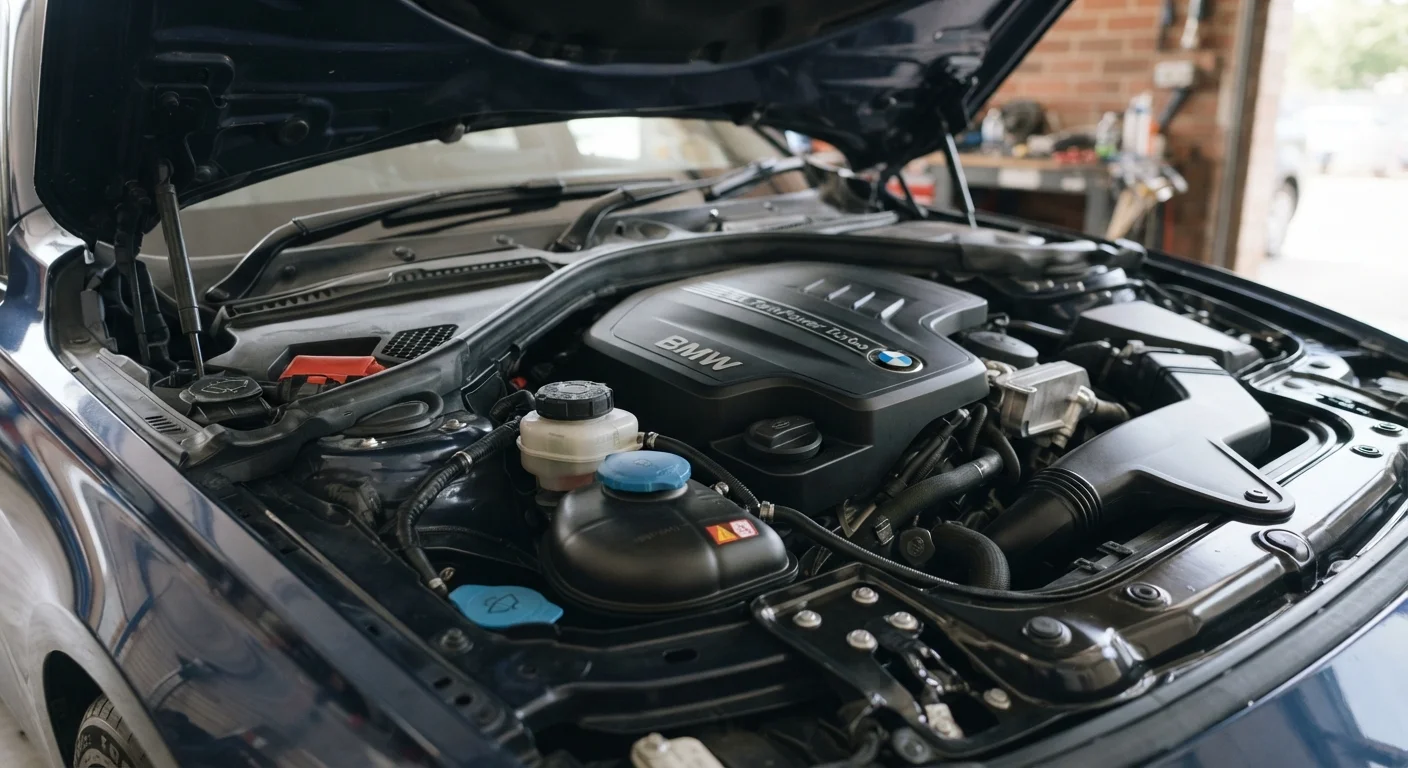
Engine oil lubricates moving metal parts, reduces friction-generated heat, and carries microscopic debris to the filter. Its reservoir is checked via a dipstick — usually a brightly colored loop or handle near the front of the engine. Pull it out, wipe it clean, reinsert fully, then withdraw again to read the level against the MIN and MAX marks. Oil should sit between those marks and appear amber-brown. Black, gritty oil or a milky appearance warrants prompt professional attention.
Engine Coolant (Antifreeze)
Coolant circulates through the engine and radiator to regulate operating temperature, preventing both overheating in summer and freeze-damage in winter. Its semi-translucent plastic reservoir is typically marked with a cold-fill MIN and MAX line. Never open the coolant cap on a warm engine — pressurized hot coolant can cause serious burns. Check coolant level only when the engine is cold. Your cooling system does considerably more than most drivers expect, so keeping it topped correctly matters year-round.
Brake Fluid
Brake fluid transmits the hydraulic force from your brake pedal to the brake calipers at each wheel. Its small, often translucent reservoir sits on top of the brake master cylinder, usually at the rear of the engine bay on the driver's side. The fluid should sit between MIN and MAX markings. A gradual drop in level can indicate normal brake pad wear; a sudden drop suggests a possible leak and requires immediate professional inspection. Fluid that appears very dark or cloudy should be flagged at your next service.
Power Steering Fluid
Vehicles with hydraulic power steering use a dedicated fluid to assist steering effort. The reservoir — a small capped bottle, often labeled with a steering wheel icon — typically has a dipstick attached to its cap or level markings on the side. Many newer vehicles use electric power steering and have no such reservoir. If your car has one and the fluid is consistently low, have the system inspected for leaks.
Transmission Fluid
Automatic transmissions rely on fluid for lubrication, cooling, and hydraulic gear engagement. Many modern vehicles have a sealed transmission with no user-accessible dipstick; level checks and fluid changes on these systems should be carried out by a qualified mechanic. On vehicles with a traditional transmission dipstick, the check procedure is similar to engine oil but is typically done with the engine warm and running — consult your owner's manual for the correct method.
Windscreen Washer Fluid
The washer reservoir — large, often blue-capped, and easy to locate — holds the fluid that keeps your screen clear in dirty or wintry conditions. Use a purpose-made washer concentrate rather than plain water, which can freeze in cold temperatures and may promote bacterial growth. A full reservoir is especially important when driving in poor-visibility weather, when road spray can dirty a screen within minutes.
Dipstick
A long metal rod inserted into a fluid reservoir — such as the engine oil sump — that you withdraw to check the fluid level against marked MIN and MAX indicators.
Master cylinder
The brake system component that converts pedal pressure into hydraulic force. The brake fluid reservoir sits directly on top of it.
Coolant / Antifreeze
A water-based fluid mixed with glycol compounds that circulates through the engine to regulate temperature. It prevents freezing in winter and boiling in summer.
Hydraulic power steering
A steering assistance system that uses pressurized fluid to reduce the effort needed to turn the wheel. Requires its own dedicated fluid reservoir.
Sealed transmission
A transmission unit designed without a user-serviceable dipstick. Fluid level and condition checks require specialist workshop equipment.
Washer concentrate
A purpose-made additive mixed with water to create windscreen washer fluid. Contains detergents and antifreeze agents not present in plain water.
Reading the Warning Signs — When a Low Level Means More
A single low reading doesn't always indicate a problem — topping up and monitoring is a reasonable first step for most fluids. But certain patterns deserve professional attention:
- Repeated low levels after topping up suggest a leak or internal consumption issue.
- Fluid on the ground beneath your parked car is never normal and should be diagnosed promptly.
- Unusual color or texture — milky oil, very dark brake fluid, rusty-tinged coolant — can indicate contamination or system breakdown.
- Dashboard warning lights combined with a low level should always be treated as urgent.
If a garage service has flagged a fluid-related advisory, understanding what that report is telling you helps you prioritize correctly. For guidance on which fluid tasks are appropriate for home checks versus which require a workshop, see DIY Car Maintenance vs Mechanic.
Always Consult Your Owner's Manual First
Fluid specifications, check procedures, and service intervals vary significantly between vehicle makes and models. Your owner's manual is the authoritative source for your specific car — it will specify correct fluid grades, dipstick check conditions (warm vs. cold engine), and manufacturer-recommended service intervals. When in doubt, a qualified mechanic is the right call.
The content on this site is for informational purposes only and is not a substitute for professional advice. Always consult a qualified professional for guidance specific to your situation.