

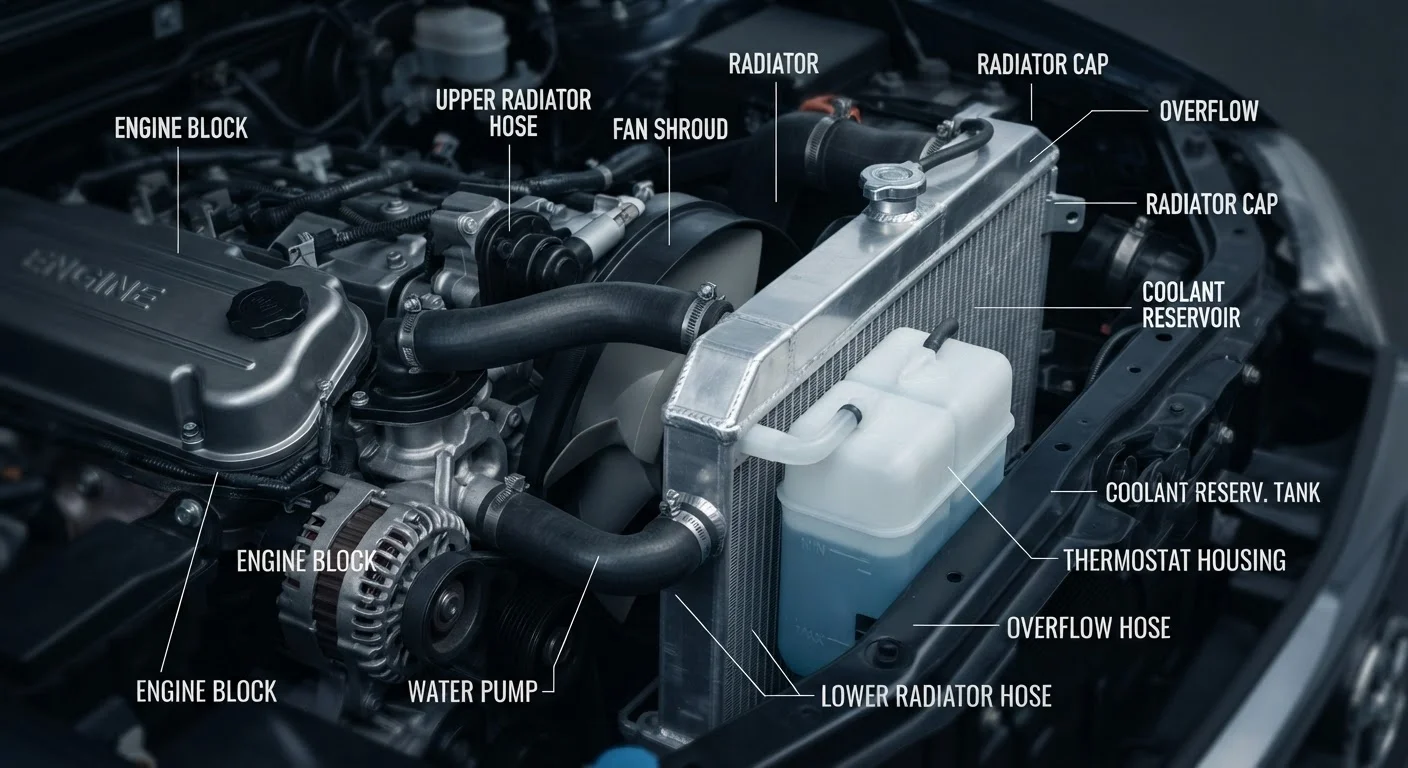
What the Cooling System Actually Does
A gasoline engine converts only about 30–40% of the energy in fuel into motion. The rest becomes heat — enormous amounts of it, generated continuously inside the combustion chamber. Left unmanaged, that heat would destroy metal components in minutes. The cooling system's primary job is to remove that surplus heat before it can cause damage.
But temperature regulation goes both ways. The system also prevents the engine from running too cold. An engine that hasn't reached its optimal operating temperature runs less efficiently, burns more fuel, and produces more wear. The thermostat — a small, heat-sensitive valve — controls when coolant begins circulating through the radiator, holding heat inside until the engine reaches its ideal range, typically between 195°F and 220°F (90°C–104°C).
Beyond engine protection, the cooling system supplies heat to the passenger cabin through the heater core — essentially a small radiator mounted behind the dashboard. Hot coolant flows through it, and a blower fan pushes cabin air across its surface. If coolant levels fall or flow is disrupted, the heater is often the first thing drivers notice losing performance.
30–40%
Efficiency of a gasoline engine converting fuel to motion
The remaining energy is released as heat, which the cooling system must continuously manage to prevent engine damage.
195–220°F
Typical engine optimal operating temperature range
Most modern engines are designed to perform most efficiently and cleanly within this temperature window, maintained by the thermostat.
Top 3
Causes of major engine failure
Overheating consistently ranks among the leading causes of catastrophic engine damage, according to automotive repair industry data.
The Main Components and What Each One Does
Understanding what each part contributes makes it easier to recognize when something is going wrong.
- Coolant (antifreeze): A mixture of ethylene glycol and water that transfers heat away from the engine. It also contains corrosion inhibitors that protect metal surfaces throughout the circuit. Coolant degrades over time, becoming acidic and losing its protective properties — which is why periodic flushing matters. See our plain-English guide to car fluids for more on how coolant compares to other essential fluids.
- Water pump: A belt- or chain-driven pump that keeps coolant circulating continuously through the engine and radiator. If the water pump fails, circulation stops — and overheating follows rapidly.
- Thermostat: A valve that regulates coolant flow based on temperature. When cold, it stays closed, allowing the engine to warm up quickly. Once operating temperature is reached, it opens to let coolant flow to the radiator.
- Radiator: A large heat exchanger positioned at the front of the vehicle. Hot coolant passes through its thin tubes, and airflow (from driving or from a cooling fan) draws the heat away.
- Pressure cap: Seals the cooling system and raises the coolant's boiling point by maintaining pressurization — typically around 15–16 psi. A failing cap can cause coolant to boil prematurely.
- Hoses: Carry coolant between components. Rubber hoses degrade over time and are a common failure point.
Check the Reservoir, Not the Radiator Cap
On most modern vehicles, coolant level is checked at the translucent plastic reservoir tank, not by opening the radiator cap directly. The reservoir has MIN and MAX markings visible from the outside. Never open the radiator cap on a warm or hot engine — the pressurized system can release scalding steam. Let the engine cool completely first.
Warning Signs Drivers Shouldn't Ignore
Cooling system problems rarely appear without warning. The challenge is knowing what those warnings mean.
A rising temperature gauge is the most urgent signal. If the needle moves toward the red zone, pull over safely and shut off the engine — continued driving risks severe, often irreversible engine damage. Related signs include steam or a sweet smell coming from the engine bay (coolant has a distinctive sugary odor when it burns off), white smoke from the exhaust, or coolant pooling beneath the vehicle.
More subtle indicators include a heater that suddenly blows cold air, a low coolant warning light, or an engine that takes unusually long to warm up in mild weather (which can point to a stuck-open thermostat). These symptoms warrant inspection by a qualified mechanic. Refer to our guide to fluid levels under the hood for help identifying your coolant reservoir and reading its level correctly.
Coolant Color Isn't a Reliable Health Indicator
Many drivers assume green coolant is fine and only worry when it turns brown. In practice, coolant condition depends on its chemical properties — not its color. Some manufacturers use orange, pink, or blue coolant, and these can look visually normal while their corrosion inhibitors are fully depleted. Testing coolant with an inexpensive test strip, or following the flush schedule in your owner's manual, is far more reliable than color alone.
Keeping the System Healthy
Routine maintenance for the cooling system is straightforward and inexpensive compared to the repairs neglect can cause. Follow your vehicle manufacturer's recommended coolant flush intervals — found in the owner's manual — and have the system pressure-tested periodically to check for slow leaks.
Hoses and the drive belt that powers the water pump should be inspected during routine service. A belt that also drives the water pump (common in interference engines) deserves particular attention: if it fails, the water pump stops, and the engine can overheat almost immediately. For context on other overlooked components with serious consequences, our article on air filters, spark plugs, and belts explores similar themes.
One common maintenance myth worth addressing: using plain water as a long-term coolant substitute. Water alone boils and freezes at temperatures that make it unsuitable for year-round use, and it promotes corrosion. Always use the coolant type specified by the manufacturer — mixing incompatible types can cause chemical reactions that accelerate deposit buildup. If you're sorting through what's fact and fiction about car upkeep, our car maintenance myths guide covers several widely misunderstood topics.
“The cooling system is one of the most maintenance-accessible systems on a vehicle, yet overheating remains one of the most preventable causes of serious engine damage we see in the shop.”
— ASE-Certified Master Technician, Automotive service professional with over 20 years of engine repair experience
Frequently Asked Questions
Most manufacturers recommend a coolant flush every 30,000 to 50,000 miles, but some long-life coolants extend that interval significantly. Always check your owner's manual for the interval specific to your vehicle, as following it protects the entire cooling circuit from corrosion and deposits.
Plain water can be used as a temporary measure if the reservoir is dangerously low and you have no coolant on hand. However, water alone provides no freeze protection and can promote corrosion, so you should have the system properly refilled with the correct coolant mixture as soon as possible.
A sudden spike in the temperature gauge means the engine is overheating — pull over safely and turn off the engine immediately. Continuing to drive risks warped cylinder heads, blown head gaskets, or worse. Do not open the radiator cap while the engine is hot; let it cool completely before inspecting.
Yes. Even a slow coolant leak will eventually drop the level low enough to cause overheating. Hoses should be inspected for cracks, soft spots, and swelling regularly. A qualified mechanic should assess and replace any hose showing signs of wear.
Cold air from a warm engine is often a sign of low coolant level, a stuck-open thermostat, or an airlock in the cooling circuit. The cabin heater uses hot coolant as its heat source, so when coolant flow is disrupted, heating performance drops noticeably.
The content on this site is for informational purposes only and is not a substitute for professional advice. Always consult a qualified professional for guidance specific to your situation.