

Our Verdict
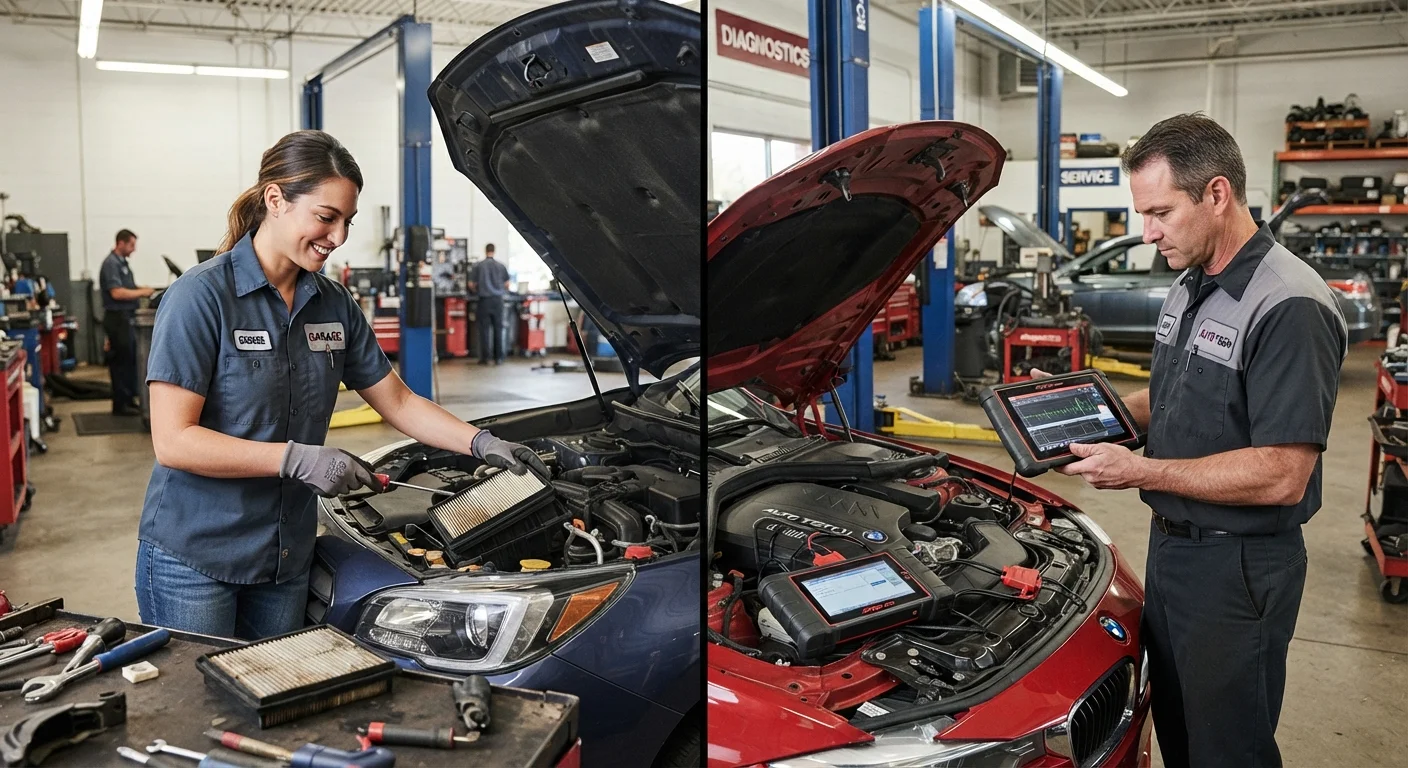
DIY maintenance makes practical sense for routine, low-risk tasks that require minimal tools and carry clear instructions. For anything involving safety-critical systems, specialized equipment, or significant mechanical complexity, a qualified mechanic is the right call. The goal is empowered, informed ownership — not heroics.
| Best for | Recommended |
|---|---|
| Drivers comfortable with basic tools and routine upkeep | DIY Maintenance |
| Safety-critical systems and complex diagnostics | Professional Mechanic |
| High-mileage vehicles with compounding issues | Professional Mechanic |
| New owners building maintenance confidence | Hybrid Approach |
The Case for Doing It Yourself
A handful of routine maintenance tasks are genuinely within reach for most drivers — no specialized training required. These jobs share a few traits: they involve accessible components, require only basic tools, and carry low risk if done carefully using your owner's manual or a reputable vehicle-specific resource.
Tasks that fall comfortably into DIY territory include:
- Engine air filter replacement — typically a tool-free job taking under 15 minutes.
- Cabin air filter replacement — usually located behind the glove box; accessible and inexpensive.
- Windshield wiper blade replacement — clearly documented, low stakes, and quick.
- Fluid top-offs — coolant, windshield washer fluid, and power steering fluid reservoirs are designed for owner access. Note that transmission fluid and brake fluid checks require more caution.
- Battery terminal cleaning — removing corrosion from terminals with a wire brush and baking soda solution is straightforward with basic safety precautions (gloves, eye protection, engine off).
- Tire pressure checks and inflation — a tire gauge and an air compressor or gas station pump are all you need.
For new owners building confidence, our guide on what car maintenance actually involves is a solid starting point. Pairing that with a seasonal maintenance calendar helps ensure nothing falls through the cracks year-round.
Start With Your Owner's Manual
Before attempting any maintenance task, check your vehicle's owner's manual for model-specific intervals, fluid specifications, and any warnings about DIY service. Manufacturer guidance takes priority over general advice. If your manual flags a task as requiring dealer or specialist service, take that seriously.
Where DIY Ends: Leave These to a Professional
Some vehicle systems are too safety-critical, too technically complex, or too dependent on specialized equipment to be responsibly handled without professional training. Attempting these incorrectly doesn't just risk damaging your vehicle — it can put you and others in danger.
Brake system work is the clearest example. While experienced DIYers sometimes replace brake pads on familiar vehicles, any work involving brake lines, calipers, or the master cylinder involves hydraulic pressure systems where an error can cause brake failure. If you notice brake fade, grinding, or a soft pedal, get a professional assessment promptly.
Suspension and steering components — ball joints, tie rods, control arms — require precise torque specifications and alignment checks that demand a lift and calibrated tools. An improperly torqued ball joint can separate at speed.
Airbag and SRS (Supplemental Restraint System) components should never be handled DIY. Airbag systems retain electrical charge even with the battery disconnected and can deploy unexpectedly.
Transmission service beyond a basic fluid drain-and-fill, and anything involving internal transmission components, requires professional expertise.
Electrical diagnostics — modern vehicles have complex, interconnected ECUs (engine control units). Chasing an intermittent fault without proper scan tools and wiring diagrams can lead to hours of wasted effort and potential damage.
Don't Let YouTube Replace Professional Judgment
Video tutorials can be a useful reference for simple tasks, but they vary widely in accuracy and may not reflect your specific vehicle's design. For any repair involving safety systems, treat instructional videos as general background only — not a substitute for professional assessment. When in doubt, consult a qualified mechanic before starting.
For context on how vehicle systems connect, the Understanding Your Car hub offers plain-language breakdowns of major components.
Comparing DIY vs. Professional: What Actually Changes
The right choice isn't just about skill — it's about risk, cost over time, and what resources you have available. The table below lays out how these two approaches compare across the factors that matter most to everyday drivers.
| DIY Maintenance | Professional Mechanic | |
|---|---|---|
| Upfront cost | Lower (parts only) | Higher (labor + parts) |
| Safety risk (if done wrong) | Low for simple tasks; high for complex ones | Minimized with qualified technician |
| Tools required | Basic hand tools for most tasks | Specialized equipment available |
| Time investment | Variable; learning curve applies | Generally faster with experience |
| Warranty impact | Possible risk if done improperly | None when using certified shop |
| Diagnostic capability | Limited without scan tools | Full access to diagnostic systems |
| Best suited for | Routine, low-risk tasks | Safety systems, complex repairs |
It's worth noting that DIY and professional service aren't mutually exclusive. Many experienced owners handle simple upkeep themselves while relying on trusted shops for anything safety-related. Our article on keeping a high-mileage car running well explores how this hybrid approach applies to older vehicles specifically.
A Practical Framework for Deciding
When you're staring at a maintenance task and wondering which side of the line it falls on, run through these questions:
- Is this system safety-critical? Brakes, steering, tires, lighting, and restraint systems fall into this category. Err toward professional service.
- Do I have the right tools? Many jobs that seem simple require torque wrenches, specialty sockets, or scan tools. Improvising on these can cause damage.
- Does my vehicle have a warranty at stake? Certain modifications or improper repairs can affect warranty coverage. Review your documentation or consult the dealer before proceeding.
- Can I find reliable, vehicle-specific instructions? Generic tutorials don't always account for model-year variations. Your owner's manual is the first source; reputable repair databases are a secondary option.
- What's the cost of getting it wrong? If a mistake means a $15 part, the risk calculus is different than if it means a $2,000 repair or a safety incident.
It's also worth separating fact from habit. Some tasks drivers outsource out of tradition could easily be done at home, while others assumed to be simple carry real risk. Our article on car maintenance myths that waste time and money clears up several common misconceptions that affect these decisions.
~35%
DIY repair rate among US car owners
AAA surveys have consistently found a significant share of American drivers attempt at least some of their own vehicle maintenance.
$100–$150/hr
Typical shop labor rate
Labor rates vary widely by region and shop type, making DIY cost savings most significant for labor-heavy but skill-light tasks.
The content on this site is for informational purposes only and is not a substitute for professional advice. Always consult a qualified professional for guidance specific to your situation.