

Why High-Mileage Cars Need a Different Approach
A vehicle that has crossed 100,000 miles isn't worn out — but it does operate under different conditions than a newer car. Seals and gaskets have experienced years of heat cycling and are more prone to minor seepage. Metal components have accumulated microscopic wear. Rubber hoses and belts have stiffened or developed micro-cracks that aren't always visible to the naked eye.
The good news is that modern engines, when properly maintained, are engineered to last well beyond 200,000 miles. The key is shifting your maintenance strategy from reactive to genuinely proactive. That means tightening service intervals, paying closer attention to fluid condition, and treating early warning signs as action items rather than things to monitor.
For a broader framework of routine upkeep, the seasonal car maintenance calendar is a useful complement to the mileage-specific priorities covered here.
Switch to a high-mileage engine oil formulation and shorten your oil change interval.
High-mileage oils contain seal conditioners and additional detergents designed for engines with more wear. Shorter intervals — often 5,000 miles rather than the maximum listed — reduce sludge buildup and keep lubrication effective between changes.
Inspect and replace cooling system components — hoses, clamps, and the thermostat — on a scheduled basis.
Overheating is one of the most destructive events an engine can experience, and it's disproportionately caused by aging cooling system parts. Rubber hoses become brittle and clamps corrode; a failure at highway speed can cause severe engine damage within minutes.
Have the timing belt or timing chain inspected and replaced according to the manufacturer's schedule — not after it fails.
A broken timing belt on an interference engine causes catastrophic internal damage that often exceeds the vehicle's value. Most manufacturers specify replacement between 60,000 and 105,000 miles, and many high-mileage vehicles are already past or approaching that window.
Check and top off all fluids — brake, power steering, coolant, and transmission — at every fuel stop or at least monthly.
High-mileage vehicles are more likely to experience fluid seepage from aging seals. Running low on any critical fluid accelerates wear significantly; catching a slow leak early gives you time to address the cause rather than deal with a component failure.
Drive smoothly — avoid hard acceleration, abrupt braking, and high-speed cornering.
Mechanical stress from aggressive driving accumulates faster on worn components. Smooth inputs reduce strain on the drivetrain, suspension, and brakes — all of which are operating closer to their wear limits in a high-mileage vehicle.
Smart Practices for Long-Term Reliability
Implementing the right habits consistently is what separates vehicles that reach 200,000 miles in good shape from those that limp through their final years. The practices below address the systems most vulnerable to high-mileage wear.
Understanding which tasks you can handle yourself — and which genuinely require a professional — is equally important. The DIY vs. mechanic guide walks through that distinction clearly.
Reading the Warning Signs Early
High-mileage vehicles give more frequent signals that something needs attention. Learning to interpret those signals accurately — rather than ignoring or over-reacting to them — is a skill worth developing.
“The vehicles that go the distance aren't necessarily the ones with the best engineering — they're the ones whose owners paid attention and acted on what they noticed.”
— Mike Allen, Senior automotive editor and longtime contributor to Popular Mechanics
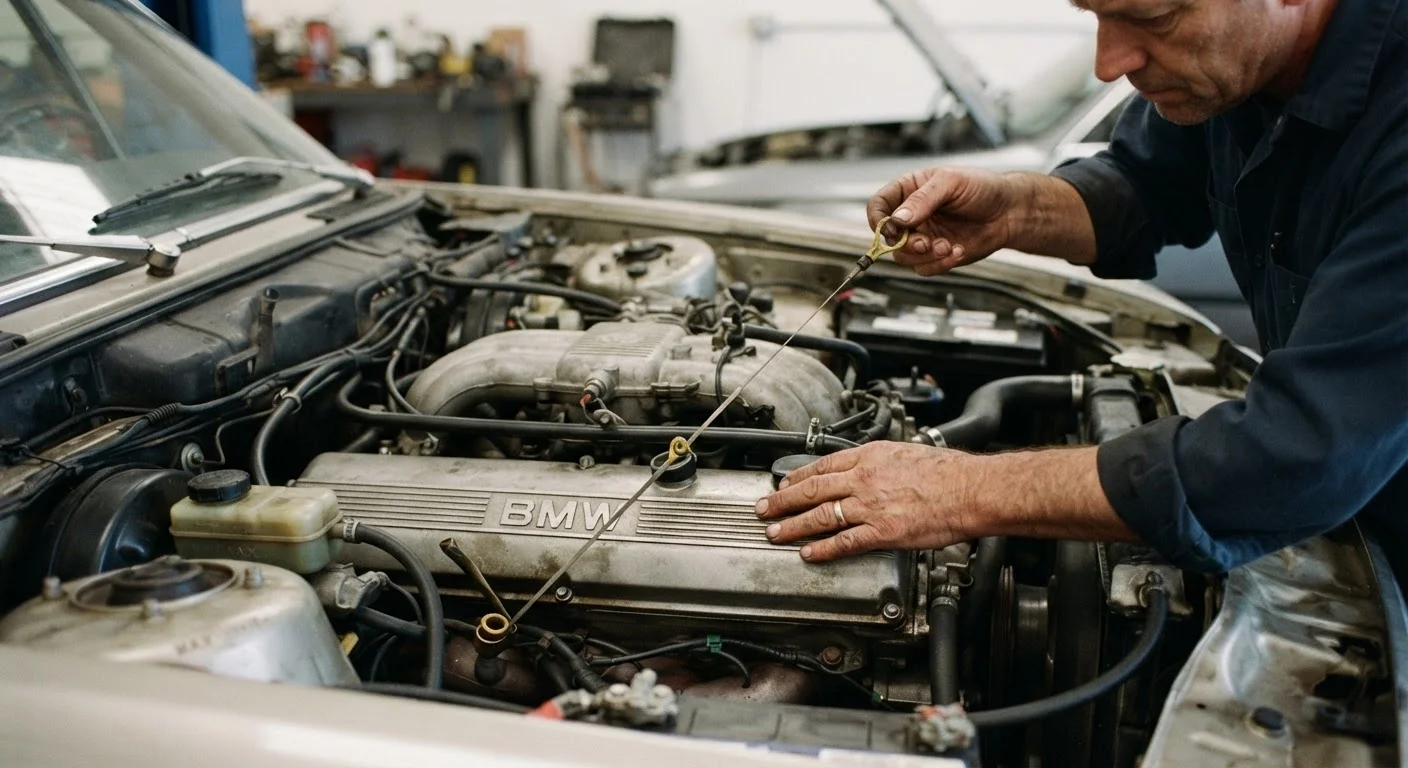
Oil consumption is one of the most common issues past 100,000 miles. Checking the dipstick between oil changes (every 1,000–2,000 miles is reasonable) tells you whether consumption is stable or accelerating. A gradual increase often indicates worn piston rings or valve seals — conditions a mechanic can evaluate and, in many cases, manage without a full engine rebuild.
Transmission behavior changes subtly before they become dramatic. Slight hesitation when shifting, a faint burning smell, or fluid that appears dark brown rather than translucent red are all reasons to have the system inspected. Many transmission problems caught early are far less expensive to address than a complete overhaul.
It's also worth revisiting what happens when service intervals are missed — the compounding costs of deferred maintenance are especially pronounced on high-mileage vehicles.
Components like air filters, spark plugs, and accessory belts are often overlooked until they fail outright. The overlooked maintenance trio guide explains what each part does and when replacement makes sense.
The content on this site is for informational purposes only and is not a substitute for professional advice. Always consult a qualified professional for guidance specific to your situation.