

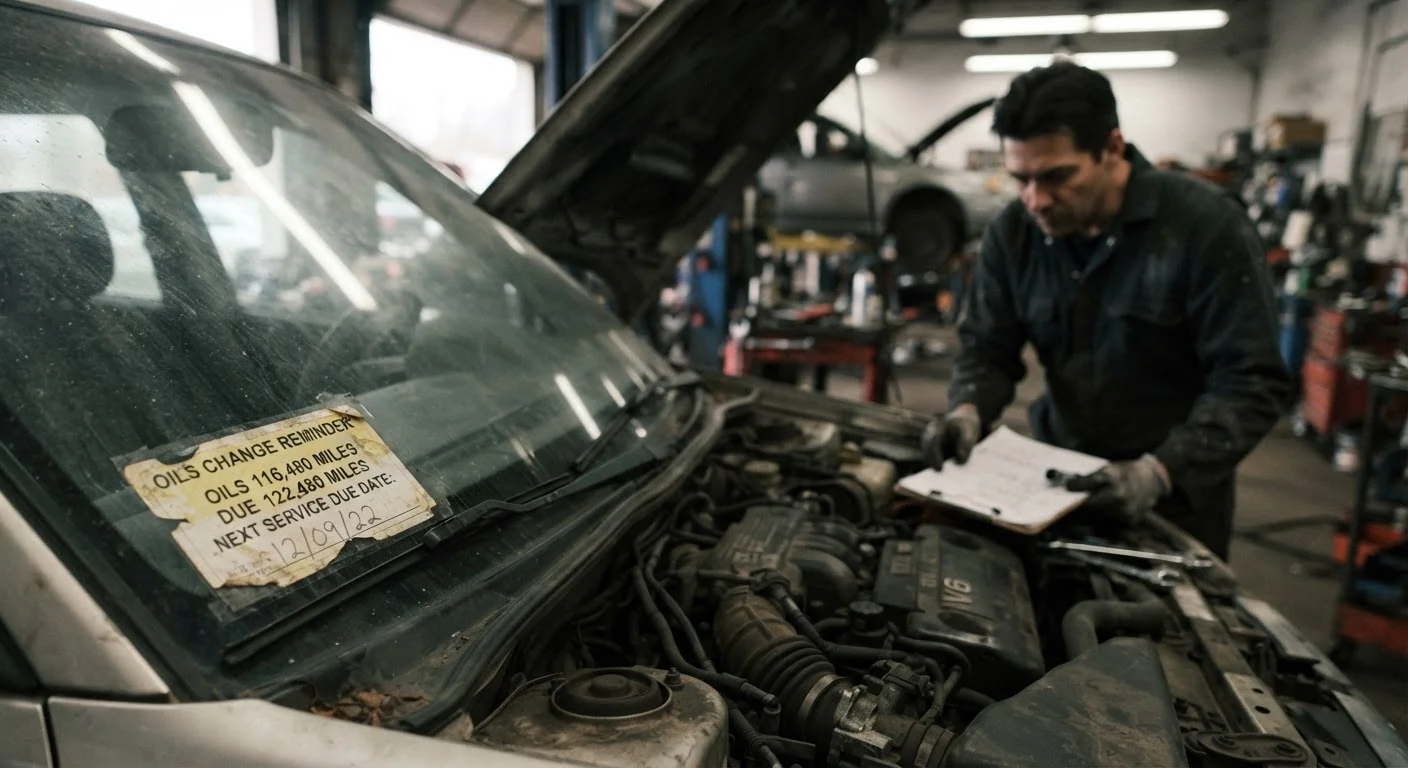
Why Scheduled Servicing Exists — and What Happens When It Doesn't
Vehicle manufacturers derive service intervals from rigorous testing of how fluids degrade, components wear, and systems interact under real operating conditions. These schedules are not arbitrary — they represent the point at which a component or fluid has reached the limit of its effective service life under normal use.
When a service interval is missed, the consequences are rarely immediate. That's precisely what makes skipping service so tempting and so damaging. Oil that should have been changed 2,000 miles ago doesn't announce itself with a loud noise; it quietly becomes more viscous, less effective at reducing friction, and increasingly acidic — conditions that accelerate wear on bearings, cylinder walls, and cam lobes.
The same principle applies across the vehicle. Brake fluid absorbs atmospheric moisture over time. Coolant loses its corrosion inhibitors. Transmission fluid oxidizes and loses its friction modifiers. None of these changes are visible to the driver until they cross a threshold into failure.
~40%
Engine wear caused by contaminated or depleted oil
Engineering analyses of engine failures consistently identify lubrication breakdown — often from overdue oil changes — as a leading contributor to premature engine wear.
2–3×
Cost multiplier when deferred maintenance becomes repair
Automotive service industry data broadly indicates that repairs resulting from neglected maintenance typically cost several times more than the original preventive service would have.
For drivers who want to stay ahead of this, understanding what each service actually covers is essential. The complete guide to your car's service schedule explains what happens at each interval and how to read a logbook effectively.
The Most Common Mistakes Drivers Make With Service Schedules
Missed servicing rarely comes from deliberate neglect — it usually results from misunderstanding how intervals work, overestimating how long a vehicle can go without attention, or underestimating the cumulative cost of putting it off.
Treating service intervals as optional or approximate rather than as engineering specifications.
Why it happens: Drivers often assume that if the car feels and sounds fine, no service is needed. Modern vehicles are engineered to mask early-stage degradation, so problems are rarely obvious until they're costly.
Skipping oil changes because synthetic oil 'lasts longer' without checking the actual interval.
Why it happens: Synthetic oil does last longer than conventional oil in many engines, but this leads some drivers to stretch intervals far beyond what the vehicle manufacturer specifies, sometimes doubling the recommended gap.
Ignoring time-based service intervals for vehicles that are rarely driven.
Why it happens: Low-mileage drivers often believe service is only triggered by distance, so a car driven 3,000 miles per year may go years without attention.
Deferring filter and minor component replacements to save money short-term.
Why it happens: A cabin air filter or spark plug replacement can feel like an unnecessary upsell at service time, especially when the car is running acceptably well.
Failing to keep service records, making warranty disputes or resale negotiations harder.
Why it happens: Many drivers rely on the shop to maintain records, but those records may not be accessible years later if the shop changes ownership, closes, or if the driver switches providers.
Safety Systems Are Checked at Service Intervals
Brake fluid, power steering fluid, and coolant condition are typically inspected during scheduled services — not at dedicated standalone visits. Skipping routine service means these safety-critical fluids may go unchecked for years. Degraded brake fluid absorbs moisture over time, which lowers its boiling point and can reduce braking effectiveness under heavy use.
High-mileage vehicles are especially vulnerable to the effects of skipped service. If you're planning to keep a vehicle long-term, the stakes of consistent maintenance rise considerably. Maintaining a high-mileage car well requires tailoring your approach — and that starts with never letting intervals lapse.
The Real Financial and Safety Cost of Letting It Slide
The argument for skipping service is almost always financial — a $90 oil change feels avoidable when money is tight. But the math of deferred maintenance consistently works against the driver.
Warranty Coverage Is Not Unconditional
Most new-vehicle manufacturer warranties require adherence to the service schedule outlined in the owner's manual. If a mechanical failure occurs and service records show missed intervals, the manufacturer may deny the warranty claim. Keep receipts and digital records of every service visit — they are your proof of compliance.
Beyond the mechanical costs, there are safety implications that don't get enough attention. Brakes, steering components, and tyres are evaluated during routine service. A mechanic performing an oil change will typically flag a brake pad that's approaching its wear limit — information the driver would otherwise have no way of knowing until performance degrades noticeably.
The overlooked components that fail quietly are often the most instructive examples. Air filters, spark plugs, and belts are rarely considered until they cause a breakdown — yet each has a defined replacement interval that prevents exactly that outcome.
Consistent servicing is also the most reliable way to protect resale value. A vehicle with a complete, documented service history commands meaningfully more on the private market and at dealership trade-in than an equivalent car with gaps in its logbook. The service costs are, in a real sense, an investment — not just an expense.
This article is for general informational purposes. Always consult your vehicle's owner's manual and a qualified mechanic for advice specific to your car's make, model, and condition.
The content on this site is for informational purposes only and is not a substitute for professional advice. Always consult a qualified professional for guidance specific to your situation.