

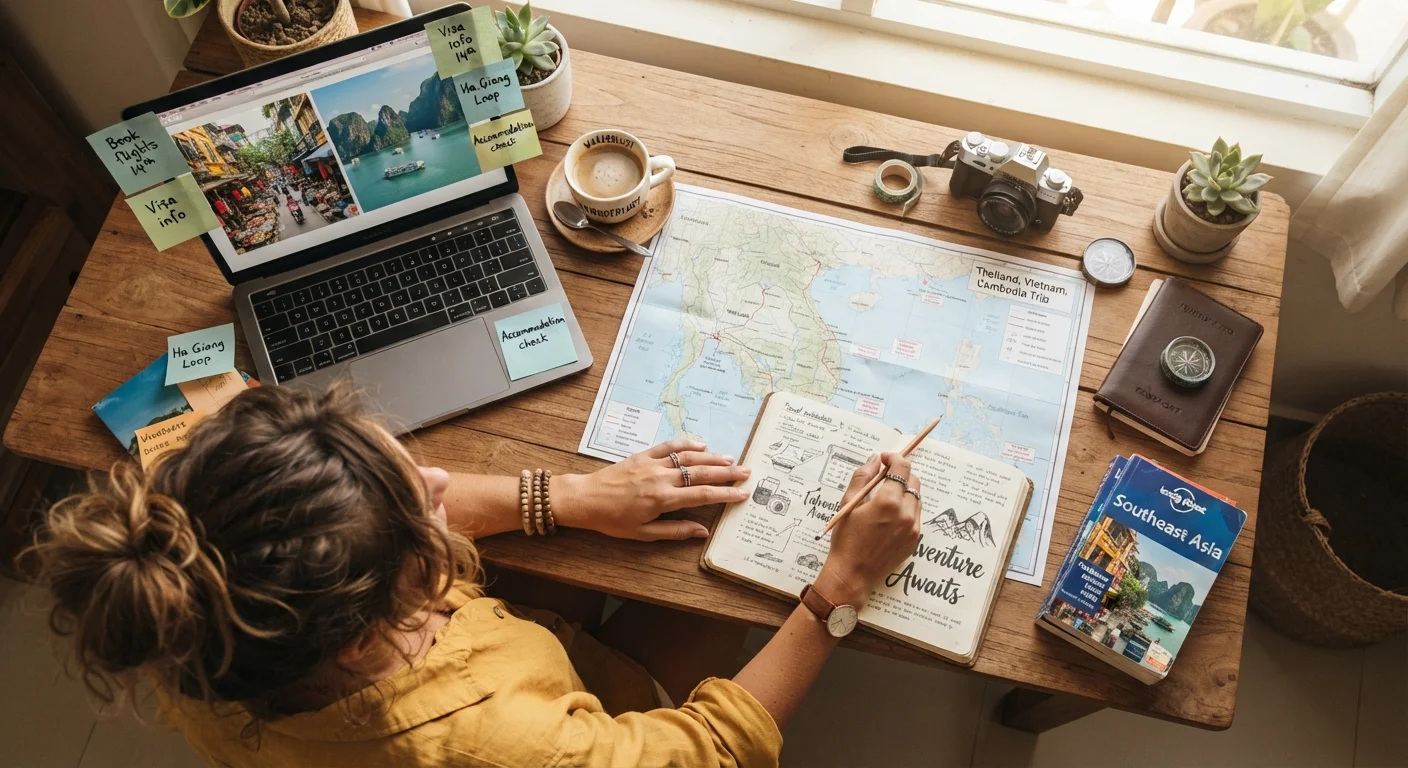
Why Research Approach Matters as Much as Research Volume
There's a version of trip research that leaves travelers more confused than when they started — a sprawling mix of blog posts, social media reels, review aggregates, and Reddit threads that contradict each other on almost every point. Experienced travelers don't avoid research; they approach it more deliberately.
The difference isn't how many hours they spend — it's having a clear framework for what kind of source answers what kind of question, and knowing when the research phase is genuinely complete. As part of the anatomy of a well-planned trip, research is a phase with a beginning and an end — not an endless scroll.
“The traveler sees what he sees. The tourist sees what he has come to see.”
— G.K. Chesterton, Author and essayist
Layering Your Sources: A Practical Framework
Savvy researchers think in layers. The first layer is authoritative and official: government travel pages, national tourism boards, park service sites, and embassy resources. These establish facts — entry requirements, safety conditions, reservation systems — that no personal blog can reliably replace.
The second layer is experiential: recent traveler accounts from forums, community groups, and destination-specific subreddits. These fill in what official sources deliberately omit — the feel of a neighborhood, the reality of crowds at a popular site, or a newly opened local favorite. For a deeper look at reading a place before you arrive, knowing how to tell a tourist trap from a hidden gem is a useful companion skill.
The third layer is thematic: if your trip has a guiding interest — food, history, nature — specialty sources go deeper than general travel guides. A food market guide or a history-focused itinerary resource will surface things that broad roundups skim over.
Match Your Source to Your Question
Not every question needs the same type of source. Entry requirements? Go official. Neighborhood vibe? Find a recent local blog or forum thread. Restaurant hours? Check the restaurant's own website. Matching your source type to your question type saves time and dramatically improves accuracy.
Best Practices for Accurate, Realistic Research
The following practices reflect how experienced travelers structure their research — building accuracy, avoiding overload, and leaving room for discovery.
Start with official and authoritative sources before exploring personal accounts.
Tourism boards, national park services, embassy websites, and government travel advisories provide baseline facts — operating hours, entry requirements, safety conditions — that personal blogs often skip or get wrong. Beginning here builds an accurate foundation before you layer in subjective recommendations.
Use niche forums and recent traveler communities to pressure-test what official sources won't tell you.
Official sources describe what a destination is designed to be. Real travelers describe what it's actually like — current construction noise near a hotel, a trail that's muddier than advertised, or a museum that changed its hours. Recent forum posts and community threads fill in that gap effectively.
Cross-check any specific fact across at least two independent sources before relying on it.
A single source — especially a commercial one — may have outdated pricing, unverified hours, or promotional framing. Cross-referencing catches discrepancies and builds a more accurate picture of what to expect. This is especially important for time-sensitive details like ferry schedules or booking windows.
Define your research scope early by anchoring to your trip's actual priorities.
Without a defined scope, research expands indefinitely. Knowing your trip theme — whether it's history, food, nature, or adventure — helps you filter out irrelevant content and focus on sources that serve your actual goals. This also saves time and reduces the paralysis that comes from over-researching.
Set a deliberate stopping point for research and commit to it.
Over-researching is a real problem: it creates decision fatigue, inflates expectations beyond what any trip can deliver, and can make travelers feel anxious rather than excited. At some point, the value of one more article is lower than the value of arriving with room for discovery.
These habits also apply when your planning context shifts. Solo trip planning and group travel require different research emphases — solo travelers often prioritize safety logistics and flexible bookings, while group planning demands consensus-building at the research stage.
Verify Entry and Safety Info Officially
Visa requirements, health entry rules, and travel advisories can change with little notice. Always confirm these details directly with official government sources — such as the U.S. Department of State's travel portal — and with your airline or accommodation provider before you travel. General travel guides, including this one, cannot guarantee that specific requirements are current.
Avoiding Information Overload: Quick Wins
The goal of research isn't certainty — it's informed confidence. These immediate actions help you build that confidence efficiently, without spending weeks down research rabbit holes.
Understanding how timing shapes your destination experience is also worth a quick research pass: shoulder season vs. peak season conditions affect far more than price — from crowd levels to which attractions are actually open. Once you've got your research grounded, the natural next step is building a travel itinerary that actually works.
70%+
Travelers who research before booking
Multiple consumer travel surveys consistently find that the large majority of leisure travelers conduct online research before making any booking decisions.
3–5 sources
Sources consulted per trip decision
Travel industry research suggests that travelers typically consult several different source types — from review platforms to official tourism sites — before finalizing key choices.
The content on this site is for informational purposes only and is not a substitute for professional advice. Always consult a qualified professional for guidance specific to your situation.