

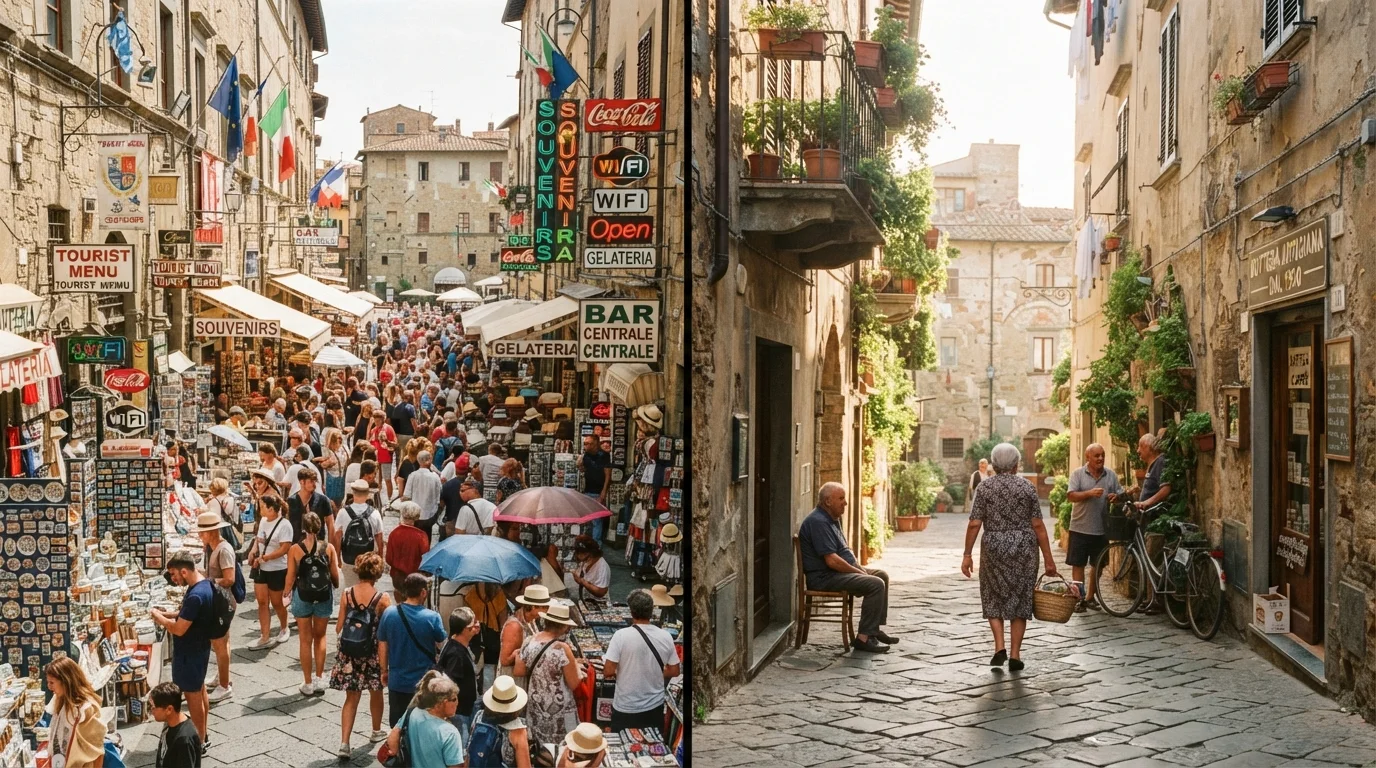
Why the Distinction Matters More Than You Think
Most travelers have felt it at some point: you've followed the guidebook, stood in the line, paid the entry fee — and walked away wondering what all the fuss was about. That low-grade disappointment is the tourist trap experience in miniature. And while it's easy to dismiss as just bad luck, it's usually something more predictable: a mismatch between marketing and reality that good research can often prevent.
Understanding the difference between a tourist trap and a hidden gem isn't about being a travel snob. It's about spending your limited time and money on experiences that actually resonate. Whether you're planning a weekend road trip or a two-week itinerary, learning to read a destination before you arrive is one of the most practical skills in any traveler's toolkit. How experienced travelers approach trip research offers a strong framework for building that skill from the ground up.
70%+
Travelers who report trip disappointment linked to mismatched expectations
Travel industry research has consistently found that unmet expectations — not poor logistics — are the leading driver of traveler dissatisfaction.
2–3x
Price premium typical in high-density tourist zones
Consumer price analyses in popular destinations commonly find that food, accommodation, and services in tourist corridors run significantly above local market rates.
The Anatomy of a Tourist Trap
Tourist traps share a recognizable set of characteristics, even when they look very different on the surface. The most telling sign isn't the crowd — it's the composition of the crowd. When the overwhelming majority of people at a site are day-trippers moving quickly through a scripted experience, that's a signal. When every nearby business caters exclusively to those visitors — with menus in multiple languages but no local prices, or souvenir shops where a general store once stood — the feedback loop is complete.
Pricing disconnected from local norms is another reliable indicator. If a coffee costs three times the regional average within a tourist zone and returns to normal two blocks away, the attraction is monetizing foot traffic rather than delivering value. The same logic applies to guided experiences that compress a complex place into a 45-minute highlight reel with no room for curiosity or wandering.
Check Where Locals Actually Eat
One of the fastest ways to gauge a destination's authenticity is to look at lunch spots during a weekday. If restaurants near an attraction are full of locals at noon, you're in a place with real economic and cultural depth. If the clientele is almost entirely tourists at every meal, that tells you something important about who the place is really designed for.
That said, not all popular places are traps. Some high-traffic destinations — well-maintained state parks, historic neighborhoods with genuine living culture, working waterfronts — attract visitors precisely because they've held onto what makes them worth seeing. New Orleans is a useful case study: the French Quarter draws enormous crowds and still contains layers of authentic culture — but only for travelers who look past the obvious.
How to Recognize a Hidden Gem
Hidden gems tend to share one defining quality: they exist primarily for reasons other than tourism. A fishing village that welcomes visitors but still runs on the rhythms of the catch. A mountain town with a serious arts scene that developed organically, not as a brand strategy. A neighborhood food market where the clientele is mostly local and the vendors are selling what's actually in season. Reading a destination through its food markets is one of the most revealing ways to take a place's temperature before committing more of your itinerary to it.
The presence of locals going about ordinary life — shopping, eating, arguing about parking — is perhaps the single most dependable signal. It tells you that a place has intrinsic value independent of visitor dollars. Hidden gems also tend to have less polished infrastructure: the signage might be minimal, the parking imperfect, the opening hours idiosyncratic. These are features, not bugs.
Practical Tools for Telling Them Apart
Before visiting anywhere, it's worth asking a few diagnostic questions. Who is this place designed for — residents or visitors? What was here before tourism arrived, and is any of that still present? Are the businesses in the area locally owned, or do they follow a chain-franchise pattern common to high-traffic tourist corridors?
Look at satellite imagery and street-level photos taken in different seasons. A destination that looks exactly the same in January as it does in July — same vendor stalls, same tourist-facing layout — is likely running a static experience rather than a living one. Cross-reference travel forums with local news sources and regional publications; the tension between those two perspectives often tells you more than either one alone.
Matching your travel style to a destination's strengths also helps. Small-town America and major cities reward very different kinds of attention, and a place that feels like a trap to a fast-moving itinerary traveler may feel like a gem to someone content to stay three days and walk everywhere. Once you've developed that read on a destination, building an itinerary that actually works becomes much more straightforward — because you're matching structure to reality rather than to a highlight reel.
Hidden Gems Don't Stay Hidden Forever
Publishing and sharing information about underrated destinations contributes to the very visibility that can erode them. Travelers who love a quiet spot can help preserve it by visiting thoughtfully, supporting local businesses, and being selective about what they amplify online. Responsible discovery is part of what separates a curious traveler from a trend-chaser.
Frequently Asked Questions
Not necessarily. A tourist trap is defined by a gap between what's promised and what's delivered — not by headcount alone. Some crowded places genuinely earn their visitors; others with modest traffic still overcharge and underdeliver.
Yes, and it happens frequently. Once a quiet destination gains widespread social media attention, visitor volume can outpace infrastructure and erode the authentic qualities that made it special. Timing and mindful travel behavior both matter.
No. Popularity and quality aren't mutually exclusive. Iconic destinations like national parks or historic city centers can be genuinely rewarding — the key is managing expectations and knowing which parts of a place are worth your time.
Look beyond top-ten lists. Regional travel blogs, local food media, community forums, and conversations with people who live in or near a destination are far more likely to surface underrated spots than algorithm-driven rankings.
Many experienced travelers find that spending more time in fewer places — rather than rushing across a checklist — allows destinations to reveal their real character. Our guide on <a href="/travel-adventure/destinations-experiences/us-destinations-that-reward-slower-longer-visits">US destinations that reward slower visits</a> explores this idea in depth.
Food environments are one of the most reliable signals of a destination's authenticity. Menus priced and styled exclusively for tourists, or markets that feel more like retail theater than working commerce, are useful red flags.
The content on this site is for informational purposes only and is not a substitute for professional advice. Always consult a qualified professional for guidance specific to your situation.