

The French Quarter Trap
New Orleans is one of the most culturally layered cities in the United States — a place shaped by French and Spanish colonial history, West African traditions, Caribbean influences, and a musical heritage that genuinely changed the world. And yet a striking number of visitors leave feeling vaguely hollow, certain they must have missed something significant.
They're right. They did. And it almost always starts with the same mistake: spending the entire trip within a few blocks of Bourbon Street.
The French Quarter is historic, lively, and worth exploring — but it's also the most tourism-saturated part of a city that extends far beyond it. Treating it as the destination, rather than one entry point, means missing neighborhoods that tell a richer, more honest story about who New Orleans actually is. Our guide on reading a destination before you visit can help you calibrate before you book.
Staying exclusively in the French Quarter and treating it as the whole city.
Why it happens: Most travel content, hotel recommendations, and walking tour routes are concentrated in this area, making it the default focus for first-time visitors.
Eating only at restaurants that appear on every tourist list.
Why it happens: Heavily marketed spots feel like a safe, validated choice, especially in an unfamiliar city with a complex culinary culture.
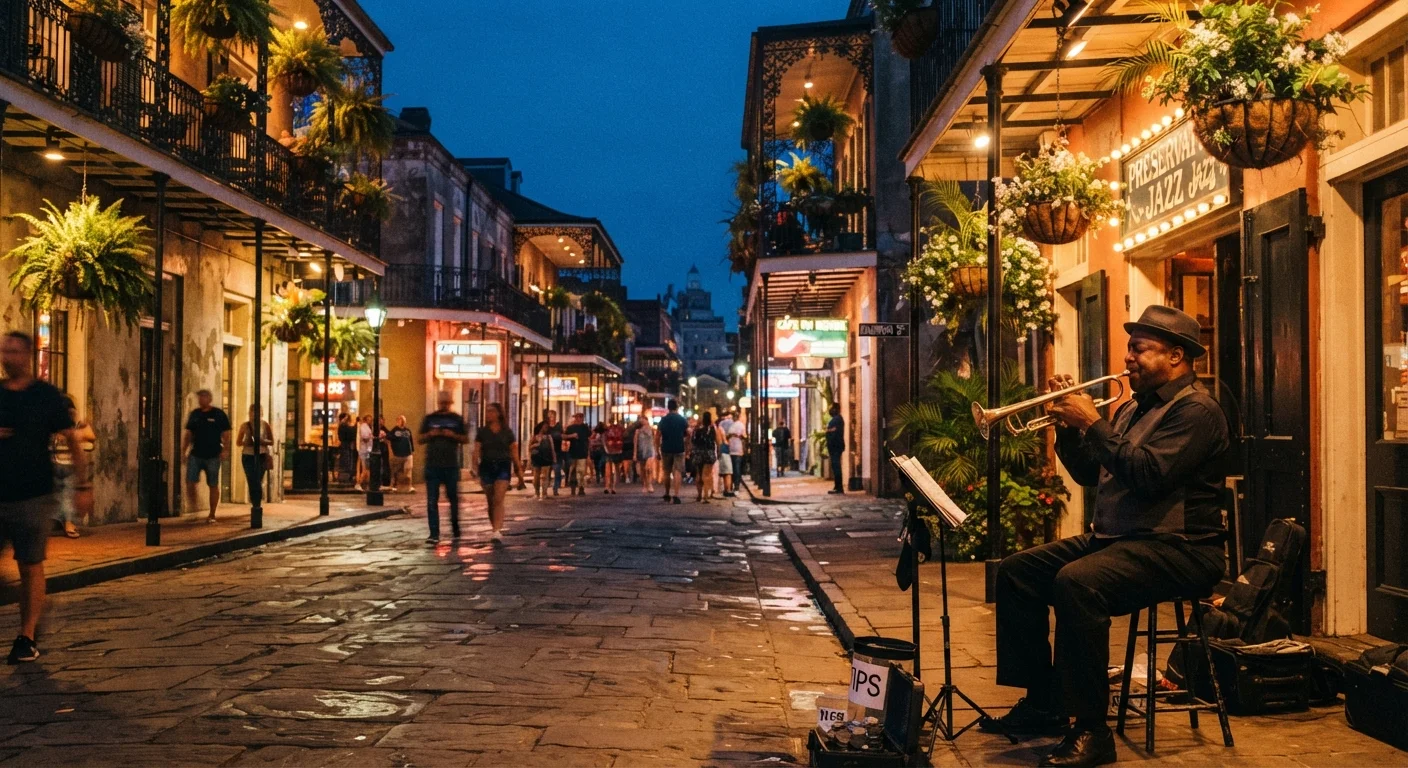
Treating live music as a ticketed evening attraction rather than an ambient part of daily life.
Why it happens: Travelers accustomed to scheduled entertainment book a single show and consider the music box checked, missing the spontaneous performances that define the city's character.
Packing the schedule so tightly that there's no room for the unexpected.
Why it happens: Short trips create anxiety about maximizing every hour, pushing travelers toward rigid, checklist-style itineraries.
Leaving without engaging with the city's history beyond surface-level landmarks.
Why it happens: History tours at famous sites feel sufficient, but the city's complex past — including its role in the domestic slave trade and the resilience of its African American cultural traditions — requires more active curiosity.
What a More Honest New Orleans Itinerary Looks Like
Correcting course doesn't require abandoning popular landmarks. It requires building an itinerary with intention — one that mixes the well-known with the genuinely local. The Tremé neighborhood, widely considered one of the oldest African American neighborhoods in the country, sits just steps from the Quarter but draws a fraction of its foot traffic. Bywater and the Marigny offer a creative, walkable residential character that feels entirely different from the tourist corridor. Mid-City reveals how actual New Orleanians live, shop, and eat.
72%
Visitors who stay in or near the French Quarter
Tourism research consistently shows the vast majority of New Orleans visitors concentrate their time in the historic district, leaving most of the city unexplored.
73 sq mi
Total area of New Orleans proper
New Orleans covers roughly 73 square miles across dozens of distinct neighborhoods, most of which receive little to no tourist foot traffic.
Food is another dimension that most visitors barely scratch. The city's culinary identity runs deep — through neighborhood corner stores, Vietnamese restaurants along the West Bank, and family-run Creole spots that don't appear on any influencer's feed. Eating well in New Orleans means following curiosity beyond the obvious.
Live music is perhaps the biggest missed opportunity. Frenchmen Street gets the guidebook mentions, but music spills out of neighborhood bars, second-line parades roll through residential streets on Sunday afternoons, and jazz funerals — a genuine cultural tradition, not a tourist performance — happen organically. You find these things by being present and unhurried, not by cramming a checklist.
New Orleans genuinely rewards visitors who give it more time. As we explore in our piece on US destinations that reward slower, longer visits, some cities don't open up until you stop rushing. New Orleans is one of them. If you're still building your framework, our guide to building a travel itinerary that actually works can help you leave room for what you can't plan in advance.
Neighborhood Safety Varies — Plan Accordingly
Like any major US city, New Orleans has neighborhoods with higher crime rates, and conditions can change block by block. Before exploring areas outside the main tourist corridor, consult current local guidance and ask your accommodation for honest, specific advice about where to walk and when. Traveling in groups, staying aware of your surroundings, and avoiding isolated streets late at night are sensible practices. Always verify current advisories through official or locally knowledgeable sources before your visit.
The content on this site is for informational purposes only and is not a substitute for professional advice. Always consult a qualified professional for guidance specific to your situation.