

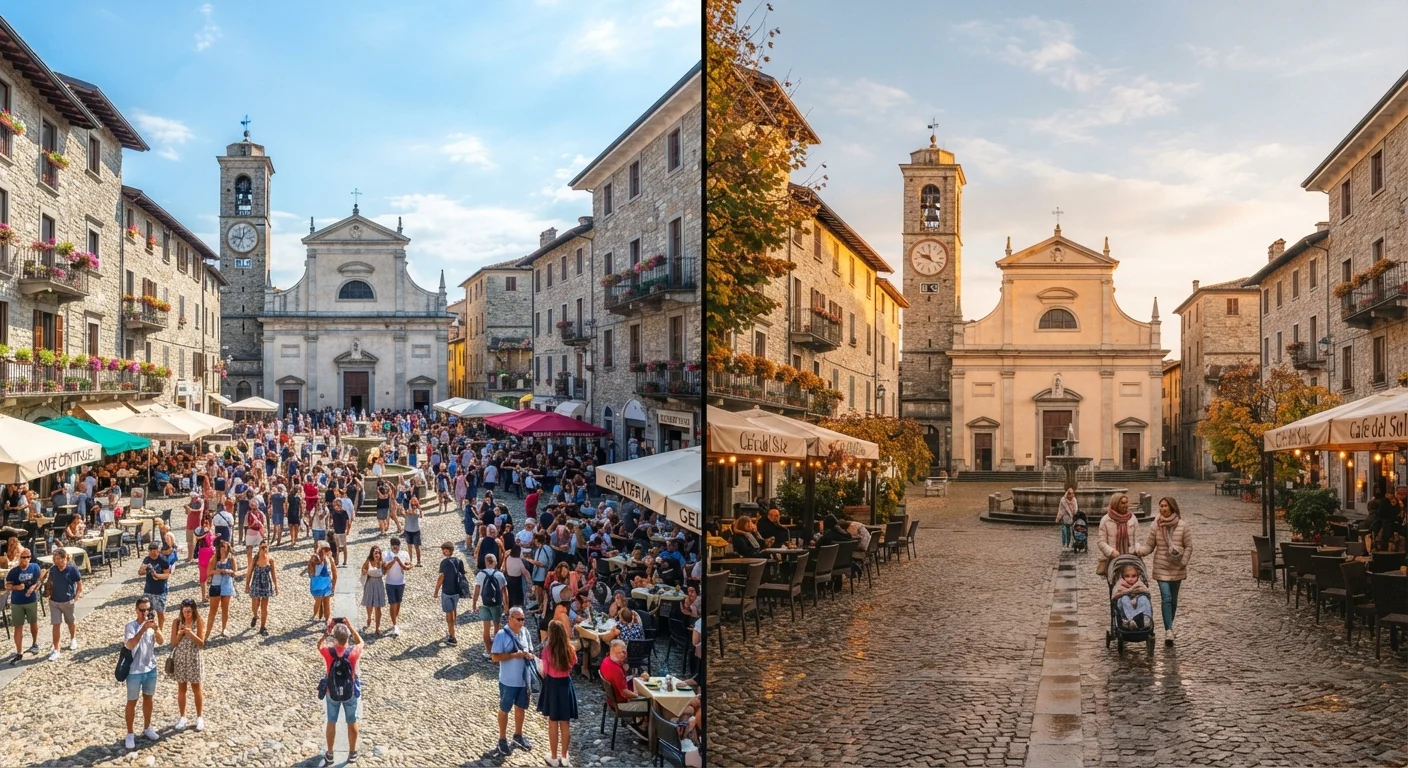
Option A
Peak Season Travel
The fully-switched-on, everything-open experience.
Best for: Travelers who want maximum access, predictable conditions, and the full social energy of a destination.
Option B
Shoulder Season Travel
The quieter, often richer alternative to the high-season rush.
Best for: Travelers who value fewer crowds, more authentic atmosphere, and greater flexibility in their itinerary.
What Actually Defines Peak vs. Shoulder Season
Peak season is straightforward: it's the window when a destination draws its largest visitor volume. For beach towns on the Atlantic seaboard, that's typically July and August. For ski resorts, December through February. For European capitals that American travelers flock to, high summer — June through August — dominates. Shoulder season sits in the in-between: spring before the summer rush, or fall after it, and occasionally the quieter weeks flanking a holiday peak.
These windows aren't universal. A coastal town in Maine and a desert destination in Arizona operate on completely different calendars. That's why researching destination-specific timing is essential before assuming any month is "off-peak." The calendar window matters less than understanding what drives visitor volume at your specific destination.
| Criterion | Peak Season | Shoulder Season |
|---|---|---|
| Crowd levels | High — expect lines and competition | Moderate to low |
| Service availability | Maximum — all businesses open | Reduced — some closures likely |
| Booking lead time | Months in advance often required | Weeks ahead usually sufficient |
| Weather reliability | Most predictable window | Variable — destination-dependent |
| Local cultural access | Tourism-oriented atmosphere | Closer to everyday local life |
| Signature events | Concentrated here | Smaller, community-level events |
| Itinerary flexibility | Limited by advance bookings | Greater spontaneity possible |
Crowd Levels, Access, and the Hidden Costs of Both
Crowds affect far more than comfort. During peak season, national parks implement timed-entry permits, popular trails require advance reservations, and iconic viewpoints become difficult to photograph without strangers in the frame. Wait times at popular restaurants can stretch well beyond an hour. That's the lived reality of high-season travel — everything is open, but everything is also contested.
Shoulder season reverses this calculus. The trade-off isn't just monetary — it's experiential. You may find that a museum you'd been eager to visit closes one weekday a week that it wouldn't during summer. A boat tour might run fewer departures. Seasonal businesses — beachside seafood shacks, ski rental shops — may not be operating yet or may have already closed. Access contracts alongside the crowds.
The sweet spot many experienced travelers target is the early shoulder: the two to three weeks just before peak season begins. Infrastructure is running, staff is in place, but visitor volume hasn't yet peaked. A well-planned trip accounts for this timing intentionally, not as an afterthought.
30–50%
Typical accommodation cost difference
U.S. travel industry analyses consistently show hotel and rental rates in popular destinations drop significantly during shoulder windows compared to peak weeks.
2–3 hrs
Average peak-season wait at top US national parks
The National Park Service has reported entry wait times of two hours or more at high-traffic parks like Zion and Grand Canyon during summer peak periods.
Weather, Events, and What You Might Gain or Miss
Peak season weather is generally a destination's most reliable window — that's often why it became peak season in the first place. Shoulder season weather can still be excellent, but it introduces more variability. A fall trip to New England might land you in peak foliage or in early frost and rain; a spring trip to the Pacific Northwest can swing from sun to persistent overcast. That unpredictability isn't a dealbreaker, but it's worth building some flexibility into your plans.
Local events tell an interesting story here. Peak season in many destinations coincides with the destination's biggest festivals, outdoor concerts, and signature cultural celebrations. If those events are why you're going, peak season is non-negotiable. But shoulder season often surfaces a different layer of local culture — harvest festivals, community markets, regional food traditions — that fly under the tourist radar entirely.
For those weighing flexibility against structure, it's worth reading how fixed-date versus open-ended travel frameworks interact with seasonal timing. A rigid itinerary during shoulder season may frustrate you if key attractions run reduced schedules; an open-ended approach lets you adapt on the fly.
Check Official Sources for Entry and Safety Conditions
Seasonal timing can affect more than just crowds — it may influence road access, park permit requirements, and regional weather advisories. Before finalizing any trip, verify current conditions with official government and destination management sources. For ongoing safety and wellness guidance while traveling, see our Travel Safety & Wellness hub.
How Seasonal Timing Shapes the Feel of a Destination
Beyond logistics, shoulder season changes the atmosphere of a place in ways that are difficult to quantify but easy to feel. When visitor volume drops, the social texture of a destination shifts. Local cafés fill with regulars instead of tour groups. Shop owners have time to talk. The destination reclaims something of its own identity — the version that exists for the people who actually live there.
This dynamic is especially relevant for solo travelers. Solo travel planning often benefits from shoulder timing, since spontaneous connections with locals and fellow independent travelers are easier when the environment isn't saturated with package-tour groups.
Peak season, meanwhile, delivers its own energy: the buzz of a place fully alive and in use, the social atmosphere of shared experience, and the reassurance that every service you might need is operating. Neither experience is objectively superior — they're genuinely different trips to the same place. The right choice depends on what kind of experience you're building, and being honest about that upfront is the foundation of any smart seasonal decision.
The content on this site is for informational purposes only and is not a substitute for professional advice. Always consult a qualified professional for guidance specific to your situation.