

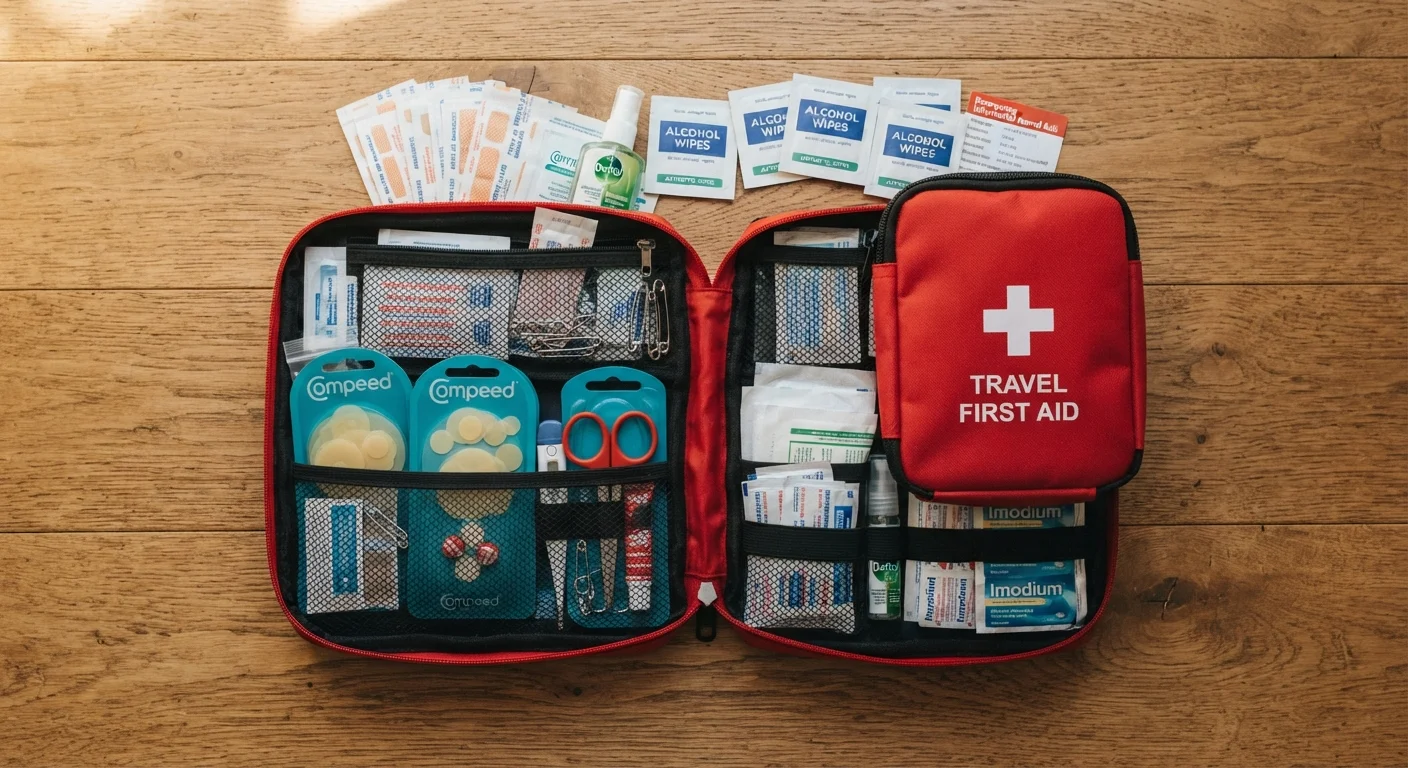
Why a Dedicated Travel First Aid Kit Matters
Packing a dedicated travel first aid kit is one of the most practical steps any traveler can take — and one of the easiest to skip until something goes wrong. Whether you're camping in a national park, navigating a bustling city abroad, or road-tripping across state lines, minor health issues have a reliable habit of surfacing far from a pharmacy. A well-stocked kit won't replace professional medical care, but it bridges the gap when you need it most.
The contents of your kit should reflect where you're going, how long you'll be away, and the activities you'll be doing. A weekend beach trip calls for different supplies than a two-week backcountry hike or an international adventure in a remote region. See how this fits into the bigger picture of preparation in our guide to well-planned trip anatomy.
| Recommended kit type for domestic weekend trips | Compact personal kit (basic bandages, pain relievers, antihistamines, blister care) |
| Recommended kit type for international or remote travel | Extended kit with wound care, ORS, antidiarrheal, and destination-specific additions |
| Minimum gloves to pack | 2 pairs of disposable nitrile gloves |
| Key documentation to include | Emergency contacts, travel insurance details, and any prescription information |
| How often to audit your kit | Before every trip — check expiration dates and replace used items |
Core Supplies: What Belongs in Almost Every Kit
Regardless of destination, certain items earn their place in virtually every travel first aid kit. Think of these as your non-negotiable baseline:
- Adhesive bandages — multiple sizes to cover cuts and blisters
- Sterile gauze pads and medical tape — for larger wounds or wounds that need pressure
- Antiseptic wipes and antiseptic solution — to clean wounds before dressing
- Blister treatment pads — especially important for walking-heavy trips
- Tweezers — for splinters, thorns, or tick removal
- Scissors and a safety pin — for trimming bandages or releasing tight clothing
- Digital thermometer — compact and essential for monitoring fever
- Over-the-counter pain reliever — general use for headaches, minor aches, or fever management
- Antihistamine tablets — for allergic reactions, insect bites, or hay fever
- Oral rehydration salts — critical for combating dehydration from heat or gastrointestinal illness
- Antidiarrheal medication — a common need, especially in destinations with different food and water profiles
- Motion sickness remedy — useful on planes, boats, or winding mountain roads
- Disposable gloves — at least two pairs, for infection control
- Emergency contact card and insurance details — kept in a waterproof sleeve
This baseline works for most short domestic or international trips. You can build from here based on your specific needs.
Oral Rehydration Salts (ORS)
A pre-measured mixture of salts and sugars dissolved in water to restore electrolytes lost through diarrhea, vomiting, or heat exposure. ORS packets are compact, inexpensive, and widely recommended for travel to warm or developing-world destinations.
SAM Splint
A lightweight, moldable aluminum and foam splint used to immobilize injured limbs in field settings. It can be shaped to fit different body parts and is a staple in wilderness and backcountry first aid kits.
Antihistamine
A class of medication that reduces the effects of histamine in the body, commonly used to relieve allergic reactions, insect bite swelling, hay fever symptoms, and sometimes motion sickness.
Triangular Bandage
A large, multi-purpose cloth bandage that can be folded into a sling, used as a tourniquet, or applied as a pressure dressing. It is a standard item in both professional and wilderness first aid kits.
Adapting Your Kit for Destination and Duration
Beyond the basics, your destination type and trip length should drive what else you include.
Remote or Wilderness Travel
Longer response times mean you need more self-sufficiency. Add a SAM splint (a flexible, moldable splint for immobilizing injuries), a triangular bandage and sling, a CPR face shield, a blister prevention stick, and water purification tablets or a filter straw. A basic wilderness first aid manual is worth including if you're heading into areas with limited communication.
International and Tropical Destinations
When traveling internationally — especially to tropical or developing-world destinations — consider adding antifungal cream, insect repellent wipes, altitude sickness medication if your itinerary includes elevation gain (discuss options with your doctor before travel), and a broader supply of oral rehydration salts. Review your pre-trip health checklist to align your kit with any required vaccinations or prescriptions.
Urban and Short-Trip Travel
A more compact kit works for city travel. Prioritize blister care, pain relievers, antihistamines, antidiarrheal medication, and a few bandages. Pharmacies are typically accessible, so you don't need to pack as extensively.
Travelers Managing Chronic Conditions
If you manage an ongoing health condition, your kit needs to go a step further — carrying sufficient prescription medications, condition-specific supplies, and relevant medical documentation. Our guide on managing a chronic condition while traveling covers the logistics in detail. Always consult your healthcare provider before travel to confirm what to bring.
Prescription Items Require a Doctor's Guidance
Some items travelers may want to carry — such as altitude sickness medication, prescription antibiotics for traveler's diarrhea, or injectable epinephrine for severe allergies — require a prescription and a conversation with your healthcare provider before travel. Never add prescription medications to your kit without medical guidance. Your doctor can advise what's appropriate for your itinerary and health profile.
Keeping Your Kit Organized and Ready
A disorganized kit is nearly as unhelpful as no kit at all. Use a dedicated waterproof bag or case with labeled compartments so items are easy to locate under stress. Check expiration dates before every trip — over-the-counter medications, antiseptics, and even adhesives degrade over time. Replace anything used on previous trips before you pack again.
Familiarize yourself with each item before you leave — knowing how to apply a SAM splint or mix oral rehydration salts in a calm moment at home makes a genuine difference in the field. If you're traveling with family or a group, make sure at least one other person knows where the kit is and what's in it.
Pair your kit preparation with the full pre-departure checklist to make sure health readiness integrates with your broader travel prep. And if something does escalate beyond your kit's capabilities, our guide on getting medical care abroad walks you through your next steps calmly and clearly.
This article is for general informational purposes only and does not constitute medical advice. Consult a qualified healthcare professional before travel, particularly regarding medications, vaccinations, or managing any health condition on the road.
The content on this site is for informational purposes only and is not a substitute for professional advice. Always consult a qualified professional for guidance specific to your situation.