

Why Preparation Changes Everything
Experiencing a health issue abroad is stressful enough without also scrambling to understand an unfamiliar healthcare system under pressure. The travelers who navigate it most smoothly are almost always the ones who prepared before they left — not necessarily by packing a full medical kit, but by gathering key information and contacts in advance.
A solid pre-departure routine dramatically reduces the chaos. Our pre-departure checklist covers the health-prep essentials alongside travel documents and finances. Complementing that, our pre-trip health checklist goes deeper on vaccinations, prescriptions, and carrying your medical records internationally.
Before you follow the steps below, gather the tools you'll need:
What you will need
Travel Health Insurance Policy
Provides financial coverage for medical expenses abroad and connects you with an insurer assistance line that can locate approved providers.
Embassy or Consulate Contact List
Your embassy can supply vetted physician referrals, help with emergency documents, and assist if you need medical evacuation support.
Personal Medical Summary Card
A card listing blood type, allergies, medications, and conditions helps foreign providers understand your health baseline quickly.
Translation App
Helps communicate symptoms and understand instructions when a language barrier exists between you and medical staff.
Secure Document Folder (Physical or Digital)
Keeps receipts, prescriptions, and discharge notes organized for insurance claim submission.
Translate Your Medical Summary in Advance
Before departure, use a reliable translation service or app to create a basic medical card in the language of your destination. Include your blood type, known allergies, current medications (with generic drug names), and any chronic conditions. Even a rough translation can help providers triage you more effectively in a high-stress moment.
Step-by-Step: Seeking Care Abroad
Whether you're dealing with a minor illness or something more serious, working through these steps in order will help you stay calm, get appropriate care, and protect yourself financially and medically.
Life-Threatening Emergency? Act First
If you or a fellow traveler is experiencing a medical emergency — chest pain, difficulty breathing, serious injury, or loss of consciousness — call local emergency services immediately (numbers vary by country). Do not delay care to contact your insurer or embassy. Insurance and documentation can always be handled after you are stabilized and safe.
Assess the Severity and Call for Help if Needed
Before anything else, honestly assess whether the situation is an emergency. For life-threatening symptoms — severe chest pain, stroke signs, uncontrolled bleeding, or high fever with altered consciousness — call local emergency services immediately. Research the emergency number for your destination before you travel, as it differs by country (112 works across the EU; other regions vary).
For non-emergency concerns, take a breath. You have time to make a thoughtful plan.
Contact Your Travel Health Insurer
Your travel health insurance policy is your single most important resource. Most insurers operate a 24/7 assistance hotline staffed by multilingual coordinators who can locate nearby approved facilities, arrange direct billing so you don't pay out of pocket, and advise on whether medical evacuation is warranted. Have your policy number ready when you call.
If you haven't yet looked into travel health coverage, our guide on what travel health insurance covers and excludes explains the key considerations before you go.
Locate a Reputable Medical Facility
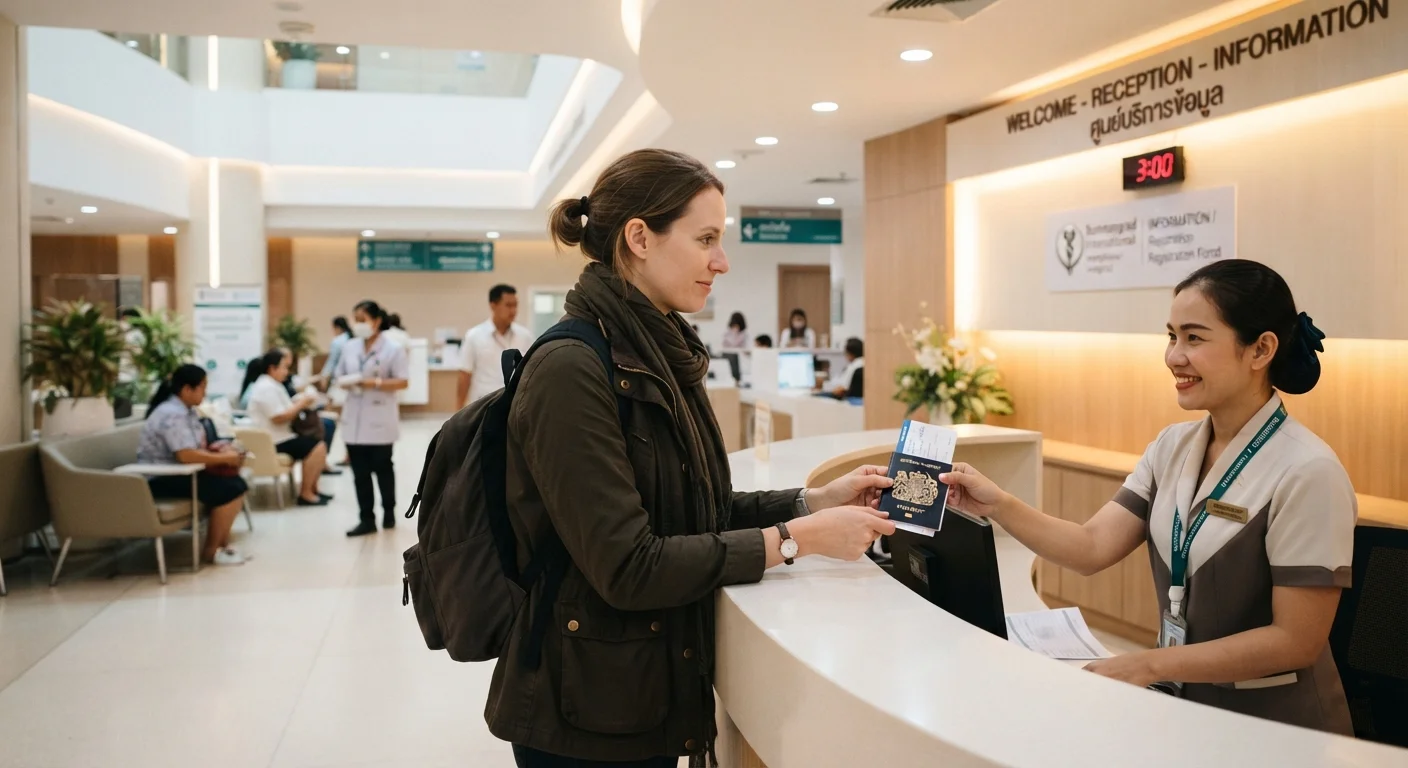
If your insurer can't direct you quickly, contact your nearest embassy or consulate — they maintain vetted lists of English-speaking physicians and hospitals used by expatriates and tourists. International hospitals in major cities often have dedicated foreigner-assistance desks with English-speaking staff.
Avoid making care decisions based solely on proximity in tourist areas, where pricing can be exploitative. Cross-reference any facility with your insurer's approved list or an embassy recommendation when the situation allows.
Communicate Your Medical History Clearly
Present your personal medical summary card to the treating provider as soon as possible. If a language barrier exists, use a translation app to convey key symptoms — describe pain using location, intensity on a 1–10 scale, and when it started. Show rather than just tell: pointing to the area of pain transcends language gaps. Generic drug names (rather than brand names) are more universally recognized for medications.
Request and Retain All Documentation
Ask for itemized receipts for every service, a written diagnosis (in English if possible, or the local language for translation later), prescription records listing the generic drug name and dosage, and a discharge summary. Take photos of any documents you can't keep. This paperwork is essential for insurance reimbursement and for informing your home physician about what occurred and what treatment you received.
Fill Prescriptions and Understand Follow-Up Instructions
International pharmacies can typically fill prescriptions written locally, but verify that the prescribed medication is available — generic alternatives are often used when a specific brand isn't stocked. Confirm dosage instructions clearly, ideally in writing. If you'll be returning home soon, also ask the provider whether the condition requires follow-up care and whether it's safe to fly in your current state.
Notify Your Home Physician and File Your Insurance Claim
Once you're safe and stable, send your collected documentation to your travel insurer to begin the reimbursement or claim process — most policies have a filing window, so don't wait. When you return home, share your discharge summary and prescription records with your primary care provider so they can assess any ongoing treatment needs. Good handoff documentation makes this seamless.
Verify Clinics Before You Pay
In popular tourist areas, some private clinics charge dramatically inflated prices or pressure travelers into unnecessary procedures. Ask for an itemized bill, and if possible, cross-reference the facility with your insurer's approved provider list or a recommendation from your embassy before agreeing to non-emergency treatment.
This article is for general informational purposes only and does not constitute medical advice. Always consult a qualified healthcare professional for personal health decisions. In a medical emergency, contact local emergency services immediately.
The content on this site is for informational purposes only and is not a substitute for professional advice. Always consult a qualified professional for guidance specific to your situation.