

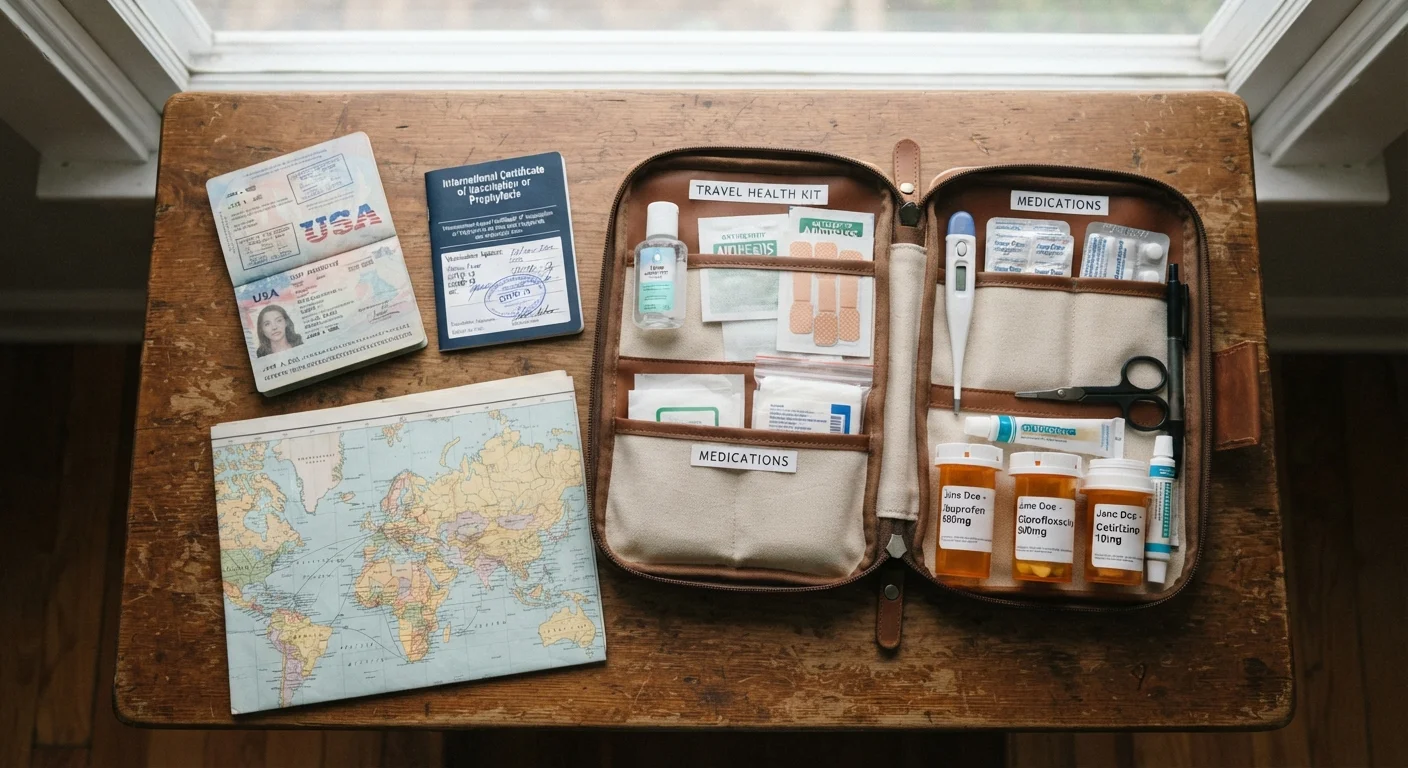
Summary
22 items · 45–90 minutes (spread across several weeks before departure)
Why a Pre-Trip Health Checklist Matters
Packing your bags is easy. Ensuring your health is protected across borders takes a little more foresight — but it's one of the most worthwhile investments you'll make before any international journey. Vaccine requirements change, prescription rules differ by country, and finding quality medical care abroad is vastly easier when you've done the groundwork at home.
This checklist is built to help you work through the essential health prep steps in a logical order, from your first doctor's appointment through to what you pack in your carry-on. Think of it as your health backstop for every trip, whether you're heading to Western Europe or rural Southeast Asia.
For a broader departure readiness overview, see The Pre-Departure Checklist Every Traveler Should Run Through. And if you're traveling with a chronic condition, Managing a Chronic Condition While Traveling covers the extra planning steps specific to your situation.
Start Early — Vaccines Need Time
Some vaccines require multiple doses spread over several weeks, and others take up to two weeks to become effective after the final dose. Beginning your health prep less than two weeks before departure may leave you unprotected. Always consult a healthcare provider as early as possible — ideally 4–6 weeks out — so every protection has time to work.
What You'll Need
Before diving into the checklist itself, gather a few foundational resources. Having these on hand makes it much easier to complete each step efficiently.
CDC Travelers' Health Portal
Look up destination-specific vaccine recommendations, disease risks, and current health notices before your medical appointment.
Personal Immunization Record
Your up-to-date vaccination history, needed to verify which shots are current and to present at border control if required.
Physician Letter for Medications
A signed letter on official letterhead describing your prescriptions by name, dosage, and medical indication — critical for customs clearance.
Travel Health Insurance Policy
Confirms your coverage scope, emergency evacuation terms, and claims process for medical events occurring abroad.
Secure Cloud Storage or Password Manager
Store digital copies of medical records, insurance documents, and emergency contacts in an encrypted, accessible-anywhere format.
Destination Country Entry Requirements (Official Government Source)
Verify current visa, vaccination, and health declaration requirements directly from official government or embassy sources before departure.
The Complete Health Prep Checklist
Work through each group in order. Items marked must are non-negotiable for most international travelers; should items are strongly recommended; nice to have items enhance your preparedness without being critical.
Medical Consultation (4–6 Weeks Before Departure)
Vaccinations
Prescriptions and Medications
Medical Records and Documentation
Medication Restrictions Vary by Country
A prescription that is legal and routine in the United States may be a controlled or prohibited substance in another country. Failing to verify this in advance can result in confiscation, fines, or legal complications at the border. Always check with the destination country's embassy and your prescribing doctor well before you travel, and carry your physician's letter at all times.
Don't Rely on Foreign Pharmacies as a Backup Plan
While pharmacies exist in most countries, the specific brand, formulation, or dosage of your medication may not be available, and language barriers can complicate substitutions. Treat your supply from home as your primary and only source, and pack more than you think you'll need.
Once you're fully prepped on the health front, don't overlook complementary safety layers: review what belongs in a travel first aid kit and check food and water safety by region for your destination. For destination-specific preventive health guidance more broadly, the Preventive Care hub is a solid reference point.
This article is for general informational and educational purposes only. It is not medical advice. Consult a qualified healthcare provider or travel medicine specialist before making any decisions about vaccinations, medications, or your personal health needs for travel.
The content on this site is for informational purposes only and is not a substitute for professional advice. Always consult a qualified professional for guidance specific to your situation.