

Our Verdict
DIY roof repair sits in a narrow lane: replacing a few clearly damaged shingles on a low-slope, accessible roof is genuinely within reach for a capable homeowner who prepares carefully. Anything beyond that — flashing, valleys, multiple layers, or suspected structural damage — carries risks that outweigh the savings. An honest assessment of your own skills, the scope of the damage, and your local code requirements should drive the decision, not cost alone.
Best suited to experienced DIYers who are comfortable at height, working on a simple gable roof with isolated shingle damage, and willing to follow safety protocols rigorously.
Understanding the Realistic Scope of Roof DIY
Roofing sits at the intersection of height, weather exposure, and structural consequence — which is why it demands more honest self-assessment than most home repair categories. The appeal is understandable: a professional roofing job can run thousands of dollars, and a handful of damaged shingles looks deceptively simple from the ground. But looks deceive.
Before touching a single tab, understand what category your damage falls into. Surface-level shingle replacement — swapping out a few cracked, curled, or missing shingles on a straightforward gable roof — is the one area where a prepared homeowner with the right materials and a solid ladder can realistically succeed. Everything else escalates quickly in complexity and risk.
This article is part of a broader look at tackling your first DIY home projects, where knowing the scope before you start is the single most important preparation step.
When to Call a Pro First, Not Last
If you can see daylight through the roof boards from inside your attic, notice sagging or soft spots when walking near the roof, or find widespread granule loss in your gutters, these are signs of systemic deterioration rather than isolated damage. In these situations, a professional inspection should come before any hands-on work — DIY patching on a failing roof structure is unlikely to solve the underlying problem and may obscure it further.
What a Homeowner Can Reasonably Attempt
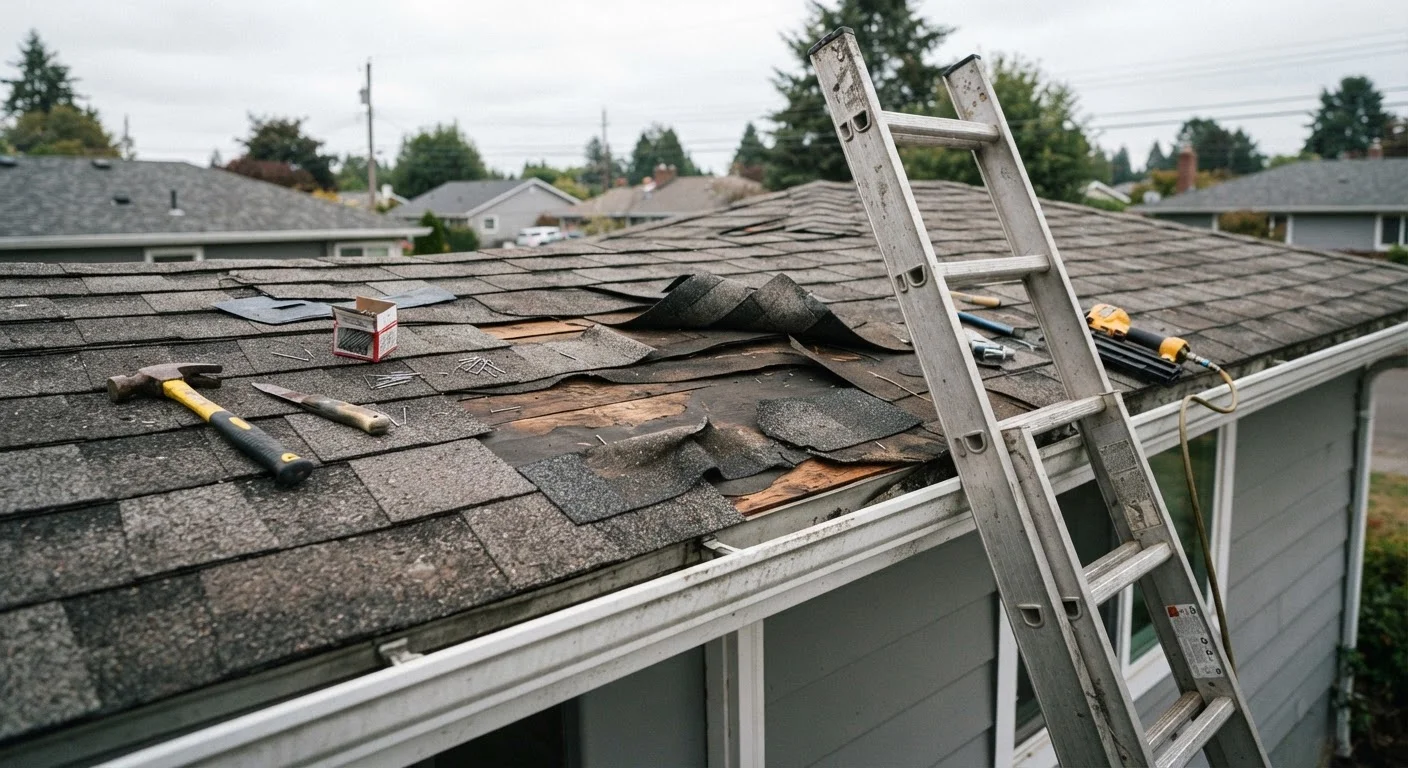
A limited shingle replacement on a roof with a gentle pitch (generally 4:12 or less) is the clearest candidate for DIY. The materials — replacement shingles, roofing nails, and roofing cement — are widely available, and the technique is straightforward: carefully lift surrounding shingles, remove damaged ones by extracting nails, slide the new shingle into position, and secure it properly before resealing edges with roofing cement.
Cleaning debris from gutters and visually inspecting flashing from a safely positioned ladder are also tasks homeowners can handle without professional involvement. Identifying the location of a leak from inside the attic — tracing water stains back toward the ridge — is another useful DIY contribution that helps a contractor zero in on the problem faster.
Cost savings on minor, clearly defined repairs
Replacing a handful of shingles yourself can avoid a service call fee, which can range considerably depending on your region and contractor. The savings are most meaningful when the damage is genuinely limited in scope.
Faster response to prevent water intrusion
A homeowner who spots a missing shingle after a storm can act within hours rather than waiting days for a contractor appointment, reducing the risk of water reaching the interior.
Builds useful working knowledge of your roof
Safely inspecting and maintaining your own roof gives you a better understanding of its condition, making future conversations with contractors more informed and harder to misrepresent.
Before any of this, review safe practices for working at height — fall prevention is not optional and cannot be improvised on the day of the repair.
Where DIY Roof Work Becomes Risky or Inappropriate
Flashing repair — the metal strips that seal joints around chimneys, skylights, vents, and valleys — is frequently the actual source of leaks, and it is not straightforward to replace correctly. Improperly seated flashing can channel water directly into the roof deck, causing rot that spreads invisibly for months before interior damage appears.
Similarly, any work that involves multiple shingle layers, a steep pitch (above 6:12), or suspected deck damage requires professional involvement. Roofing over rotted decking doesn't fix a leak — it buries it. Structural issues, sagging ridgelines, and widespread granule loss on aging shingles signal that the roof has reached end-of-life and needs full replacement, not patchwork.
Serious fall hazard even on low-slope roofs
Falls from roofs are a leading cause of serious injury in home repair. Even a one-story fall can be life-altering, and the risk increases with pitch, wet conditions, or inadequate footwear and ladder setup.
Difficult to accurately diagnose leak sources
Water travels along rafters and decking before dripping, meaning the visible damage inside rarely marks the true entry point. Patching the wrong area provides false confidence while the real leak continues.
Risk of voiding warranty or insurance coverage
Manufacturer warranties on roofing materials often require professional installation. Homeowner's insurance policies may also limit payouts when damage is linked to improper prior repairs.
Incorrect technique can worsen the problem
Over-driving nails, misaligning shingles, or failing to seal edges properly can create new leak pathways. A contractor then has to remove the DIY work before making a proper fix, adding to total cost.
It's worth reading about DIY home repair myths that can cost more than a pro — the assumption that any repair is cheaper when done yourself doesn't always hold, especially when a failed attempt means paying a contractor to undo your work first.
Permits, Insurance, and Code Considerations
Many jurisdictions require permits for roofing work beyond minor repairs. Even where permits aren't strictly required for patching, work that doesn't meet local building codes can create problems when you sell the home or file an insurance claim. Some homeowner's insurance policies include language that limits coverage for damage resulting from improper repairs — so a botched DIY fix to avoid a $500 service call could jeopardize a $20,000 claim later.
Before starting any repair, check with your local building department about what's permitted under owner-exemptions and what triggers a formal permit. The few minutes that takes can save significant headaches. This parallels the judgement calls involved in knowing where to draw the line between DIY and professional help — in both cases, regulatory and safety thresholds exist for good reason.
~33%
Of roofing leaks traced to flashing failure
Industry roofing assessments commonly attribute roughly a third of residential roof leaks to failed or improperly installed flashing rather than shingle damage, highlighting why surface-only repairs miss the root cause.
6:12
Pitch threshold where DIY risk rises sharply
Roofing professionals and safety guidelines generally treat a 6:12 slope (a 6-inch rise for every 12-inch run) as the threshold above which working without fall-arrest equipment becomes significantly more hazardous.
This article provides general educational information about home maintenance. It is not a substitute for professional roofing assessment. Always verify local permit requirements and consult a licensed roofing contractor for damage beyond minor surface repairs.
The content on this site is for informational purposes only and is not a substitute for professional advice. Always consult a qualified professional for guidance specific to your situation.