

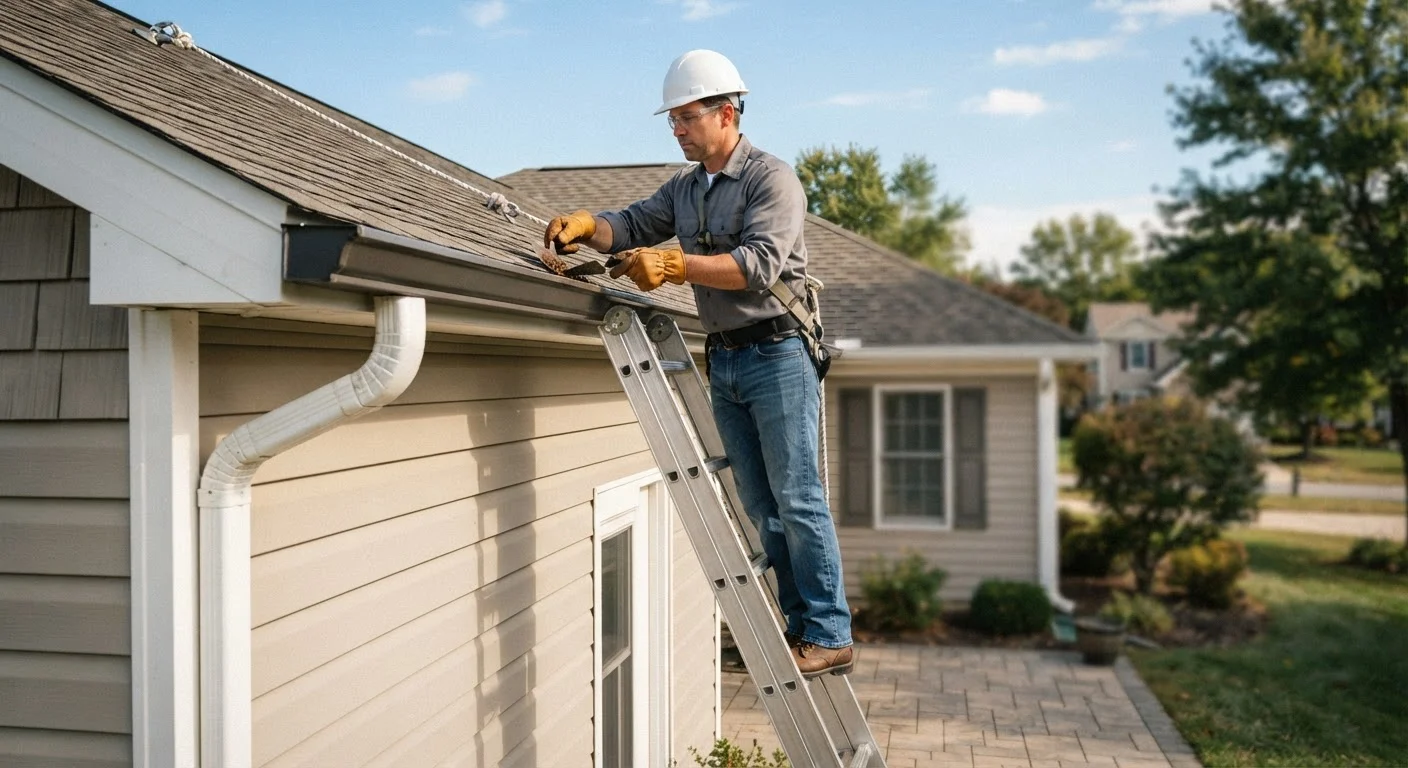
Why At-Height Safety Deserves Serious Attention
Falls are among the most common causes of serious injury during home repair work. Even a drop from a standard six-foot stepladder can result in broken bones or worse, and roof-level work dramatically raises the stakes. The goal of safe at-height practice isn't to discourage you from tackling legitimate DIY tasks — it's to make sure you complete them and walk away in good shape.
Before reaching for a ladder, take a moment to honestly assess the job. Many elevated repairs, such as cleaning gutters, patching siding, or replacing a vent cover, are well within a prepared homeowner's reach. Others — including work near roof edges, in high-wind conditions, or involving roofing materials — genuinely warrant a licensed contractor. See our guide to common DIY myths for a frank look at where the line falls.
“The majority of ladder-related injuries occur on ladders under 10 feet. Height alone isn't the hazard — incorrect setup and overconfidence are.”
— National Safety Council, U.S. nonprofit organization focused on injury prevention and workplace safety
Ladder Setup and Selection
Choosing the right ladder is your first safety decision. Extension ladders suit most exterior work on single-story homes; stepladders work well for interior ceiling repairs and low roof access. Whatever type you use, confirm the ladder's duty rating — marked on its label — exceeds your combined body weight plus tools and materials. Most household ladders are rated for 225 or 250 pounds.
Inspect your ladder thoroughly before every use
Ladders develop stress cracks, bent rungs, and worn rubber feet through normal use. A compromised ladder can fail without warning mid-task, when you have the least ability to react safely.
Apply the 4-to-1 angle rule every time you set an extension ladder
An improperly angled ladder is the leading cause of ladder-related falls at home. Too steep and it tips backward; too shallow and the feet kick out. The 4-to-1 ratio keeps forces working in your favor.
Always maintain three points of contact while on a ladder
Two hands and one foot, or two feet and one hand, on the ladder at all times gives you a stable base even if you shift weight or reach slightly. Breaking that contact to grab a tool is a common moment of loss of balance.
Never extend your reach past your body's center line while elevated
Overreaching shifts your center of gravity beyond the ladder's stable support zone, which can topple the ladder laterally or cause you to lose your footing. It's tempting to stretch a little further to avoid climbing down, but the risk is disproportionate.
Use a spotter whenever working on an extension ladder outdoors
A second person at the base adds meaningful stability, can alert you to shifting ground or incoming hazards, and can summon emergency help immediately if something goes wrong.
For exterior access to gutters or fascia boards, the 4-to-1 angle rule is the widely accepted standard: for every four feet of ladder height, the base should sit one foot away from the structure. A ladder reaching 16 feet should have its feet placed four feet out from the wall. This ratio balances stability against the risk of the ladder sliding backward.
Always place ladder feet on firm, level ground. Avoid setting up on soft soil, loose gravel, or sloped surfaces without purpose-built leveling feet. Lock any spreader braces fully open on a stepladder, and never stand on the top two rungs of any ladder.
Working Near Roof Edges and Elevated Surfaces
Roof edge work is where fall risk escalates sharply. If your repair requires you to step fully onto a roof surface — rather than reaching from a ladder — the safety calculus changes considerably. Sloped roofs demand non-slip footwear with rubber soles, and any pitch above 6-in-12 (meaning the roof rises 6 inches for every 12 inches of horizontal run) is generally considered unsafe to walk on without professional fall-arrest equipment.
When Professional Help Is the Right Call
Any roof work that requires walking on a surface with a pitch steeper than 6-in-12, replacing structural roofing materials, or working near power lines should be handled by a licensed roofing contractor or qualified professional. This isn't a limitation on your ability — it reflects the specialized equipment and training those tasks genuinely require. Permits and inspections may also be required for certain roof repairs depending on your local building code; check with your municipality before starting.
Never work on a roof alone. A ground spotter can stabilize the ladder base, call for help if something goes wrong, and hand up materials so you aren't climbing with your hands full. Keep tools in a belt or apron rather than pockets, and never carry anything in your hands while ascending or descending.
For homeowners tackling their first elevated projects, our complete first-project guide walks through foundational safety habits alongside practical repair techniques.
Weather, Preparation, and Knowing When to Stop
Conditions change quickly outdoors, and elevated work amplifies the danger. Wind gusts can destabilize a ladder or throw off your balance on a roof surface; even a modest breeze creates meaningful risk at height. Rain, morning dew, and frost all reduce friction dramatically on ladder rungs and roof materials. Make it a firm rule: if conditions are less than ideal, reschedule the job.
Before climbing, do a quick equipment check. Inspect each rung for cracks, bends, or slippery residue. Confirm that rubber feet are intact and gripping. Wear close-toed, rubber-soled footwear — never sandals or smooth-soled shoes. Leave your phone accessible but pocketed, so you can call for help without reaching for it awkwardly.
Finally, recognize that some repairs that begin at manageable heights can lead you toward edges or steeper sections mid-task. Set a personal boundary before you start: identify the point at which you will stop and contact a professional rather than push further. That decision made in advance, on the ground, is far more reliable than one made while balanced on a pitch. If your project touches anything electrical, review what homeowners should know about electrical safety before you begin.
The content on this site is for informational purposes only and is not a substitute for professional advice. Always consult a qualified professional for guidance specific to your situation.