

Why Engine Oil Myths Persist
Engine oil advice gets passed down through generations of drivers, shop floors, and quick-lube waiting rooms — and a surprising amount of it is either outdated or flat-out wrong. Some myths were once grounded in truth but haven't kept up with advances in oil chemistry and engine design. Others were always convenient oversimplifications. The cost of acting on bad information ranges from unnecessary spending to genuine engine harm.
This guide walks through the most common misconceptions, corrects them with accurate information, and explains why the truth matters for your engine's long-term health. For a broader look at how engine oil fits into your vehicle's fluid system, see our plain-English guide to car fluids.
Myth
You must change your engine oil every 3,000 miles, no exceptions.
Fact
Most modern vehicles can safely go 5,000 to 10,000 miles — or more — between oil changes, depending on the oil type and engine design.
The 3,000-mile rule was a reasonable guideline for older engines using conventional oil. Today's engine tolerances are much tighter, and modern oils — especially full synthetics — are formulated to last considerably longer without breaking down. Automakers set change intervals based on rigorous engineering, and many vehicles now come equipped with oil life monitoring systems that calculate the optimal change point based on actual operating conditions. Changing oil more frequently than necessary wastes money and generates unnecessary waste oil. Always consult your owner's manual for the interval appropriate to your vehicle.
Myth
Switching from conventional to synthetic oil will cause your engine to develop leaks.
Fact
Synthetic oil does not cause leaks in engines that are in good mechanical condition.
This myth likely originated decades ago, when early synthetic formulations used additives that could swell certain older rubber seals. Modern synthetic oils are compatible with current seal materials and will not cause a properly maintained engine to leak. If an engine leaks after an oil change, the cause is almost always a pre-existing seal or gasket issue — the kind that conventional oil was simply masking by leaving behind varnish deposits that filled small gaps. Switching oils may make an underlying problem visible, but the synthetic didn't create it.
Myth
Dark or black engine oil always means it needs to be changed immediately.
Fact
Oil darkens during normal operation as it absorbs combustion byproducts — this is a sign it's working, not necessarily that it's spent.
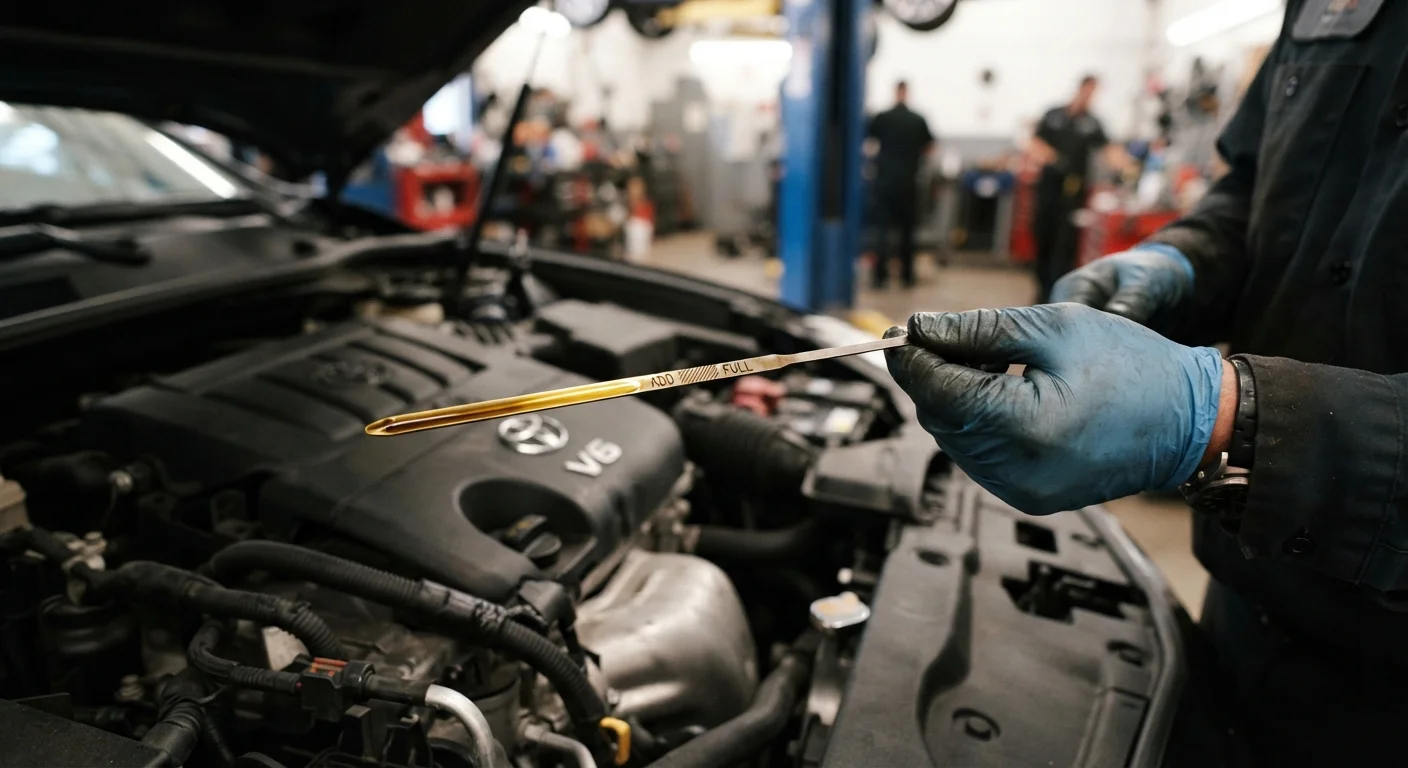
Engine oil is designed to suspend tiny particles of soot and combustion byproducts, keeping them in suspension so they don't accumulate on engine surfaces. This process turns the oil darker relatively quickly, particularly in diesel engines. Color alone is not a reliable indicator of whether an oil change is needed. What matters is the oil's remaining additive package and viscosity — characteristics that can only be assessed through analysis or by following the manufacturer's recommended service interval. A dipstick check for oil level and consistency is useful, but color is not the determining factor.
Myth
A higher oil viscosity grade (like 10W-40 vs. 5W-30) gives your engine better protection.
Fact
Using a viscosity grade not specified for your engine can reduce protection and fuel efficiency, not improve it.
Viscosity grades describe how oil flows at different temperatures — the first number (with the W for winter) indicates cold-weather pumpability; the second indicates viscosity at operating temperature. Engine oil passages, bearing clearances, and hydraulic systems are all engineered around a specific viscosity range. Using an oil that's too thick can starve components of lubrication during cold starts; using one that's too thin at high temperatures may not maintain the protective film between metal surfaces. The correct grade is the one specified in your owner's manual — heavier is not better by default.
Myth
You should never mix synthetic and conventional oil — it will damage your engine.
Fact
Mixing synthetic and conventional oil of the same viscosity grade is generally safe in an emergency, though it's not an ideal long-term practice.
Both synthetic and conventional motor oils use compatible base oils and additive packages — they can be mixed without causing a chemical reaction that harms your engine. The result is simply a blend that performs somewhere between the two. If you're running low on oil away from home and only have access to a different oil type, topping up with the correct viscosity grade is acceptable. That said, mixing regularly undermines the performance advantages of full synthetic oil, so it should be a temporary measure rather than a habit. Change to a full, consistent oil type at your next service.
What the Evidence Actually Says
Modern engines are designed to tighter tolerances than their predecessors, and modern oils — both conventional and synthetic — are formulated to match. The American Petroleum Institute (API) and the Society of Automotive Engineers (SAE) set the standards that govern oil performance ratings, and automakers engineer oil change intervals around those standards, not around industry rules of thumb.
7,500–10,000 mi
Typical modern oil change interval
Many automakers now specify intervals of 7,500 to 10,000 miles for synthetic oil under normal driving conditions, a significant departure from the old 3,000-mile rule.
~40%
Engine wear occurring at cold start
Engineering research has long estimated that a disproportionate share of engine wear occurs in the first moments after a cold start, before oil reaches full operating pressure — underscoring why correct viscosity matters.
The single most reliable source of guidance for your specific vehicle is your owner's manual. It specifies the correct oil viscosity grade, the API performance category, and the recommended change interval for your driving conditions. Oil life monitoring systems in many newer vehicles go further, calculating remaining oil life based on actual driving data rather than mileage alone.
For a deeper look at how engine oil degrades and why neglecting it causes lasting damage, our engine oil guide covers the chemistry and consequences in plain terms. And if you're weighing synthetic against conventional oil, the synthetic vs. conventional comparison explains the real performance differences without the marketing noise.
Your Owner's Manual Overrides All Rules of Thumb
No general guideline — including anything in this article — replaces the service specifications written for your specific engine. Automakers engineer oil type, viscosity grade, and change intervals to exacting tolerances. Following third-party shortcuts instead of manufacturer guidance can void warranties and, over time, cause premature engine wear. Keep your manual in the glove box and reference it whenever you're unsure.
The content on this site is for informational purposes only and is not a substitute for professional advice. Always consult a qualified professional for guidance specific to your situation.