

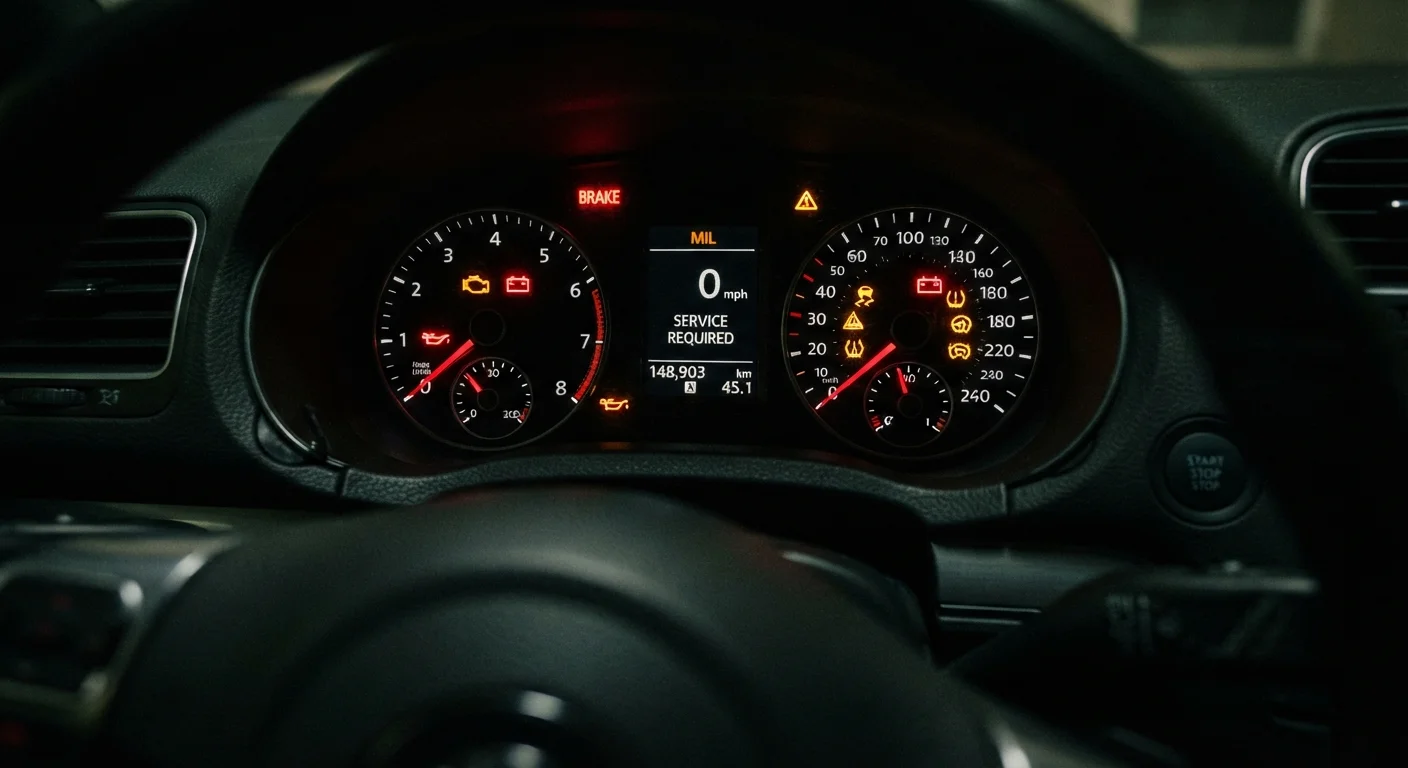
The Color System: How Urgency Is Communicated
Your dashboard uses a traffic-light color logic to signal how quickly you need to act. Red lights indicate an active, potentially serious problem — stop driving safely as soon as conditions allow. Amber or yellow lights signal a fault that needs attention soon, but typically won't cause immediate damage if addressed within a reasonable period. Green and blue lights are informational, confirming that a system (like high beams or cruise control) is active.
This color convention is broadly consistent across manufacturers, though exact symbols differ. Always cross-reference your owner's manual for your specific vehicle. For a broader view of how fault severity is categorized, see our guide on reading a vehicle health check report.
| Colors used for warning lights | Red (urgent), amber/yellow (caution), green/blue (informational) |
| TPMS required since | Model year 2008 (all US passenger vehicles) (NHTSA FMVSS No. 138) |
| OBD-II standardization date | Required on all US cars from 1996 onward (EPA/CARB regulatory requirement) |
| Engine overheat risk threshold | Above ~220°F coolant temperature |
| Safe response to red warning light | Pull over safely as soon as possible and do not continue driving |
| Check engine light possible causes | Loose gas cap, faulty O2 sensor, catalytic converter issue, and dozens more |
The Most Common Warning Lights — and What They Mean
Check Engine (Malfunction Indicator Light): This amber symbol is one of the most misunderstood lights on the dash. It can indicate anything from a loose gas cap to a failing catalytic converter. While it rarely demands you stop immediately, it should be diagnosed promptly — continuing to ignore it can turn a minor fault into a costly repair. A qualified technician will read the stored DTC using an OBD-II scanner to pinpoint the cause.
Oil Pressure Warning (red oil can): This is a pull-over-now light. Low oil pressure means engine components may not be receiving adequate lubrication. Continuing to drive risks severe, irreversible engine damage within minutes. Switch off the engine safely as soon as you can. See our related guide on car fluids in plain English for context on why oil pressure matters.
Engine Temperature Warning (red thermometer): Indicates the coolant has exceeded safe operating temperature. Pull over, switch off the engine, and allow it to cool before checking the coolant reservoir — never open a hot radiator cap. Driving an overheating engine risks warped cylinder heads and catastrophic failure.
Battery Warning (red battery symbol): The charging system isn't maintaining voltage. This could be a failing alternator, a worn drive belt, or a weak battery. You may have limited time before the vehicle loses power entirely; minimize electrical loads and head directly to a service facility.
Brake System Warning (red exclamation in circle): If the parking brake is fully released and this light remains on, it may indicate low brake fluid or a hydraulic fault. Do not ignore this — brake performance may be compromised. Our article on brake warning signs covers related symptoms worth knowing.
TPMS (tire with exclamation): One or more tires are significantly under-inflated. Check pressures at the nearest air station. Under-inflated tires increase stopping distances and blowout risk. The system does not identify which tire has low pressure on all vehicles, so check all four.
Your Owner's Manual Is the Definitive Reference
Warning light symbols and their exact meanings can vary between makes and models. While general conventions (red = urgent, amber = caution) are widely followed, your vehicle's owner's manual is always the authoritative source for your specific car. Keep a digital or physical copy accessible — many manufacturers offer free PDF downloads through their websites.
Malfunction Indicator Light (MIL)
Commonly called the 'check engine' light, the MIL signals that the vehicle's onboard diagnostic system has detected a fault in the engine, transmission, or emissions controls. It requires professional diagnosis with a scan tool to read the stored fault code.
OBD-II
On-Board Diagnostics II is a standardized vehicle self-diagnostic system required on all US cars built after 1996. It monitors engine and emissions components and stores fault codes that technicians can read with a scan tool.
Fault Code (DTC)
A Diagnostic Trouble Code is an alphanumeric code stored by the vehicle's computer when a sensor or system falls outside its expected operating range. Codes help technicians pinpoint the specific cause of a warning light.
Brake Fluid Reservoir
A small translucent container, usually located near the firewall on the driver's side, that holds hydraulic brake fluid. Low fluid level can indicate a leak in the brake system or worn brake pads.
Coolant Temperature
A measure of the temperature of the liquid circulating through the engine to prevent overheating. Most engines operate between 195°F and 220°F; temperatures above this range risk serious engine damage.
TPMS
Tire Pressure Monitoring System — a federally mandated sensor system (required on all US vehicles from 2008 onward) that alerts drivers when one or more tires are significantly under-inflated.
When to Pull Over Immediately vs. Schedule Service
Not every warning light demands you stop on the spot, but knowing which ones do is critical. Pull over immediately if you see: the oil pressure light, the engine temperature warning, or any red light accompanied by unusual sounds, smoke, burning smells, or a change in vehicle handling. These combinations point to an active failure that can escalate rapidly.
Schedule service promptly (within days) for: an illuminated check engine light with no drivability issues, the TPMS light, the battery warning, or an amber brake light. These indicate faults that won't necessarily strand you immediately but will worsen and become more expensive if neglected.
Before every journey — especially longer trips — a quick visual walk-around can help you catch low tire pressure or fluid leaks before they become dashboard emergencies. Our pre-journey vehicle check guide walks you through exactly what to inspect. Understanding your car's systems more broadly is covered in the Understanding Your Car hub.
The content on this site is for informational purposes only and is not a substitute for professional advice. Always consult a qualified professional for guidance specific to your situation.