

Why the Southwest Keeps Surprising Visitors
The American Southwest — spanning parts of Arizona, Utah, Nevada, New Mexico, and Colorado — is one of the most visually iconic regions in the country. Yet it's also one of the most consistently misread. Travelers often arrive expecting either a simple, scorched emptiness or a theme-park-ready highlight reel of Instagram formations. The reality is far richer and more nuanced than either picture suggests.
These misconceptions aren't harmless. Underestimating the desert's complexity leads to poor preparation. Overgeneralizing canyon landscapes leads to missed gems and crowded overlooks when quieter, equally spectacular alternatives exist nearby. And misreading accessibility leads some visitors to skip experiences they'd actually love — or to overreach into terrain they're not ready for.
Clearing up these myths isn't just academic. It's how you travel smarter, safer, and with a lot more wonder. For a broader look at how geography shapes the entire feel of American destinations, explore our region-by-region national parks guide.
Myth
Desert landscapes are empty and lifeless — just sand, rock, and heat with nothing to discover.
Fact
Southwestern deserts are among North America's most biodiverse biomes, teeming with specialized plants, insects, reptiles, birds, and mammals.
The Sonoran Desert alone supports more than 2,000 plant species, 550 bird species, and 100 reptile species. The saguaro cactus — iconic to this region — provides nesting sites for elf owls and Gila woodpeckers. Spring wildflower blooms can carpet valley floors in vivid color. Even the seemingly barren soil is colonized by biological soil crust, a fragile living community of cyanobacteria, fungi, and mosses critical to desert ecology. The emptiness is an optical illusion created by scale — slow down and look closely, and life is everywhere.
Myth
All Southwest canyons look and feel the same — once you've seen one, you've seen them all.
Fact
Canyon landscapes across the Southwest vary dramatically in geology, color palette, scale, and atmosphere — often within a single state.
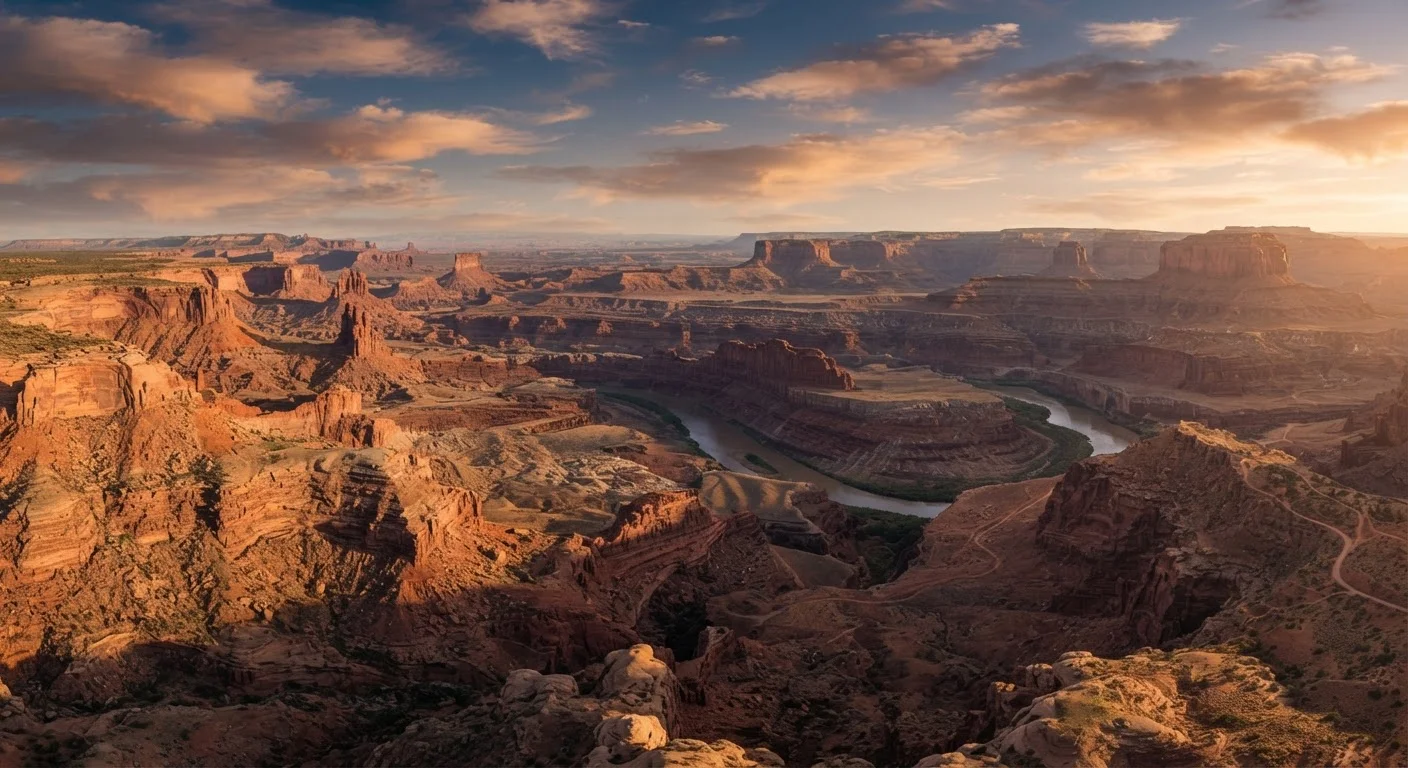
The Grand Canyon's sheer mile-deep scale is nothing like the intimate, sinuous walls of Antelope Canyon. Zion's towering Navajo sandstone monoliths feel completely different from Bryce Canyon's delicate, densely packed hoodoos. Canyonlands stretches across a vast plateau with a remote, austere quality that has little in common with the red rock amphitheaters of Sedona. Each canyon system reflects distinct geological forces, erosion timescales, and rock formations. Treating them as interchangeable means missing exactly what makes each one extraordinary.
Myth
The desert is always dangerously hot — you can only visit safely in winter.
Fact
Temperature varies enormously by elevation, season, and time of day; spring and fall offer excellent conditions across much of the region.
Low-elevation desert basins like Phoenix and Las Vegas do reach extreme summer heat, often exceeding 110°F. But many of the Southwest's most celebrated destinations — Utah's canyon country, the Colorado Plateau, New Mexico's high desert — sit at elevations where summer daytime temperatures are far more moderate, and nights can turn genuinely cold year-round. March through May and September through November bring mild, pleasant conditions to most of the region. Even summer travel is manageable with early morning starts and sensible planning.
Myth
Southwest national parks are too remote and rugged for anyone but hardcore outdoor enthusiasts.
Fact
Most major Southwest parks offer paved roads, accessible viewpoints, and well-maintained trails suitable for a wide range of fitness levels.
Grand Canyon's South Rim is lined with paved walking paths and accessible overlooks requiring minimal exertion. Arches National Park has short, flat trails leading to iconic formations, as well as more challenging options. Bryce Canyon's rim trail offers stunning hoodoo views without significant elevation change. Accessibility facilities have improved substantially across the national park system. Visitors with mobility considerations should check the National Park Service's accessibility pages for current conditions — but the assumption that all Southwest parks demand elite athleticism is simply wrong.
Myth
You need a four-wheel-drive vehicle to explore the Southwest properly.
Fact
The majority of the Southwest's most celebrated sights are reachable by standard passenger vehicle on paved or well-maintained roads.
Iconic destinations like the Grand Canyon's South Rim, Monument Valley's main loop, Bryce Canyon, and Zion are fully accessible by standard car. A high-clearance or 4WD vehicle opens additional backcountry roads — such as sections of Canyonlands' Needles District or the road to Wave trailhead — but is not required for a rich, full Southwest itinerary. Renting an unnecessarily large vehicle or assuming you need specialized gear is a common planning overreach. Research specific road conditions for any unpaved route you plan to travel, and consult land managers for current access status.
Preparation Realities for Southwest Travel
Once the myths are cleared away, what remains is a region that genuinely rewards preparation. The Southwest isn't forgiving of casual planning — but it's extraordinarily generous to visitors who take its conditions seriously.
Altitude Affects Visitors More Than Expected
Many Southwest destinations sit above 5,000 feet — some considerably higher. If you're arriving from a low-elevation city, give yourself at least a day to acclimate before attempting strenuous hikes. Symptoms such as headache, fatigue, or mild nausea are common. Stay well hydrated and consult a healthcare provider if you have cardiovascular or respiratory conditions before planning high-altitude activities.
Altitude is the most underestimated factor. Many iconic Southwest destinations sit well above 5,000 feet. Bryce Canyon's rim trails hover near 8,000 feet; parts of the Colorado Plateau exceed 7,000 feet. Visitors flying in from sea-level cities may feel fatigue, headaches, or shortness of breath — symptoms that typically ease with rest and hydration, but that can catch unprepared travelers off guard. For a thorough breakdown of physical realities including heat, isolation, and flash flood risk, see our dedicated desert travel safety guide.
Seasonal timing also defies assumptions. Spring and fall are generally the most temperate seasons across most of the region, but monsoon season — roughly July through September — brings dramatic afternoon thunderstorms to many areas. These storms are visually spectacular but can trigger dangerous flash floods in slot canyons with no local rainfall at all. Always check conditions with land managers before entering confined canyon terrain.
2,000+
Plant species in the Sonoran Desert
According to the Arizona-Sonora Desert Museum, the Sonoran Desert supports extraordinary biodiversity across its range.
~8,000 ft
Elevation of Bryce Canyon rim trails
The National Park Service notes that Bryce Canyon's high elevation means temperatures roughly 20°F cooler than nearby lowland areas.
The Southwest isn't one landscape — it's dozens. Going in with accurate expectations means you're free to be genuinely surprised by what you find, rather than confused by what you didn't expect. That's the real adventure. And if broader planning myths are shaping your trip decisions, our guide to travel planning misconceptions is worth a read before you book.
The content on this site is for informational purposes only and is not a substitute for professional advice. Always consult a qualified professional for guidance specific to your situation.