

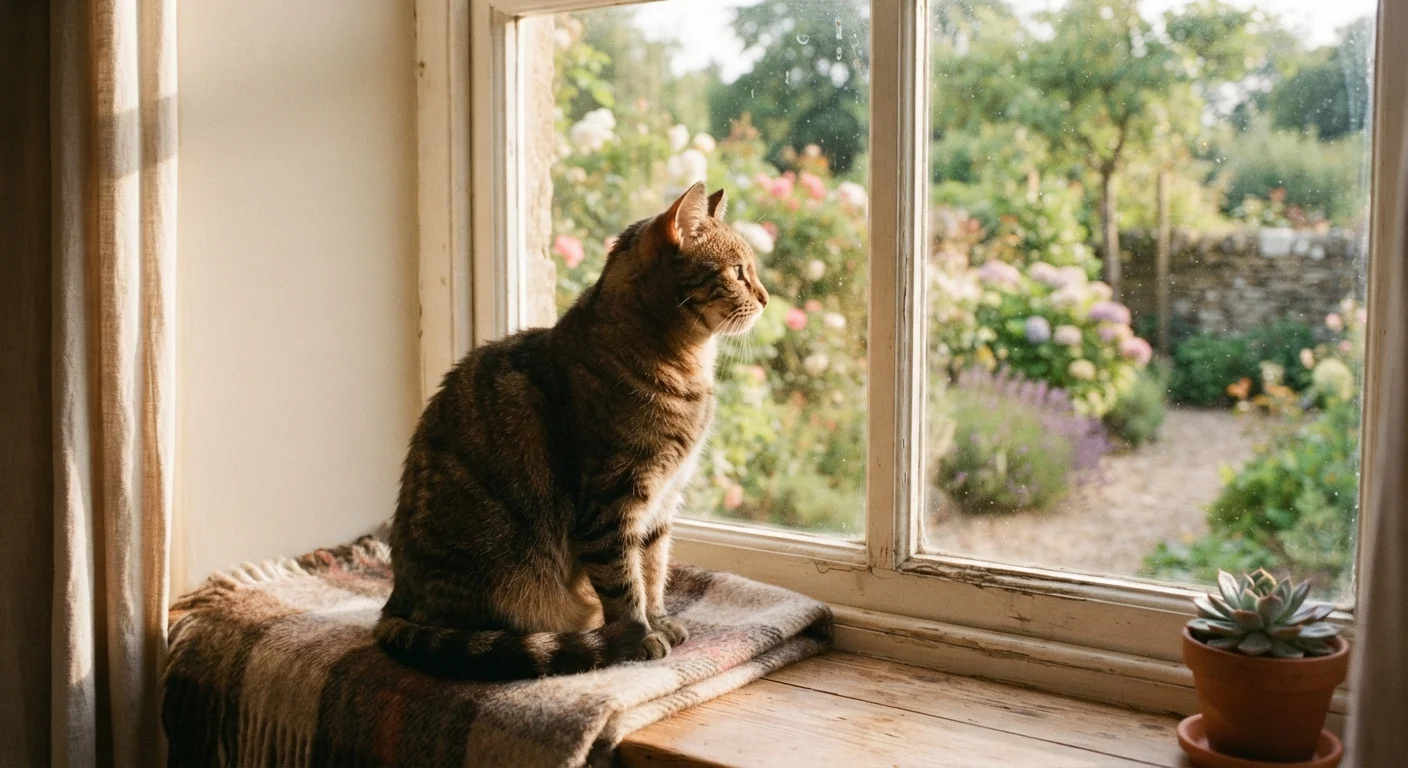
Option A
Indoor Lifestyle
The sheltered, controlled environment approach.
Best for: Cats in urban or suburban areas where traffic, predators, or disease exposure are significant concerns.
Option B
Outdoor Lifestyle
The free-roaming, stimulus-rich approach.
Best for: Cats in lower-risk rural settings where owners accept the trade-offs of independent roaming.
The Core Health Trade-offs at a Glance
The question of whether cats should live indoors or outdoors doesn't have a universal answer — it involves genuine trade-offs that vary by cat, owner, and environment. Understanding what each lifestyle actually means for a cat's physical health is the starting point for making an informed choice.
| Criterion | Indoor Lifestyle | Outdoor Lifestyle |
|---|---|---|
| Average lifespan | Generally longer (10–15+ years) | Often shorter (varies widely) |
| Injury and accident risk | Low | Significantly higher |
| Infectious disease exposure | Low (FIV, FeLV, parasites) | Higher risk |
| Obesity risk | Higher without enrichment | Lower due to activity |
| Mental stimulation | Requires deliberate effort | Naturally abundant |
| Behavioral stress risk | Higher if under-enriched | Generally lower |
| Parasite prevention needs | Moderate | High — ongoing prevention required |
For a broader look at how these considerations extend to other species, see our guide on indoor vs outdoor lifestyles for common pets.
Indoor Cats: Longer Lives, New Challenges
Research consistently suggests that indoor cats have longer average lifespans than cats allowed to roam freely outdoors. The primary reasons are straightforward: less exposure to moving vehicles, fewer encounters with dogs or wildlife, and dramatically reduced contact with infectious diseases like feline immunodeficiency virus (FIV) and feline leukemia virus (FeLV).
However, the indoor life creates its own health vulnerabilities. Without sufficient physical activity and mental stimulation, indoor cats are at elevated risk of obesity, which in turn raises the likelihood of diabetes, joint problems, and urinary tract disease. Behavioral issues — including anxiety, over-grooming, and redirected aggression — are also more common in under-stimulated indoor cats.
Owners can address many of these risks through deliberate enrichment: puzzle feeders, climbing structures, interactive play, and window perches that provide visual access to the outside world. Our article on creating a safe home environment for curious pets covers practical ways to reduce hazards while keeping indoor spaces engaging. Weight management also deserves attention — the approach to managing an overweight pet often begins with lifestyle adjustments rather than strict dietary restriction alone.
10–15+ yrs
Typical indoor cat lifespan
Veterinary organizations commonly cite indoor cats living significantly longer than free-roaming counterparts, though individual variation is considerable.
~40%
Proportion of US cats estimated to be overweight
The Association for Pet Obesity Prevention has found obesity to be among the most common preventable health conditions in pet cats in the United States.
2–5x
Increased FIV exposure risk outdoors
Studies in feline medicine indicate outdoor and feral cats are substantially more likely to test positive for FIV compared to exclusively indoor cats.
Outdoor Cats: Natural Stimulation, Real Risks
Free-roaming outdoor cats typically get more exercise, engage in natural hunting behaviors, and have lower rates of boredom-related stress. In lower-risk environments — rural areas with minimal traffic and few feral cat populations — outdoor access can support good physical and psychological wellbeing.
The risks, however, are well-documented. Beyond vehicle collisions, outdoor cats face exposure to parasites (fleas, ticks, intestinal worms), infectious disease transmitted by other cats, toxins such as pesticides or antifreeze, and predation in some areas. They can also be affected by extreme weather. These aren't rare edge cases — they are consistent findings in veterinary literature on feline mortality.
If outdoor access is part of a cat's routine, keeping vaccinations and parasite prevention current is essential. Regular veterinary check-ups become even more important, as outdoor cats may sustain injuries or pick up illnesses that aren't immediately obvious to owners.
A Note on Wildlife and Community Impact
Free-roaming cats are also documented to have an impact on local wildlife populations, particularly birds and small mammals. This consideration sits alongside feline health in broader discussions about outdoor cat management. Some communities have local ordinances or guidelines around keeping cats contained, so it's worth checking what applies in your area.
The Middle Ground: Supervised and Hybrid Approaches
Many owners and veterinarians advocate for a middle path that attempts to capture the benefits of both lifestyles. Common approaches include:
- Catio enclosures: Secure outdoor structures that allow fresh air, sunlight, and sensory stimulation without the hazards of free roaming.
- Leash training: Some cats adapt well to harness-and-leash walks, providing outdoor exploration under owner supervision.
- Supervised garden time: Allowing outdoor access in a monitored, enclosed yard reduces but doesn't eliminate all risks.
These hybrid approaches work best when introduced gradually and matched to the individual cat's temperament. A cat with a calm, adaptable personality may thrive on leash walks; a highly territorial or anxious cat might find them stressful. Observing your cat's body language signals during any new outdoor introduction can help gauge comfort levels.
Whatever approach you choose, consistent daily habits around feeding, play, and observation remain the foundation of a healthy cat's life. No single environment replaces attentive, informed ownership.
This article provides general information about cat care and is not a substitute for advice from a licensed veterinarian. Consult your vet to determine the lifestyle arrangement that best suits your individual cat's health needs.
The content on this site is for informational purposes only and is not a substitute for professional advice. Always consult a qualified professional for guidance specific to your situation.