

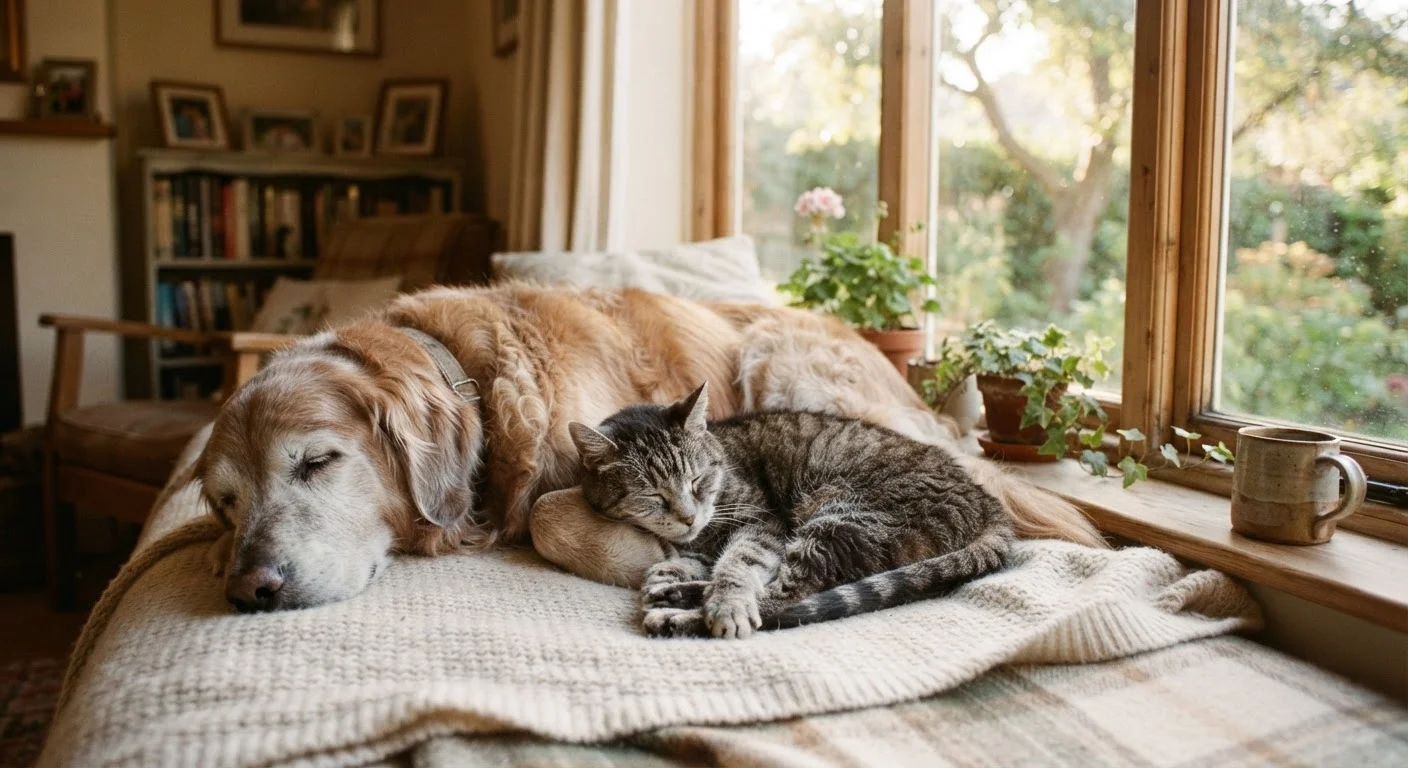
When Does a Pet Become a 'Senior'?
There is no single age at which an animal officially becomes a senior pet — the threshold depends on species, breed, and body size. For dogs, larger breeds age faster; a Great Dane may be considered senior at six or seven, while a small terrier might not reach that classification until nine or ten. Cats generally enter their senior phase around age ten to twelve, though indoor cats often live well into their late teens.
Veterinary organisations typically use a life-stage framework that includes mature adult, senior, and geriatric categories. Understanding where your pet sits in this continuum helps you anticipate, rather than simply react to, the changes ahead. For a broader overview of how the body shifts as animals age, see the companion guide on senior pet health.
~50%
Cats over 15 affected by arthritis
Research published in veterinary journals estimates arthritis affects the majority of cats aged 15 and older, though it is frequently underdiagnosed.
2×/year
Recommended vet visits for senior pets
Most veterinary associations advise bi-annual wellness examinations for dogs and cats once they reach senior life stage.
6–7 yrs
Age large-breed dogs enter senior stage
Larger dog breeds have shorter lifespans and are generally classified as seniors earlier than small or medium breeds.
Nutritional Needs in Older Animals
Metabolism slows as pets age, which often means caloric requirements decrease — yet the need for high-quality, easily digestible nutrients increases. A common mistake is continuing to feed a senior pet the same volume and formulation used during their adult years, which can contribute to weight gain and place extra strain on joints and organs.
Key nutritional considerations for ageing pets include:
- Protein quality: Senior pets benefit from highly bioavailable protein to maintain muscle mass without stressing the kidneys.
- Reduced phosphorus: Particularly important for cats prone to chronic kidney disease.
- Joint-supportive nutrients: Omega-3 fatty acids and, in some cases, glucosamine may help manage age-related joint changes — discuss specific supplements with a veterinarian before adding them.
- Hydration: Older pets are more susceptible to dehydration. If your dog or cat seems to be drinking more than usual, that shift can itself be a symptom — learn what increased thirst may signal.
Transition your senior pet to a life-stage-appropriate diet gradually over seven to ten days to avoid gastrointestinal upset, and monitor body condition score monthly rather than relying on weight alone.
Body condition scoring accounts for muscle loss, which can occur even when a pet's scale weight appears stable — a common and easily missed issue in older animals.
Ask your veterinarian to perform a pain assessment at every senior wellness visit, even if your pet seems comfortable — many animals mask discomfort effectively until it becomes severe.
Prey-species instinct and stoic temperament mean pets often suppress visible pain signals, causing owners and even clinicians to underestimate how much an animal is struggling.
Physical Activity: Finding the Right Balance
Regular, gentle exercise remains important for senior pets — it supports a healthy weight, maintains muscle tone, and provides mental stimulation. The key word is gentle. High-impact activities that were appropriate in younger years may now aggravate joint pain or cause injury.
For dogs, shorter but more frequent walks are often better than one long outing. Swimming can be an excellent low-impact option for dogs with arthritis. For cats, interactive play sessions with wand toys or puzzle feeders keep the mind active without demanding strenuous movement. Exercise needs vary significantly by breed and life stage — consulting that framework can help owners tailor activity appropriately.
Short Sessions Work Better Than Long Ones
For senior dogs, two or three 10–15 minute walks spread through the day are generally less taxing on joints than one 45-minute outing. Watch for signs your pet is tiring — lagging behind, reluctance to continue, or limping after activity — and adjust duration accordingly. Always allow time for a slow warm-up and cool-down.
Behavioural and Emotional Changes to Watch For
Changes in behaviour are among the earliest signals that something has shifted in an ageing pet's health or emotional state. Increased irritability, reluctance to be touched, withdrawal from family interaction, or altered sleep patterns can all reflect underlying pain, cognitive dysfunction syndrome (a form of age-related cognitive decline), or sensory loss such as diminished hearing or vision.
Cognitive dysfunction syndrome in dogs and cats shares some features with dementia in humans — affected animals may appear disoriented, vocalise at night, or forget previously learned habits such as house-training. Documenting specific changes you observe makes it far easier to discuss them constructively with a veterinarian. For a detailed checklist of behavioural changes worth monitoring, visit our guide on pet behavioural changes that signal distress.
Don't Dismiss Behaviour Changes as 'Just Aging'
It is tempting to attribute a senior pet's new reluctance to climb stairs or play to old age, but these changes frequently indicate treatable pain or illness. A veterinarian can distinguish between normal age-related slowing and conditions that respond well to intervention. Early identification almost always leads to better outcomes.
Preventive Veterinary Care for Senior Pets
For adult pets, an annual wellness examination is typically sufficient. Once a pet enters their senior years, most veterinarians recommend increasing that to twice yearly. Because animals age faster than humans — and because they instinctively mask discomfort — six months in a senior pet's life represents a significant window during which conditions can develop or progress.
Routine senior wellness visits generally include:
- Full physical examination including lymph nodes, eyes, ears, teeth, and coat condition
- Blood chemistry panel to assess organ function
- Urinalysis, particularly valuable for detecting early kidney disease in cats
- Blood pressure measurement, which becomes more relevant as pets age
- Dental assessment, since periodontal disease is common and can affect systemic health
Proactive monitoring through the Pet Health & Wellness hub can help owners stay current with general wellness guidance across all life stages.
Dental Disease Is a Systemic Health Risk
Untreated periodontal disease does not just affect the mouth — bacteria from infected gums can enter the bloodstream and affect heart, kidney, and liver function. Senior pets are disproportionately affected, yet owners often overlook oral health. Ask your veterinarian to assess your pet's teeth at every visit and discuss professional cleaning if recommended.
Adapting the Home Environment
Physical comfort at home can make a meaningful difference to an older pet's quality of life. Arthritis, for example, is extremely common in senior dogs and cats — studies suggest it affects the majority of cats over twelve — but it is frequently underdiagnosed because signs are often subtle.
Practical modifications to consider include:
- Orthopedic bedding: Supportive foam beds reduce pressure on stiff joints and help arthritic animals rest more comfortably.
- Ramps and steps: Low-profile ramps allow pets to access furniture or vehicles without the jumping that can aggravate joint pain.
- Raised food and water bowls: Particularly helpful for large dogs with neck or shoulder stiffness.
- Non-slip flooring: Yoga mats or carpet runners on slippery surfaces reduce falls and the anxiety associated with them.
- Litter box access: Cats with mobility issues benefit from boxes with lower sides, placed on the same floor as where the cat spends most of their time.
Environmental enrichment also matters emotionally. Senior pets, like younger ones, benefit from predictable routines, gentle interaction, and sensory engagement suited to their current capabilities. Understanding the social nature of your pet — whether they are a species that seeks companionship or one that values independence — can guide how you structure that enrichment. See how social versus solitary species differ in their needs.
This article is intended for general informational purposes only and does not constitute veterinary advice. Always consult a qualified veterinarian for guidance specific to your pet's health and care needs.
The content on this site is for informational purposes only and is not a substitute for professional advice. Always consult a qualified professional for guidance specific to your situation.