

What Counts as 'More Than Usual'?
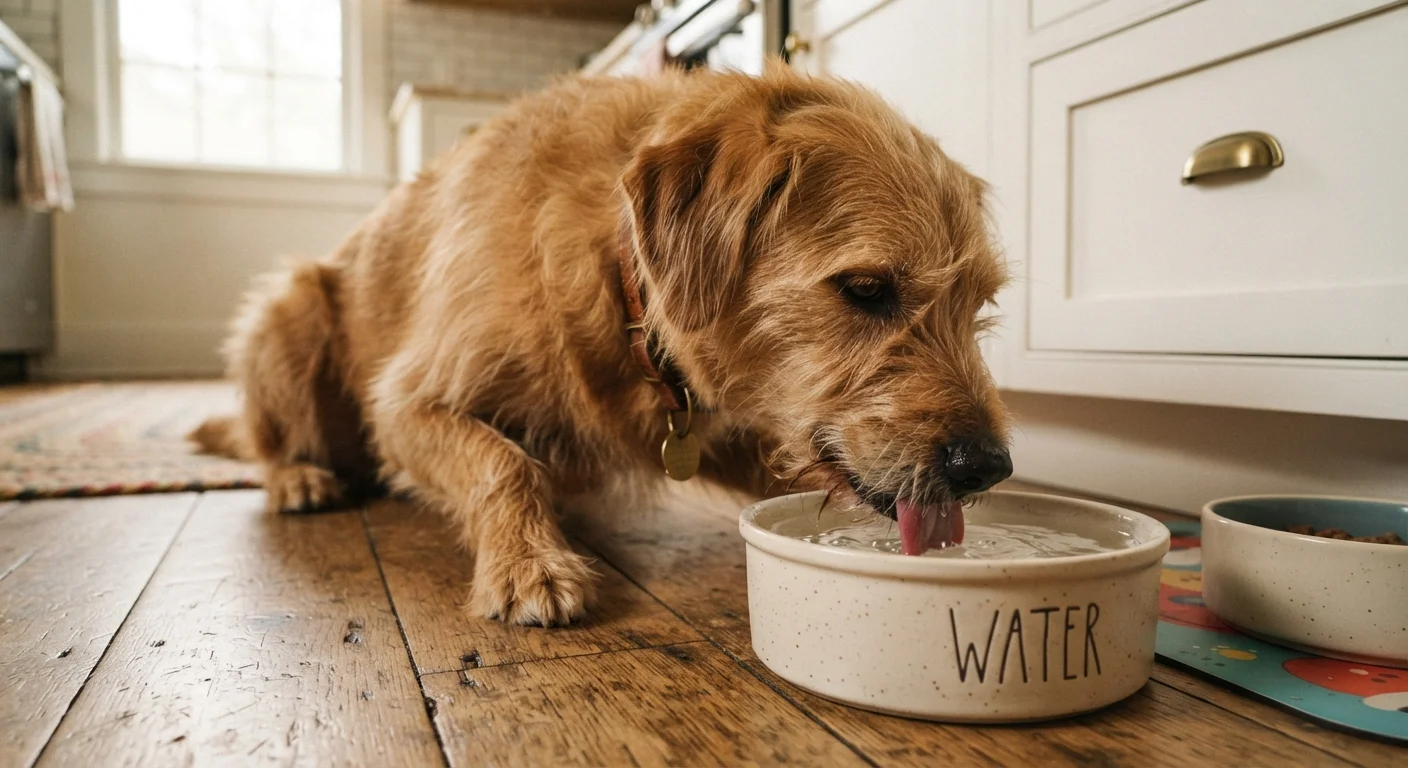
Before assuming something is wrong, it helps to understand your pet's baseline. Water consumption naturally fluctuates. A dog that just finished a long walk on a warm afternoon is going to drink more — that's expected physiology, not cause for concern.
The pattern worth noting is one that persists across days or appears suddenly without an obvious trigger. If you find yourself refilling the water bowl far more frequently than usual, or if your pet seems unable to satisfy their thirst, that's the signal to investigate further.
Increased urination often accompanies increased drinking (collectively referred to by vets as PU/PD — polyuria and polydipsia). If your house-trained dog is having accidents indoors, or your cat is filling the litter box more than normal, the two symptoms together carry more diagnostic weight than either alone. See our guide to behavioral changes that signal distress for a broader look at symptoms worth monitoring.
Everyday Reasons Your Pet May Drink More
Several entirely normal factors can temporarily drive up your pet's water intake:
- Diet changes: Switching from wet food (which contains significant moisture) to dry kibble substantially reduces the water your pet gets through meals, prompting them to drink more from their bowl.
- Heat and humidity: Pets regulate body temperature partly through panting (dogs especially), which increases fluid loss and the need to rehydrate.
- Exercise: More physical activity means more water needed for muscle function and cooling.
- Salty treats or food: Just as with humans, saltier food temporarily increases thirst.
- Medications: Corticosteroids — commonly prescribed for allergies and inflammatory conditions — are well known to increase thirst and urination as a side effect.
If one of these factors applies and the increased drinking resolves within a day or two, there's likely no underlying issue. That said, even benign causes can mask real ones, so ongoing monitoring is worthwhile. For context on how food choices affect overall health, our article on keeping an overweight pet healthy touches on the role diet plays in a pet's wellbeing.
Track Before Your Vet Appointment
Measuring your pet's exact water intake for two to three days before seeing a vet gives the clinician concrete data rather than impressions. Use the same bowl, fill it to the same level each morning with a measured amount, and record the remainder each evening. This small step can meaningfully speed up diagnosis.
Medical Conditions Associated With Increased Thirst
When increased thirst isn't explained by lifestyle factors, a veterinarian will consider a range of medical causes. The most commonly investigated include:
- Diabetes mellitus: Excess glucose in the bloodstream spills into urine, pulling water with it and creating persistent thirst. Both dogs and cats can develop diabetes.
- Chronic kidney disease: Damaged kidneys lose the ability to concentrate urine efficiently, meaning more water is needed to flush waste products. This condition is particularly common in older cats.
- Hyperthyroidism: An overactive thyroid gland — seen most often in middle-aged to senior cats — raises metabolic rate and can drive increased thirst and urination.
- Cushing's disease (hyperadrenocorticism): Overproduction of cortisol affects fluid regulation and is among the more common hormonal disorders in dogs.
- Pyometra: A serious uterine infection in unspayed females that can cause systemic illness, including increased thirst.
- Liver disease: Impaired liver function can alter fluid balance and thirst regulation.
This isn't an exhaustive list, and a veterinarian's role is to narrow down which — if any — of these applies through targeted diagnostics. Our overview of how health needs shift as pets age explains why older animals are particularly susceptible to several of these conditions.
Never Restrict Water in Response to Excessive Drinking
It may seem logical to limit water if your pet is drinking excessively, but this can be genuinely dangerous. Many conditions that cause increased thirst also affect the body's ability to stay hydrated. Restricting water access without veterinary guidance can worsen the underlying problem and lead to dehydration. Always consult a vet first.
What to Do If You're Concerned
The most useful thing you can do before a vet visit is gather data. Measure your pet's water intake over two to three days using a consistent method — fill the bowl with a measured amount each morning and record what's left each evening. Note any other changes you've observed: appetite, energy, urination frequency, weight, or coat condition.
~10%
Cats affected by chronic kidney disease
Research published in veterinary literature suggests chronic kidney disease affects an estimated 1 in 10 cats overall, with prevalence rising substantially in cats over age 15.
1 in 300
Dogs diagnosed with diabetes mellitus
Veterinary epidemiological studies estimate approximately 1 in 300 dogs may develop diabetes, with middle-aged to senior dogs at higher risk.
Armed with this information, your veterinarian can decide whether blood work, a urinalysis, or other tests are warranted. Many of the conditions associated with increased thirst are manageable when caught early, which makes timely reporting valuable.
Avoid the temptation to restrict water access in response to excessive drinking — this can be harmful, particularly if an underlying condition is already causing dehydration. Always consult a professional before making changes to your pet's care routine based on a new symptom.
For a deeper look at how aging changes a pet's health landscape, see our article on caring for ageing pets.
This article is for general informational purposes only and does not constitute veterinary medical advice. Always consult a licensed veterinarian for guidance specific to your pet's health.
Frequently Asked Questions
A general guideline is that dogs need roughly 1 ounce of water per pound of body weight daily, while cats need somewhat less — especially if they eat wet food. These are rough benchmarks, and individual needs vary with activity level, diet, and climate. Your veterinarian can help establish what's typical for your specific pet.
Not always. Diet changes, warmer weather, increased exercise, or a new medication can all temporarily increase thirst without indicating illness. However, when increased thirst is persistent, sudden, or accompanied by other symptoms like weight loss or frequent urination, it warrants professional evaluation.
Common conditions include diabetes mellitus, chronic kidney disease, hyperthyroidism (especially in cats), Cushing's disease (hyperadrenocorticism), pyometra in unspayed females, and liver disease. A veterinarian uses blood tests, urinalysis, and other diagnostics to identify which condition may be involved.
If you notice your pet drinking noticeably more for several days in a row, or if the change is sudden and dramatic, schedule a veterinary appointment. Pair it with other signs — increased urination, lethargy, weight loss, or appetite changes — and treat it as more urgent.
Yes. Corticosteroids (such as prednisone) are among the most common medications that increase thirst and urination in pets. If your pet recently started a new medication and you've noticed more drinking, mention it to your veterinarian — they can confirm whether it's an expected side effect.
Use a measuring cup to fill your pet's water bowl each morning with a known amount, then measure what remains at the end of the day. Account for any water from other sources. Do this for several consecutive days and share the data with your vet for a more accurate assessment.
The content on this site is for informational purposes only and is not a substitute for professional advice. Always consult a qualified professional for guidance specific to your situation.