

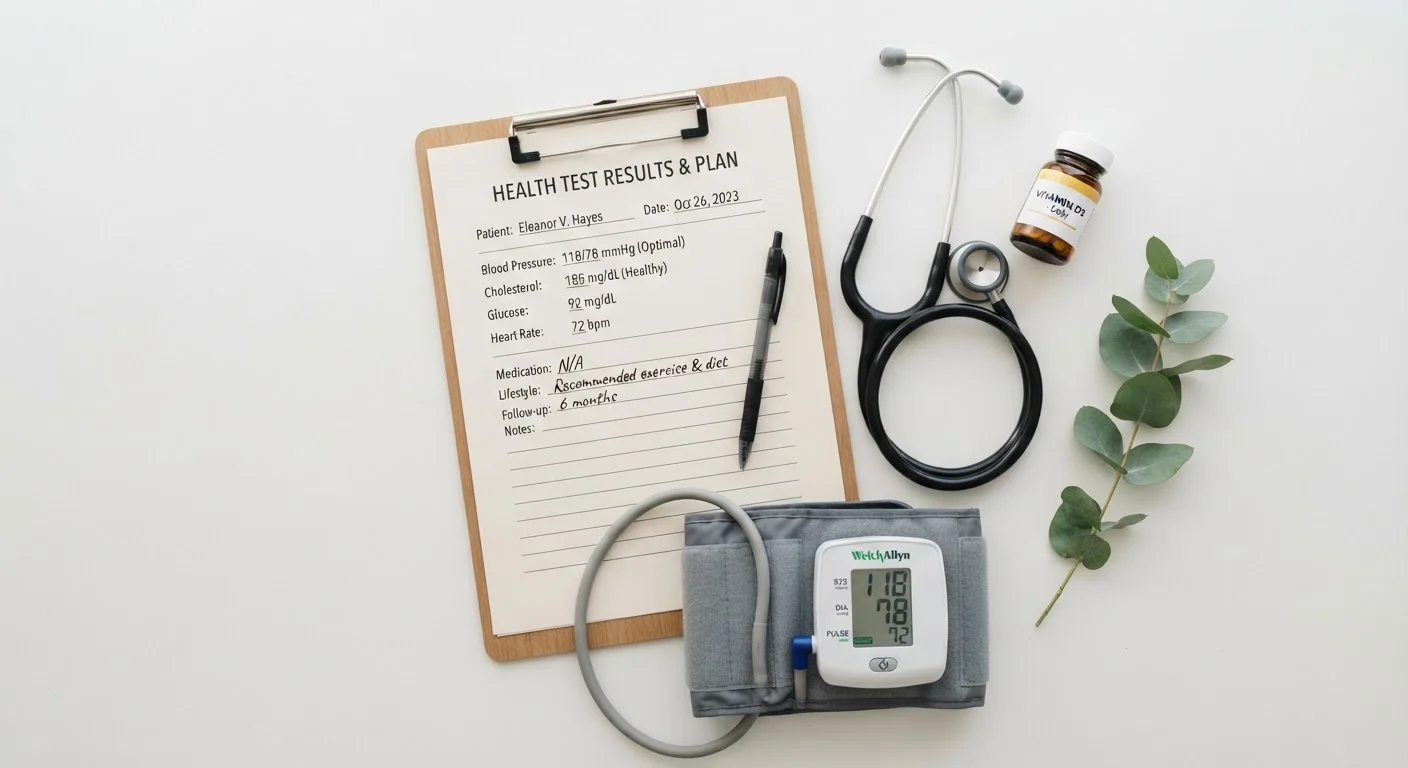
Why These Three Numbers Matter
When a doctor orders routine blood work or takes your blood pressure, they're capturing a snapshot of processes happening silently inside your body every day. Cholesterol, blood sugar (glucose), and blood pressure don't tell the whole story of your health — but together, they flag some of the most consequential risks adults face: cardiovascular disease, stroke, and diabetes.
What makes these markers especially important is that elevated readings typically produce no pain, fatigue, or warning signs. Many people discover high blood pressure or abnormal cholesterol only because they happened to get screened. If you're building a foundation for long-term wellness, understanding these numbers is a logical place to begin. See our guide to preventive health for adults for a broader look at where screenings fit into your overall care.
~1 in 3
U.S. adults with high blood pressure
The Centers for Disease Control and Prevention estimates roughly one in three American adults has hypertension, and many are unaware of it.
38%
U.S. adults estimated to have prediabetes
According to CDC data, approximately 38% of U.S. adults have prediabetes — and the majority do not know it.
>50%
Adults with borderline-high or high LDL cholesterol
CDC surveillance data indicates that more than half of U.S. adults have LDL cholesterol levels that may warrant clinical attention.
Cholesterol: More Than One Number
Cholesterol is a fatty substance your body needs — but in excess, certain forms accumulate in artery walls and raise the risk of blockages. A standard lipid panel measures several values:
- Total cholesterol: The combined measure of all cholesterol in your blood.
- LDL (low-density lipoprotein): Often labeled 'bad' cholesterol because high levels are associated with plaque buildup in arteries.
- HDL (high-density lipoprotein): Often labeled 'good' cholesterol because it helps carry cholesterol away from arteries.
- Triglycerides: A type of fat in the blood; elevated levels are an independent cardiovascular risk factor.
Clinicians don't look at total cholesterol alone — the ratio of LDL to HDL, alongside your broader health history, shapes how any result is interpreted. Diet, physical activity, genetics, and certain medications all influence cholesterol levels.
Blood Sugar: A Window Into Metabolic Health
Blood glucose — the amount of sugar circulating in your blood — reflects how effectively your body uses insulin to process carbohydrates. Two common tests are used:
- Fasting glucose: Measures blood sugar after at least eight hours without eating. A level below 100 mg/dL is generally normal.
- A1C (hemoglobin A1C): Reflects average blood sugar over roughly three months, expressed as a percentage. Below 5.7% is generally considered normal.
Persistently elevated blood sugar strains blood vessels and nerves over time. The prediabetes range — fasting glucose of 100–125 mg/dL or A1C of 5.7–6.4% — signals an opportunity to intervene before type 2 diabetes develops. Lifestyle modifications at this stage can be highly meaningful, though what's appropriate for any individual should be discussed with a clinician.
Track Your Numbers Over Time
Ask your doctor or patient portal for copies of your lab results at each visit, and keep a simple personal record. Trends across multiple screenings — rather than any single data point — are what clinicians find most informative. Bringing this history to appointments helps your provider give more personalized guidance.
Blood Pressure: Understanding the Two-Number Reading
Blood pressure is expressed as two numbers — for example, 118/76 mmHg. The first (systolic) reflects pressure in your arteries when your heart contracts; the second (diastolic) reflects pressure between beats. Standard classifications from major cardiovascular organizations generally describe:
- Normal: Below 120/80 mmHg
- Elevated: Systolic 120–129 and diastolic below 80
- Stage 1 hypertension: 130–139 / 80–89 mmHg
- Stage 2 hypertension: 140/90 mmHg or higher
Chronic high blood pressure puts ongoing strain on the heart, kidneys, and blood vessels. Single readings can be affected by stress, caffeine, or activity — which is why patterns over multiple measurements matter more than any one result. Our article on self-checks vs. clinical blood pressure readings explores how and when to monitor at home.
“Blood pressure is a powerful predictor of cardiovascular risk, yet it remains one of the most undertreated conditions in adults — largely because it causes no symptoms until serious damage has already occurred.”
— American Heart Association, Leading U.S. cardiovascular health organization
How to Use These Numbers Proactively
Numbers without context have limited value. A result that falls slightly outside a reference range may be clinically insignificant for one person and important for another, depending on age, family history, existing conditions, and medications. The goal of knowing these markers is to enable informed, collaborative conversations with your doctor — not to self-diagnose.
That said, there's value in tracking trends over time. A cholesterol level that has climbed steadily over five years tells a different story than a consistently stable one. Similarly, wearable fitness data can complement — but not replace — clinically measured markers like blood pressure or blood glucose.
If you haven't had these markers checked recently, speaking with a primary care provider is the most straightforward next step. Routine screening is one of the most evidence-supported tools available for catching modifiable risk early.
This article is for general informational and educational purposes only. It is not a substitute for professional medical advice, diagnosis, or treatment. Always consult a qualified healthcare provider regarding any health questions or before making changes to your care.
Frequently Asked Questions
For most adults, a total cholesterol level below 200 mg/dL is generally considered desirable. LDL (often called 'bad' cholesterol) is ideally below 100 mg/dL, while HDL ('good' cholesterol) above 60 mg/dL is considered protective. Your doctor will interpret these numbers relative to your overall cardiovascular risk.
A fasting blood glucose between 100–125 mg/dL typically indicates prediabetes, while 126 mg/dL or higher on two separate tests generally meets the diagnostic threshold for type 2 diabetes. An A1C between 5.7% and 6.4% also corresponds to prediabetes range. Always discuss results with your healthcare provider.
The top number (systolic) measures pressure when your heart beats; the bottom (diastolic) measures pressure between beats. A reading of 120/80 mmHg is considered normal by most clinical guidelines. Readings consistently at or above 130/80 are generally classified as high blood pressure (hypertension).
Yes — both conditions are frequently called 'silent' because they rarely cause noticeable symptoms until significant damage has occurred. This is precisely why routine screening is so important, even for people who feel well.
General guidance from major health organizations suggests adults have cholesterol checked every four to six years starting at age 20, with more frequent checks for those with risk factors. Blood pressure should be checked at every routine healthcare visit. Blood sugar screening frequency depends on your age and risk profile. Ask your doctor what schedule is right for you.
Research consistently shows that regular physical activity, a balanced diet, maintaining a healthy weight, limiting alcohol, and not smoking can positively influence cholesterol, blood sugar, and blood pressure. The degree of improvement varies by individual, and some people also require medication — which only a clinician can determine.
The content on this site is for informational purposes only and is not a substitute for professional advice. Always consult a qualified professional for guidance specific to your situation.