

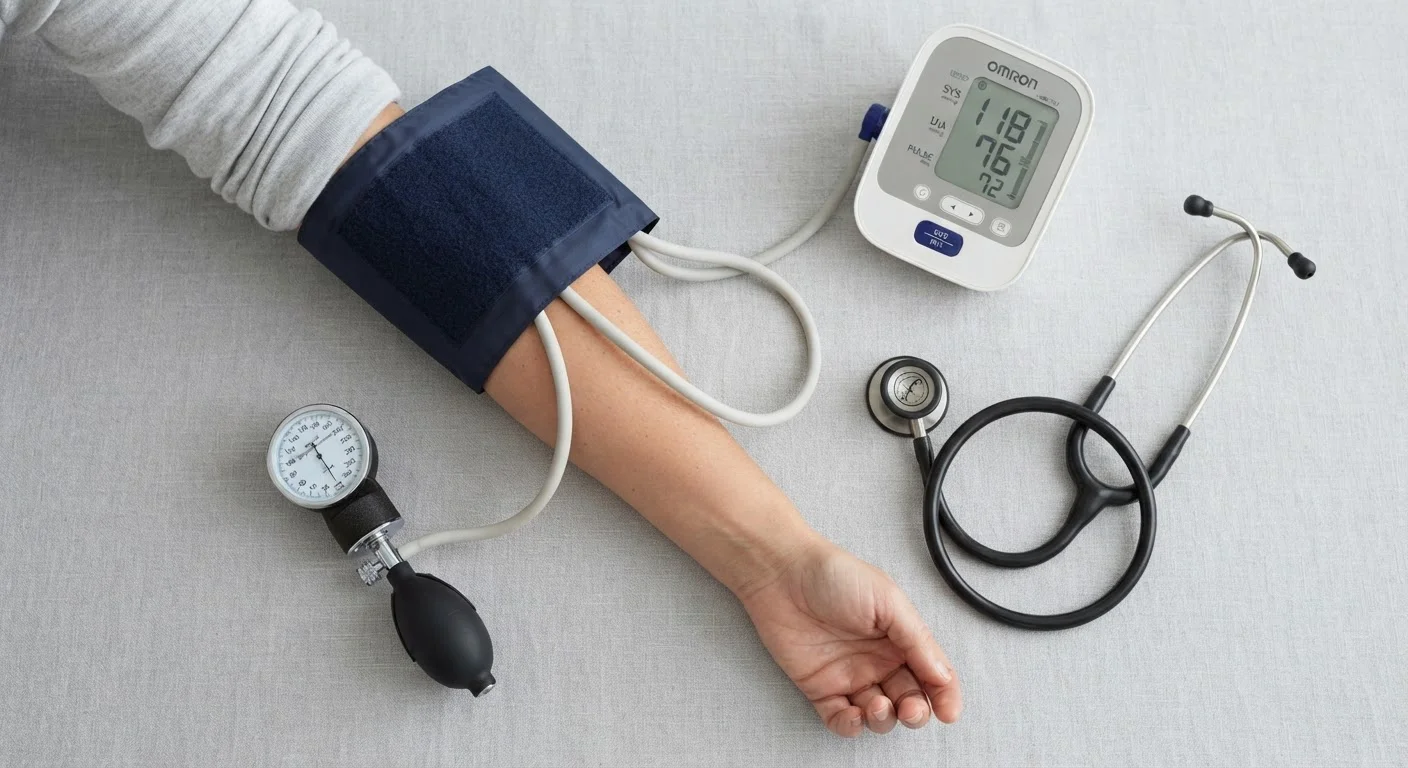
Option A
At-Home Blood Pressure Monitoring
The convenient, continuous tracking option.
Best for: People who need frequent readings over time to track trends, manage a known diagnosis, or detect white-coat effects.
Option B
Clinical Blood Pressure Readings
The standardized, professionally interpreted benchmark.
Best for: People seeking a validated baseline, diagnostic confirmation, or professional interpretation of their cardiovascular risk.
Why Blood Pressure Measurement Method Matters
Blood pressure is one of the most measured vital signs in preventive care — and also one of the most context-dependent. A single number taken at a single moment rarely tells the full story. Pressure fluctuates throughout the day in response to activity, stress, sleep, caffeine, and even posture. Understanding how and where a reading is taken is just as important as understanding what the numbers mean. For a plain-language breakdown of target ranges and what they indicate, see our guide to Cholesterol, Blood Sugar, and Blood Pressure: What the Numbers Mean.
The two primary settings for blood pressure measurement — the home and the clinic — each offer distinct advantages and limitations. Neither is universally superior; instead, they serve complementary roles in a complete monitoring strategy. This article examines how each method works, what it reliably captures, and where it falls short.
| Criterion | At-Home Monitoring | Clinical Reading |
|---|---|---|
| Frequency of readings | Daily or multiple times daily | Once per visit (often annually) |
| Equipment standardization | Varies; device validation recommended | Calibrated, validated equipment |
| Technique consistency | User-dependent; error-prone | Trained staff, standardized protocol |
| White-coat effect detection | Effective — readings in relaxed setting | May be elevated by anxiety |
| Trend data over time | Strong — captures daily patterns | Limited — single-point snapshot |
| Professional interpretation | Requires follow-up with provider | Immediate clinical context available |
| Masked hypertension detection | Effective — reveals elevated home levels | May miss if clinic readings appear normal |
At-Home Blood Pressure Monitoring: Strengths and Limitations
Home blood pressure monitors — typically upper-arm cuff devices validated for accuracy — allow individuals to take readings in their own environment, at rest, and at varying times of day. This is their primary strength: volume and ecological validity. A single clinical visit might produce one or two readings taken minutes apart; consistent home monitoring can generate dozens of data points across weeks, revealing patterns that isolated snapshots cannot.
Home monitoring is particularly valuable for detecting white-coat hypertension, a phenomenon in which blood pressure rises in clinical settings due to anxiety or stress, producing readings that may not reflect day-to-day levels. It is equally useful for identifying masked hypertension — the reverse situation, where readings appear normal at a clinic but are consistently elevated at home. Both conditions carry distinct health implications and are only identifiable through cross-setting comparison.
~15–30%
Adults estimated to have white-coat hypertension
Research published in cardiovascular journals suggests white-coat hypertension is common and may lead to over-treatment if clinical readings alone guide decisions.
~10–15%
Estimated prevalence of masked hypertension
Studies indicate masked hypertension — normal clinic readings, elevated home levels — may affect roughly one in eight to ten adults and is associated with increased cardiovascular risk.
Key limitations include the potential for incorrect technique. Readings taken with an improperly positioned cuff, after physical activity, or without a few minutes of seated rest can be misleading. Device calibration is also a consideration; not all consumer monitors are validated to clinical standards. The American Heart Association recommends choosing a validated upper-arm cuff device and following consistent measurement protocols for reliable results.
Chronic stress patterns can also influence your day-to-day readings. If you suspect psychological stress is a factor, our practical stress audit offers a structured way to examine what may be affecting your body's baseline state.
Clinical Blood Pressure Readings: Strengths and Limitations
In a healthcare setting, blood pressure is measured using calibrated equipment and — ideally — a standardized protocol: the patient seated quietly for at least five minutes, feet flat, arm supported at heart level, no talking during measurement. These conditions reduce many of the common sources of error found in casual home readings and produce a validated, reproducible benchmark.
Clinical readings also occur within a broader diagnostic context. A provider can cross-reference blood pressure with other vitals, medication history, lab results, and physical examination findings — something a home device cannot replicate. For a detailed look at what happens during a standard physical, including how blood pressure fits into the overall picture, see The Anatomy of a Routine Checkup.
The central limitation of clinical readings is frequency. Most adults see a primary care provider once a year or less. A single annual reading captures blood pressure at one moment in time and may not reflect someone's typical range — particularly if they experience white-coat effects, or if their pressure varies significantly across the day. Preparing well for those visits matters; our Annual Health Checkup Preparation Guide outlines steps to help you get the most from each appointment.
Ambulatory Blood Pressure Monitoring: A Third Option
For cases where neither home nor single-office readings are conclusive, clinicians may recommend ambulatory blood pressure monitoring (ABPM). This involves wearing a device that automatically takes readings at regular intervals over 24 hours, capturing sleep-time as well as waking levels. ABPM is considered a reference standard for diagnosing white-coat and masked hypertension. Ask your healthcare provider whether it may be appropriate for your situation.
Using Both Methods Together
Most cardiovascular health guidelines — including those from the American Heart Association and the American College of Cardiology — now recommend out-of-office blood pressure monitoring alongside clinical readings to confirm diagnoses and guide treatment decisions. The two approaches are most powerful in combination.
A practical approach many providers recommend: take readings twice daily (morning and evening) for at least one week before a scheduled appointment, recording each result. Bring that log to your visit. This gives your provider a richer dataset to work with than any single in-office measurement could provide.
It is also worth remembering that blood pressure is just one of several preventive markers worth tracking. Our overview of preventive health checks often overlooked highlights other assessments that frequently fall off the radar but carry meaningful long-term health value.
This article is for general informational and educational purposes only and does not constitute medical advice. Always consult a qualified healthcare professional for guidance on your individual health situation, including interpreting blood pressure readings or making any changes to your care.
The content on this site is for informational purposes only and is not a substitute for professional advice. Always consult a qualified professional for guidance specific to your situation.