

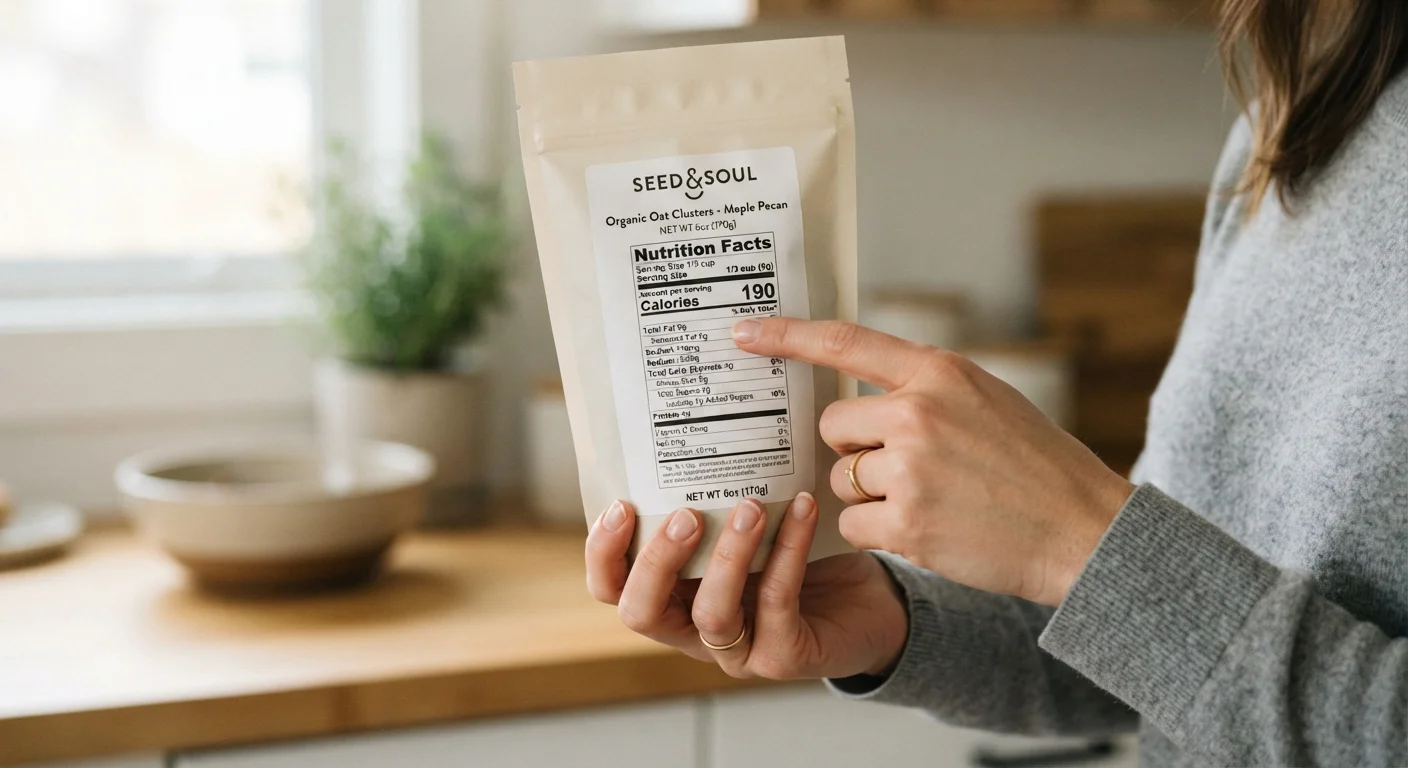
Why Nutrition Labels Exist — and What They Actually Cover
The Nutrition Facts panel is a federally standardized format required by the U.S. Food and Drug Administration (FDA) on most packaged foods. Its purpose is to give consumers consistent, comparable nutrition information — not to tell you whether a food is good or bad, but to give you the data to make an informed choice.
The label was updated in 2016 (with manufacturers phasing it in through 2020) to reflect updated nutritional science, including the addition of Added Sugars as a separate line item and a more prominent calorie display. Understanding the structure of the label helps you use it efficiently rather than getting overwhelmed by the numbers.
This Is General Information, Not Medical Advice
Nutrition labels are a helpful tool for general awareness, but individual dietary needs vary based on age, health status, medications, and other factors. If you have a specific health condition, food allergy, or are managing a chronic disease, consult a registered dietitian or your healthcare provider before making significant dietary changes.
Labels are required on most packaged foods but not all. Fresh produce, raw meat, and foods produced by very small businesses may be exempt. Restaurant menu items are governed by separate calorie-disclosure rules.
Food product package
The physical or digital label you will be reading and interpreting.
Pen and notepad (or notes app)
Useful for jotting down values when comparing multiple products at the store.
Kitchen scale
Helps measure actual serving sizes accurately, especially for items measured by weight rather than volume.
How to Read a Nutrition Label Step by Step
Follow these steps the next time you pick up a packaged food — whether you're at the grocery store or reviewing something already in your pantry. With practice, scanning a label takes under a minute.
What you will need
Start with serving size and servings per container
Every value on the label — calories, fat, sodium, everything — is calculated based on one serving, not the entire package. Before reading anything else, locate the Serving Size and Servings Per Container at the very top of the panel.
If a bag shows 3 servings and you eat the whole bag, multiply every number by 3. This single step corrects the most common misreading of nutrition labels.
Check the calorie count in context
The large, bold Calories figure tells you how much energy one serving provides. For general reference, a 2,000-calorie daily intake is used as the federal benchmark on labels — though actual needs vary considerably by person.
Rather than fixating on calories in isolation, treat this number as one data point alongside the quality of nutrients the food provides.
Review nutrients to limit: saturated fat, sodium, and added sugars
Scan the Total Fat row and look specifically at Saturated Fat — major dietary guidelines generally recommend keeping this lower in a balanced diet. Trans Fat appears just below; current guidance is to consume as little as possible.
Sodium is worth close attention, especially for adults monitoring blood pressure. Added Sugars — listed as a sub-item under Total Sugars — indicates sugars added during processing, distinct from naturally occurring sugars in fruit or dairy.
Identify beneficial nutrients: fiber, vitamins, and minerals
Look for Dietary Fiber, Vitamin D, Calcium, Iron, and Potassium — nutrients many Americans tend to consume in insufficient amounts. A higher % Daily Value for these is generally a positive signal.
Understanding how macronutrients like protein, carbohydrates, and fat function in the body helps put these numbers in context. See our overview of macronutrients for a clear breakdown of each one's role.
Interpret the % Daily Value column
The % Daily Value (%DV) column shows what percentage of the recommended daily amount for each nutrient one serving provides, based on a 2,000-calorie diet. It allows fast comparisons between products without needing to calculate grams yourself.
Read the ingredient list carefully
Ingredients are listed in descending order by weight — the first ingredient is the most abundant by mass. A product whose first three ingredients are whole food items is generally composed primarily of those foods.
Look for recognizable, whole-food ingredients near the top. Long lists with many unfamiliar chemical names don't automatically make a food harmful, but reading the list builds familiarity with what you're eating.
Use the 5% and 20% Rule of Thumb
A quick way to evaluate the % Daily Value column: 5% DV or less is generally considered low for a nutrient, while 20% DV or more is considered high. Aim for higher percentages for beneficial nutrients like fiber and vitamins, and lower percentages for sodium and saturated fat.
Putting Labels in Perspective
Nutrition labels are a tool, not a verdict. A food high in sodium might still fit well into a diet that's otherwise low in that nutrient; a food with added sugars might provide valuable nutrients in the same package. The goal is pattern awareness across your overall diet, not hyper-focus on any single product.
Don't Rely on Front-of-Pack Claims Alone
Terms like "natural," "light," or "made with whole grains" on the front of packaging are marketing language, not regulated nutrition standards. Always flip the package and read the Nutrition Facts panel and ingredient list directly — those are the sections governed by federal labeling requirements.
If you use a fitness tracker or health app to log meals, understanding label values makes that data more meaningful. Our article on what fitness tracking numbers actually measure explores how to interpret health data without over-relying on it.
Curious how human food labeling compares to the way pet food is regulated? The thinking behind pet nutrition labels follows a different regulatory framework entirely — an interesting contrast if you read labels for your pets as well.
This article is for general informational and educational purposes only. It does not constitute medical or dietary advice. Speak with a qualified healthcare provider or registered dietitian for guidance specific to your individual health needs.
The content on this site is for informational purposes only and is not a substitute for professional advice. Always consult a qualified professional for guidance specific to your situation.