

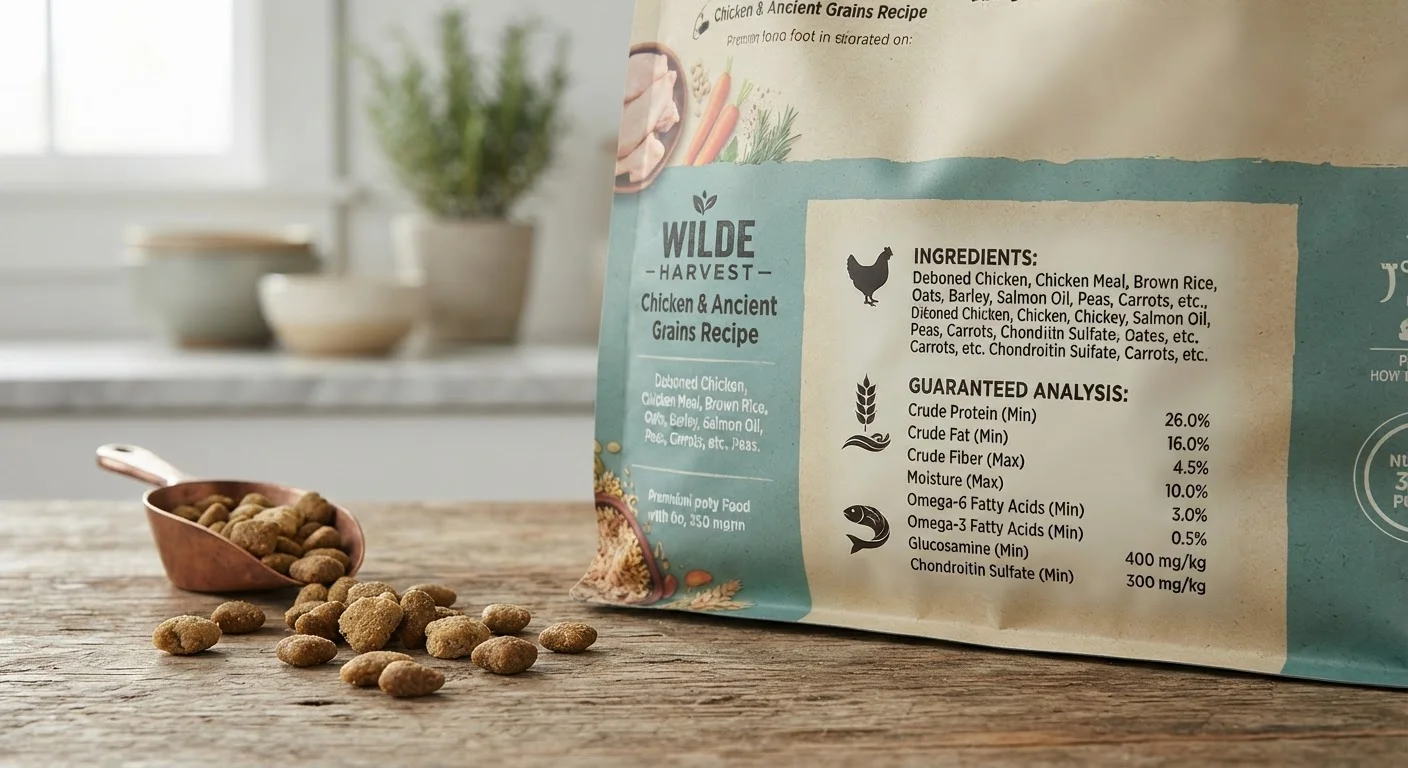
Why Pet Food Labels Are Worth Understanding
Pet food packaging can look either reassuringly detailed or bewilderingly technical depending on how familiar you are with what each section is actually communicating. Labels are not marketing documents in the way that front-of-pack imagery is — the panels on the side or back of a bag or can are subject to regulatory requirements designed to give owners standardized, comparable information.
In the United States, pet food labeling is shaped by guidelines from the Association of American Feed Control Officials (AAFCO) and overseen at the federal level by the FDA, with enforcement handled by state feed control officials. Understanding this structure helps owners look past the branding and focus on the parts of the label that carry real nutritional meaning. This connects well to the broader question of feeding fundamentals that apply across pet species.
The Ingredient List: What Order Really Means
Ingredients on a pet food label are listed in descending order by weight before processing. This pre-cooking weight includes the natural moisture content of each ingredient, which is why a raw meat like chicken can appear first on the list even when it contributes less actual protein to the finished product than a lower-listed meat meal.
Meat meals — such as chicken meal or salmon meal — are already rendered and dehydrated, so their position on the ingredient list more directly reflects their contribution to the dry product. This is not necessarily a negative; meals are concentrated protein sources. The key is not to read ingredient rank as a straightforward measure of quality or quantity in the final food.
Look Past the Front-of-Pack Claims
Phrases like 'natural,' 'premium,' or 'holistic' on the front of a pet food bag have no standardized regulatory definition and tell you nothing about nutritional adequacy. Focus instead on the ingredient list, guaranteed analysis, and AAFCO statement on the back or side panel — these are the sections subject to regulatory guidelines.
Named by-products (e.g., chicken by-products) are regulated to exclude certain materials and can include nutritious organ meats. An unlabeled or generic by-product source is worth more scrutiny than a named one.
For a broader look at how common misconceptions surround ingredients, see our piece on pet nutrition myths.
Guaranteed Analysis: Floors and Ceilings, Not Exact Figures
The guaranteed analysis panel lists minimum percentages for crude protein and crude fat, and maximum percentages for crude fiber and moisture. These are regulatory minimums and maximums — not the exact amounts present in the food. A food may contain considerably more protein than the stated minimum.
This also means direct comparisons between wet and dry food labels can be misleading. A wet food showing 8% protein and a dry food showing 30% protein aren't comparable as printed, because wet food contains 75–80% moisture while dry food contains roughly 10%. Converting to a dry matter basis — dividing the nutrient percentage by the percentage of dry matter — allows accurate comparison.
~78%
Typical moisture content in wet/canned pet food
This high moisture level explains why nutrient percentages on wet food labels appear much lower than on dry food labels, even when actual nutrient content is comparable on a dry matter basis.
~10%
Typical moisture content in dry kibble
Dry pet food's low moisture content means its guaranteed analysis percentages are more directly reflective of nutrient density than those found on wet food labels.
2
Main methods AAFCO accepts for adequacy claims
A manufacturer can substantiate a nutritional adequacy claim either by formulating to AAFCO nutrient profiles or by conducting AAFCO-defined animal feeding trials — each method has different implications for how confidence in the claim was established.
The Nutritional Adequacy Statement
Often considered the single most important line on a pet food label, the AAFCO nutritional adequacy statement tells you whether the food is complete and balanced, and for which life stage. Common phrasings include "formulated to meet the nutritional levels established by AAFCO" for a given life stage, or "animal feeding tests using AAFCO procedures substantiate" the claim.
Life stage categories include growth and reproduction (for puppies, kittens, and pregnant or nursing animals), adult maintenance, and all life stages. A food labeled for "all life stages" meets the more demanding growth standards, making it suitable for animals of any age. Foods labeled "for intermittent or supplemental feeding only" are not complete diets and shouldn't serve as a pet's sole nutrition source.
Life Stage Labels Have Real Consequences
Feeding an adult-maintenance food to a growing puppy or kitten can result in nutritional shortfalls during a critical developmental window. Conversely, feeding a growth-formula food long-term to a sedentary adult animal may contribute to excess calorie intake. Matching the food's stated life stage to your pet's actual life stage is a foundational step in label-reading.
Feeding Guidelines and What to Do With Them
Feeding guidelines printed on packaging are calculated estimates based on average animals at given body weights. They're a reasonable starting point, but most pets will need some individual adjustment. An older, less active cat may need less than the suggested amount; a working dog may need considerably more.
Body condition scoring — a standardized method veterinarians use to assess whether an animal is at a healthy weight — is a more reliable ongoing check than strict adherence to package amounts. Building consistent feeding routines is part of the daily habits that support long-term pet wellbeing.
“The guaranteed analysis tells you the floor, not the whole picture. Two foods can show identical minimums on paper and still differ meaningfully in ingredient quality, digestibility, and overall formulation.”
— Veterinary Nutrition Perspective, General principle reflected across veterinary nutrition literature and AAFCO educational guidance
If you're ever uncertain whether a food matches your pet's life stage or health status, a licensed veterinarian or board-certified veterinary nutritionist is the right resource. Labels provide the framework — professional guidance helps you apply it to a specific animal.
This article is for general informational purposes only and does not constitute veterinary or medical advice. Always consult a qualified veterinarian for guidance on your pet's individual nutritional needs.
Frequently Asked Questions
The AAFCO nutritional adequacy statement indicates that a food is formulated to meet the nutrient profiles established by the Association of American Feed Control Officials for a specific life stage, such as adult maintenance or growth and reproduction. It may also indicate the food was tested through feeding trials. This statement is one of the most meaningful signals on a label because it confirms the food meets a recognized nutritional standard.
Ingredients are listed by weight before cooking or processing. A protein like chicken may rank first because it contains a lot of moisture, but once cooked, its actual contribution to the final product may be smaller than it appears. Grain or meal ingredients listed lower can sometimes contribute more protein or calories by weight after moisture is removed.
Wet and dry foods contain very different moisture levels, making their guaranteed analysis percentages hard to compare directly. Converting both to a dry matter basis — by removing the moisture percentage from the equation — gives you a more accurate comparison of actual nutrient content.
Feeding guidelines are a reasonable starting point based on average activity levels and body weight for a given species. However, individual animals vary based on age, metabolism, health status, and activity level. Owners should treat guidelines as estimates and adjust based on their pet's body condition, ideally with input from a veterinarian.
The length of an ingredient list alone does not indicate quality. A longer list may simply reflect added vitamins, minerals, and preservatives needed to meet nutritional requirements. What matters more is whether the ingredients collectively support the AAFCO nutritional adequacy claim and suit the individual pet's needs.
Named by-products — such as chicken by-products — are regulated and must consist of parts like organs and necks, not hair, hooves, or feathers. These can be legitimate, nutritious protein sources. The word 'by-product' doesn't automatically indicate poor quality, though ingredient sourcing and the overall formulation context matters.
The content on this site is for informational purposes only and is not a substitute for professional advice. Always consult a qualified professional for guidance specific to your situation.