

Why Some Parts Have a Built-In Expiration Date
Not every car problem is a surprise. A significant number of failures are entirely foreseeable — the result of friction, heat, chemical degradation, or mechanical fatigue that engineers understood when the part was designed. These components don't so much break as they simply wear out, and manufacturers publish service intervals precisely because the expected lifespan is known in advance.
Understanding which parts fall into this category — and roughly when they'll need attention — shifts a driver from reactive to proactive. It also makes repair estimates easier to evaluate and helps you avoid the scenario where one ignored item cascades into damage to a much costlier neighboring component.
The intervals below are general guidance drawn from common manufacturer recommendations. Always consult your specific owner's manual and discuss any service needs with a qualified mechanic, since driving conditions, climate, and vehicle design can all affect real-world wear rates. For a broader view of how these items fit into a structured maintenance plan, see The Complete Guide to Understanding Your Car's Service Schedule.
Brake Pads
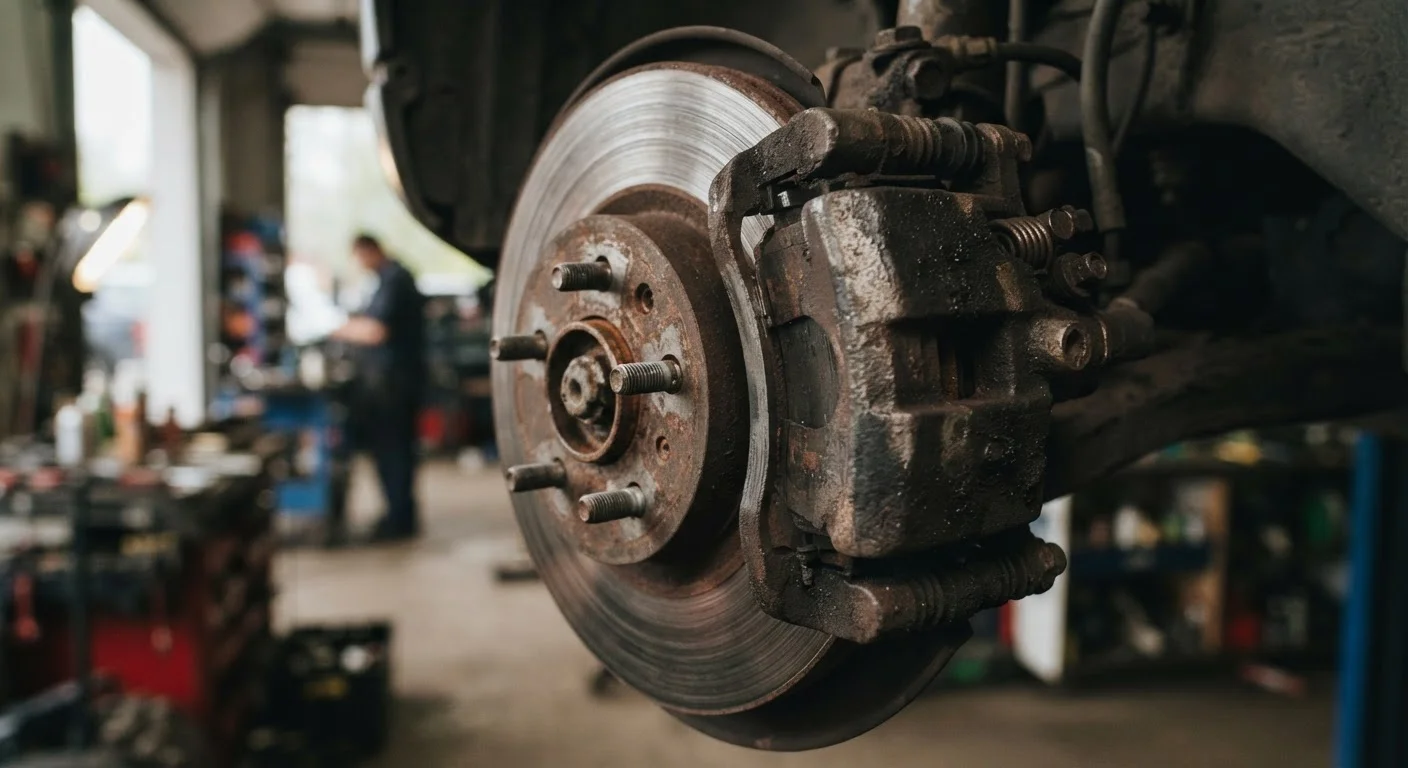
Brake pads are a friction material bonded to a metal backing plate. Every time you press the brake pedal, that material is pressed against the rotor and slowly ablated away. Most pads carry between 25,000 and 65,000 miles of useful life, though heavy urban driving or frequent towing can push them toward the lower end of that range.
Most pads include a wear indicator — a small metal tab that contacts the rotor when the friction material gets thin, producing a high-pitched squeal. This is a deliberate alert, not a random noise. Ignoring it and continuing to drive will eventually lead to metal-on-metal contact, which damages the rotor and significantly increases stopping distances. For more detail on brake noise and when it demands urgent attention, see Why Your Brakes Are Squealing — and When It's Serious.
Ignoring the wear indicator squeal risks rotor damage and dangerously extended stopping distances.
Timing Belt
The timing belt synchronizes the rotation of the crankshaft and camshaft, ensuring engine valves open and close at exactly the right moment in each combustion cycle. It's made of reinforced rubber, and unlike many components, it gives little warning before it fails.
Manufacturers typically specify replacement between 60,000 and 100,000 miles or every 5–7 years, whichever comes first — because the rubber degrades with age as well as use. In an interference engine (the most common design), a snapped timing belt allows pistons and valves to collide, causing catastrophic engine damage that can cost several times more than belt replacement. This is among the highest-stakes scheduled services on any vehicle.
A snapped timing belt in an interference engine can cause catastrophic internal damage in an instant.
Spark Plugs
Spark plugs ignite the air-fuel mixture in each cylinder. The electrode at the tip erodes incrementally with each ignition event — over tens of millions of firings. Conventional copper-core plugs typically require replacement around every 30,000 miles; iridium and platinum plugs can last 60,000–100,000 miles due to their harder electrode materials.
Worn plugs produce a weaker spark, leading to misfires, reduced fuel efficiency, rough idling, and harder cold starts. They can also stress the ignition coils that power them. Replacement is straightforward and relatively inexpensive — making it one of the better-value preventive services available. See Air Filters, Spark Plugs, and Belts: The Overlooked Maintenance Trio for more context on this component.
Worn spark plugs reduce fuel efficiency and can stress ignition coils — replacement is comparatively inexpensive.
Tires
Tire rubber wears from the tread surface down through friction with the road. US law sets the minimum legal tread depth at 2/32 of an inch — measurable with a penny or a purpose-made gauge. Most tires also feature built-in wear bars: raised sections molded into the tread grooves that become flush with the surface at the legal minimum.
Typical passenger tires last between 25,000 and 50,000 miles depending on rubber compound, alignment, inflation habits, and driving style. Beyond tread depth, age matters: most manufacturers recommend replacing tires after six years regardless of apparent wear, as rubber oxidizes and becomes brittle. Proper inflation extends service life and is one of the simplest maintenance habits a driver can maintain.
Rubber oxidizes over time — tire age matters as much as tread depth when assessing replacement need.
Engine Air Filter
The engine air filter captures dust, debris, and particulates before they enter the intake system and cylinders. A clogged filter restricts airflow, which disrupts the air-fuel ratio the engine management system is trying to maintain and can reduce throttle response and fuel economy.
Most manufacturers suggest replacement every 15,000–30,000 miles, but this varies significantly with environment. Driving regularly on unpaved roads or in dusty, arid regions can cut service life substantially. Air filters are inexpensive and inspecting them visually at each oil change takes seconds — if the filter looks heavily soiled or gray-brown rather than its original color, it's worth replacing.
A clogged air filter disrupts the engine's air-fuel ratio — checking it at each oil change costs nothing.
Coolant (Antifreeze)
Engine coolant doesn't just regulate temperature — it also contains corrosion inhibitors that protect the aluminum, steel, and rubber components of the cooling system. Those inhibitors deplete over time through chemical breakdown, leaving the cooling system vulnerable to internal corrosion, scale buildup, and seal deterioration.
Depending on coolant type, replacement is typically recommended every 2–5 years or 30,000–150,000 miles. Conventional green coolant degrades faster than modern extended-life formulations. Using the wrong type during a top-up can accelerate inhibitor depletion, so always match the specification in your owner's manual. A cooling system that's been neglected can eventually cause head gasket damage — one of the more expensive repair bills in passenger vehicles.
Depleted coolant inhibitors can cause internal corrosion that leads to head gasket failure over time.
Shock Absorbers and Struts
Shock absorbers (and the combined strut assemblies on many modern vehicles) control how the suspension responds to road inputs. The hydraulic fluid and internal valving wear gradually over time, reducing the damper's ability to control wheel movement. Handling becomes vague, braking distances increase on uneven surfaces, and tire contact with the road becomes less consistent.
There's no universal mileage stamp for shocks — degradation is gradual enough that drivers often adapt without noticing. Many mechanics suggest inspection around 50,000 miles and replacement when performance testing or physical inspection reveals significant wear. For a deeper look at how these components interact with the rest of the suspension system, How Your Car's Suspension Actually Works explains the full picture.
Shock absorber wear is gradual enough that drivers often adapt to it — inspection at 50,000 miles is prudent.
Staying Ahead of the Schedule
The common thread across all these components is that their failure is rarely instant — it's gradual, and the warning signs appear before the component is completely exhausted. Tracking mileage, keeping service records, and reviewing your owner's manual regularly are the most effective tools a driver has.
Use Your Owner's Manual as the Starting Point
Manufacturer-specified intervals are established through engineering testing and are the most reliable baseline for your specific vehicle. Third-party recommendations and general rules of thumb are useful context, but the manual's guidance takes precedence. If you've lost your physical copy, most manufacturers provide digital versions on their websites or through dealer service departments.
Driving patterns matter too. City driving with frequent braking wears pads faster than highway use. Extreme heat accelerates coolant and belt degradation. If your circumstances differ meaningfully from average conditions, discuss adjusted intervals with your mechanic. You can also explore The Seasonal Car Maintenance Calendar Every Driver Should Follow to see how these components fit into year-round upkeep.
For drivers managing older vehicles, Keeping a High-Mileage Car Running Well covers how wear-part priorities shift once the odometer climbs. And if you've ever been tempted to push service intervals further than recommended, Skipping Scheduled Servicing: The Hidden Costs of Letting It Slide outlines what that choice typically costs in the long run.
The content on this site is for informational purposes only and is not a substitute for professional advice. Always consult a qualified professional for guidance specific to your situation.