

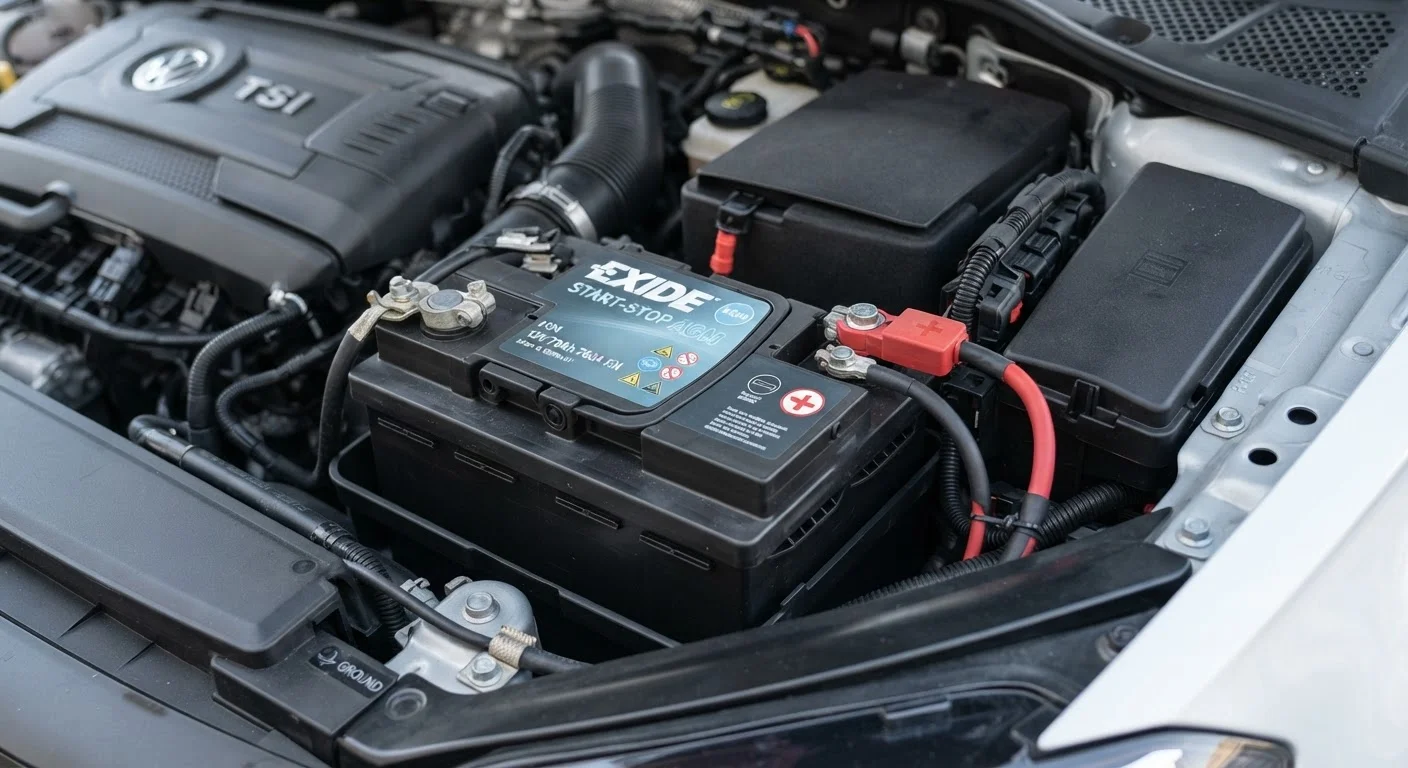
Starting the Engine Is Just the Beginning
Most drivers think of the car battery as a one-trick component — it starts the engine, and then the alternator takes over. That framing misses most of the battery's actual job. While cranking the starter motor is the battery's most power-intensive single task, it's far from the only one.
When you turn the key or press the ignition button, the battery sends a large surge of current to the starter motor, which rotates the engine until combustion begins. Once the engine is running, the alternator does take on the bulk of the electrical load — but the battery continues to act as a voltage buffer, absorbing fluctuations and supplementing power during peak demand moments when the alternator's output isn't quite enough.
For a broader look at how different drivetrains manage power delivery, see our guide to combustion, hybrid, and electric powertrains.
3–5 years
Typical lifespan of a lead-acid car battery
The Car Care Council cites three to five years as the general service life, with significant variation based on climate and usage patterns.
~50 systems
Electronic control modules in a modern vehicle
Industry estimates suggest many current passenger vehicles contain 50 or more individual electronic control units, all requiring stable battery-backed voltage.
~40%
Reduction in battery capacity at 32°F (0°C)
According to AAA, cold temperatures can reduce available battery capacity by roughly 40%, while simultaneously increasing the power needed to crank a cold engine.
What the Battery Powers Beyond the Starter
The list of systems that draw from the battery — directly or indirectly — is longer than most drivers expect:
- Lighting: Headlights, taillights, interior cabin lights, and dashboard illumination all rely on the electrical system the battery anchors.
- Climate control: The blower motor, heated seats, rear defroster, and electronic climate controls all place meaningful demand on the system.
- Infotainment and electronics: Navigation, touchscreens, Bluetooth modules, and USB charging ports draw continuously whenever the ignition is on.
- Safety systems: Anti-lock braking (ABS), electronic stability control, airbag control modules, and backup cameras all require stable voltage to function correctly.
- Driver-assist features: Lane-keeping assist, adaptive cruise control, automatic emergency braking, and parking sensors are all computationally driven — they need reliable electrical supply.
- Engine management: Fuel injectors, ignition coils, the ECU (engine control unit), and various sensors all operate within a voltage band that depends on the battery holding steady charge.
When a battery starts to degrade, the effects ripple across all of these systems — not just the starter. That's why a marginal battery can produce symptoms that seem unrelated to charging at all.
Test Before Winter, Not During
Battery failures spike in cold weather, but the underlying weakness often develops over summer heat. Have your battery load-tested by a technician before temperatures drop — ideally in early fall. This gives you time to address a borderline battery before it leaves you stranded.
The Battery's Role When the Engine Is Off
The battery's responsibilities don't end when you park the car. Modern vehicles maintain a low-level electrical draw even with the ignition off — known as a parasitic draw or quiescent current. This keeps the clock running, preserves radio presets, maintains alarm system readiness, and allows keyless entry modules to stay active.
Under normal circumstances this draw is minimal and a healthy battery handles it without issue. But if a car sits unused for several weeks, or if there's an electrical fault causing excessive parasitic draw, the battery can discharge to the point where starting becomes impossible.
Short-trip driving compounds this. If most of your journeys are under ten minutes, the alternator rarely has enough time to fully replenish what each cold start consumed. Over time, this creates a cumulative deficit. See our article on what drains a car battery and how to check its health for a deeper look at these patterns.
Why Battery Condition Matters More in Modern Cars
Older vehicles had relatively simple electrical systems — a battery, an alternator, and a handful of circuits. Today's cars are rolling electronic networks. A mid-range sedan can contain dozens of control modules, dozens more sensors, and multiple driver-assistance computers all operating simultaneously.
This increased complexity means the tolerance for voltage variation is lower. A battery that tests at borderline capacity might have started a 2005 sedan without complaint but cause erratic behavior in a vehicle loaded with electronic systems. Warning lights, module resets, and intermittent faults can all trace back to a battery that's technically functional but no longer delivering stable output.
Routine car maintenance — including periodic battery testing — is a straightforward way to catch this before it becomes a problem. Our guide to first-time car maintenance covers when and how to include battery checks in your regular upkeep schedule.
Frequently Asked Questions
Yes. The alternator converts mechanical energy from the engine into electricity and continuously recharges the battery during normal driving. However, if the battery is heavily discharged or failing internally, the alternator may struggle to fully restore it.
It can. Many modern engine management systems rely on stable voltage to operate sensors and fuel injectors correctly. A battery that can't hold adequate charge may cause rough idling, misfires, or trigger warning lights on the dashboard.
Most conventional lead-acid batteries last between three and five years under normal driving conditions. Climate extremes, frequent short trips, and high electrical loads can shorten that lifespan noticeably.
Running accessories like the radio, lights, or climate fan with the engine off draws directly from the battery with no recharging source. This can drain the battery enough to prevent the engine from starting, particularly in older or marginal batteries.
Cold temperatures reduce a battery's chemical reaction rate, lowering its available power output. At the same time, cold engines require more current to crank. This double pressure is why battery failures spike in winter months.
Slow engine cranking, dimming headlights at idle, and warning lights appearing on the dashboard are common early signs. A technician can test voltage and load capacity with a battery tester — a more reliable method than visual inspection alone.
The content on this site is for informational purposes only and is not a substitute for professional advice. Always consult a qualified professional for guidance specific to your situation.