

Why Batteries Fail Gradually, Not All at Once
Most drivers assume a car battery is either working or dead. In reality, battery failure is almost always a gradual process. Inside every conventional lead-acid battery, repeated charge and discharge cycles cause the lead plates to degrade and sulfation — a buildup of lead sulfate crystals — to accumulate. Over time, this reduces the battery's usable capacity. The engine still cranks, but with less reserve margin. One cold morning or one heavy electrical demand tips a weakened battery over the edge.
Understanding that process matters because it creates a window to act. Car batteries do far more than start the engine — they stabilize voltage across the entire electrical system. When capacity shrinks, everything from engine management modules to safety systems can be affected before the car stops starting altogether.
3–5 years
Typical lifespan of a lead-acid car battery
AAA automotive research consistently identifies battery failure as one of the leading causes of roadside breakdown calls in the United States.
~60%
Capacity loss at 0°F versus room temperature
Battery Council International notes that cold temperatures substantially reduce available cranking power, which is why marginally healthy batteries often fail first in winter.
1 in 4
Vehicles with underperforming batteries
AAA vehicle testing programs have found roughly one in four cars tested had a battery operating below its rated output, often without the driver being aware.
The Biggest Drains on Battery Life
Several factors accelerate battery aging beyond the normal wear of charge cycles:
- Short-trip driving: Every engine start draws a heavy burst of current. The alternator needs sustained driving — typically 15–20 minutes at highway speeds — to fully restore that charge. Drivers who mostly make short city runs never fully recharge the battery between starts. Vehicles that sit unused face similar challenges, since a battery in storage self-discharges over time.
- Temperature extremes: Heat accelerates the internal chemical reactions that degrade battery plates. Cold weather reduces the battery's ability to deliver current — a battery loses a significant portion of its rated capacity at freezing temperatures. Both extremes shorten overall lifespan.
- Parasitic electrical drain: When the car is off, certain systems legitimately draw small amounts of power. But a faulty relay, an aftermarket accessory wired incorrectly, or a module that won't enter sleep mode can create an abnormal draw that discharges the battery within days.
- Aging charging system: A failing alternator that undercharges — or overcharges — the battery speeds up degradation. The battery compensates for a weak alternator and wears out faster as a result.
Extend Battery Life With One Simple Habit
If most of your driving is short trips, consider adding one longer drive per week — at least 20–30 minutes at a steady highway speed. This gives the alternator enough time to restore a full charge to the battery. It's a low-effort habit that can meaningfully slow the cumulative depletion that wears out batteries prematurely.
How to Check Battery Health
There are two practical levels of battery checking available to most drivers:
Voltage Check (Basic)
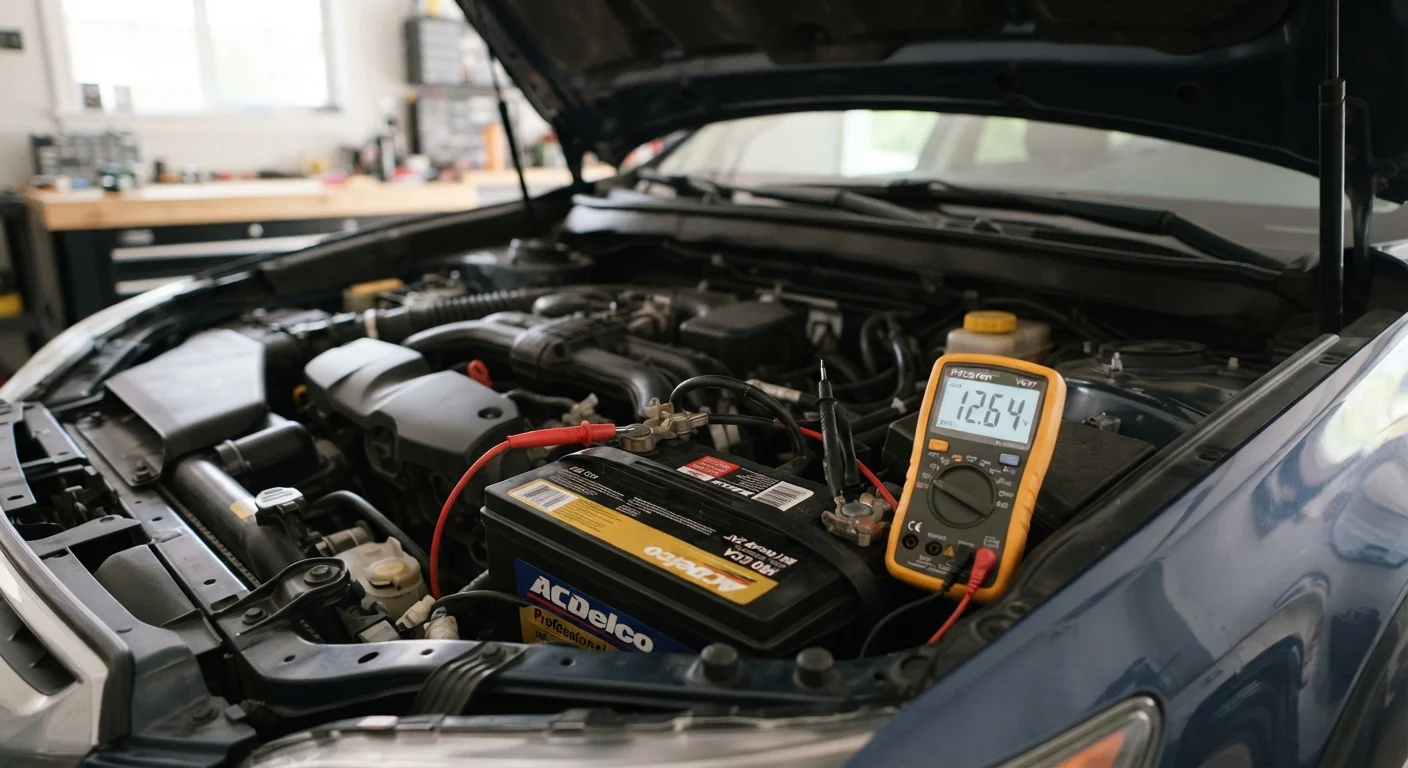
A basic multimeter test measures resting voltage. With the engine off and no accessories running, a fully charged 12-volt battery should read between 12.4 and 12.7 volts. Below 12.2 volts suggests a partially discharged or weakened battery. This test is easy to do at home, but it tells you only the surface state of charge — not how much capacity the battery actually has.
Load Test (Definitive)
A load test applies a controlled electrical demand to the battery — simulating the draw of starting the engine — and measures how well voltage holds up under that stress. This is the test that reveals true health. Many auto parts retailers and repair shops offer this test at no charge. If a battery fails a load test, it's unreliable regardless of what the voltage reading said.
Watch for these real-world warning signs that warrant a test: sluggish cranking when starting, headlights that dim noticeably at idle, warning lights on the dashboard (particularly the battery or check-engine light), or any history of needing a jump-start.
When to Involve a Qualified Mechanic
If your battery passes a load test but your car still won't start reliably, the issue may lie with the alternator, the starter motor, or excessive parasitic drain requiring diagnostic equipment to locate. These are tasks best handled by a qualified automotive technician. Attempting to trace parasitic drain without proper tools can lead to incorrect diagnosis or accidental short circuits.
Practical Habits That Help Batteries Last Longer
No battery lasts forever, but certain habits reduce the rate of decline. Keeping the terminal connections clean and tight prevents resistance buildup that makes the battery work harder. Driving for longer stretches periodically — rather than exclusively short errands — allows the alternator to maintain a healthy charge level. If a vehicle sits unused for weeks at a time, a quality battery maintainer (sometimes called a trickle charger) can prevent deep discharge without overcharging.
Having the battery and charging system tested once a year — or whenever a warning sign appears — is the most reliable way to avoid being stranded. Most automotive technicians recommend this as part of a routine maintenance inspection, particularly before winter. The goal isn't just avoiding a no-start; it's keeping the vehicle's broader electrical system stable. For a fuller picture of what depends on that stability, see our guide on how cars work and what their parts do.
Frequently Asked Questions
Most conventional lead-acid car batteries last between 3 and 5 years under normal driving conditions. Factors like climate, driving patterns, and electrical load can shorten or extend that range. Batteries in hot climates often degrade faster because heat accelerates the chemical breakdown inside the cells.
Early warning signs include slow or sluggish engine cranking, dashboard warning lights, dim headlights at idle, and electronics that behave erratically. If your vehicle needs a jump-start more than once in a short period, that's a strong indicator the battery deserves a professional load test.
Yes. The alternator recharges the battery while you drive, but short trips — typically under 15–20 minutes — don't allow enough time to fully replenish the charge used during starting. Repeated short trips can gradually deplete the battery, especially in colder weather.
Parasitic drain is a small but continuous electrical draw on the battery when the vehicle is off. Some draw is normal — for clocks, alarm systems, and memory modules — but a faulty relay, improperly installed accessory, or malfunctioning module can create an excessive drain that kills the battery overnight.
Not on its own. A battery can show a normal resting voltage (around 12.6V) while lacking the internal capacity to deliver power under load. A load test, which simulates the demands of starting the engine, is the most reliable way to assess true battery health.
Cold temperatures significantly reduce a battery's ability to deliver current. A battery already weakened by age may start a car fine in summer but fail entirely in freezing conditions. As a general guideline, having the battery tested before winter is sound preventive maintenance.
The content on this site is for informational purposes only and is not a substitute for professional advice. Always consult a qualified professional for guidance specific to your situation.