

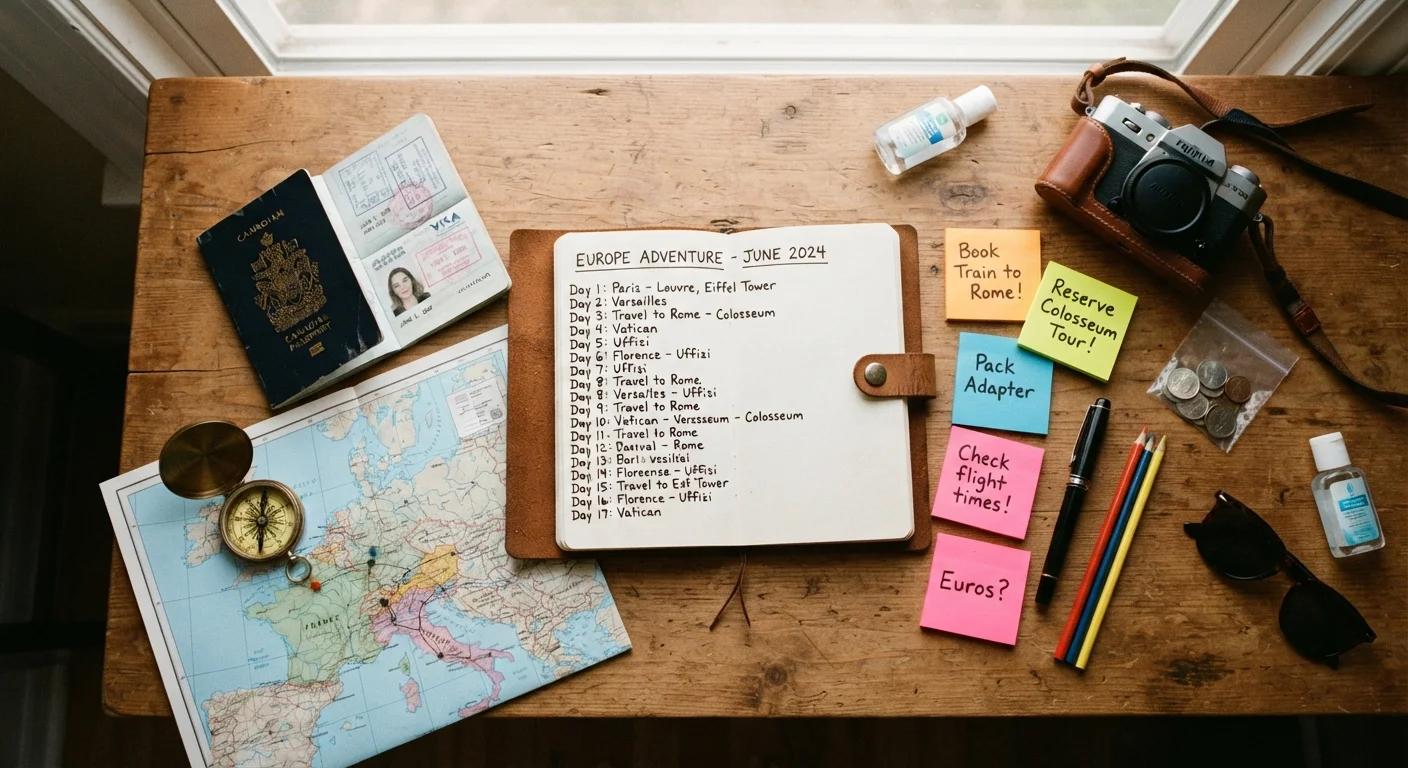
Start here
Choose Your Destination
Next
Set Your Budget and Timeline
Then
Sort the Logistics: Flights, Stays, and Documents
Almost there
Build Your Itinerary
Final step
Pack Smart and Stay Prepared
Choose Your Destination
The first decision in any trip is also the most exciting: where do you actually want to go? Rather than scrolling endlessly through travel feeds, narrow your choices with three concrete filters: your interests, your budget range, and the time of year you're traveling.
Ask yourself what kind of experience you're chasing — urban exploration, nature immersion, cultural history, beach relaxation, or something entirely different. Cross-reference that with practical realities. A winter trip to a beach destination may need different planning than a summer mountain escape. Seasonality affects not just weather but crowd levels, local prices, and which activities are actually available.
If you're open to domestic travel, the Destinations & Experiences hub offers curated insights across memorable U.S. locations worth considering. For those weighing a first international adventure, official tourism boards and the U.S. Department of State's travel pages are reliable starting points — always verify current entry requirements and advisories before booking anything.
Itinerary
A planned schedule of destinations, activities, and travel arrangements for your trip. It can be as loose or as detailed as you prefer.
Visa
An official permit issued by a foreign government that allows you to enter and stay in their country for a specified period and purpose.
Travel insurance
A type of insurance policy that can cover financial losses related to trip cancellation, medical emergencies abroad, lost baggage, or other travel disruptions.
Peak season
The time of year when a destination receives the most visitors, typically resulting in higher prices, fuller accommodation, and more crowded attractions.
STEP (Smart Traveler Enrollment Program)
A free U.S. State Department service that lets American travelers register international trips so embassies can contact them during emergencies.
Contingency buffer
A percentage of your travel budget — often 10–15% — set aside specifically to cover unexpected costs that arise during the trip.
Set Your Budget and Timeline
Once you have a destination in mind, money and dates become the framework everything else hangs on. Budget planning isn't about finding the cheapest option — it's about understanding what your trip will realistically cost so you're not caught off guard midway through.
Break your estimate into four buckets: transportation (flights or driving costs), accommodation, food and drink, and activities and entry fees. Research typical ranges for your specific destination rather than guessing. Then add a contingency buffer — most seasoned travelers recommend keeping 10–15% of the total in reserve for unexpected costs.
Your timeline is equally important. International trips generally benefit from three to six months of lead time to handle passport and visa requirements, secure popular accommodation, and give yourself breathing room. Domestic trips can often come together in four to six weeks, though peak-season destinations book up quickly. It's also worth checking whether your destination has local public holidays that could affect availability or pricing during your intended dates.
Research Real Costs, Not Averages
General 'average daily cost' figures for destinations can be wildly misleading depending on your accommodation style, dining habits, and activity choices. Spend 30 minutes looking up actual prices for the specific hotels, restaurants, and attractions you're interested in — you'll get a far more accurate budget picture than any headline number provides.
Sort the Logistics: Flights, Stays, and Documents
This is the stage where your trip becomes real — and where first-timers most often underestimate the time involved. Start with documents, because they set a hard deadline everything else orbits.
If you're traveling internationally, confirm your U.S. passport is valid for at least six months beyond your return date — many countries require this. Visa requirements vary widely by destination, so check the official embassy website of the country you're visiting and allow adequate processing time. Some countries also require proof of vaccinations; consult a healthcare professional and official health authority guidance well before departure.
With documents in hand (or in process), move to flights and accommodation. Rather than chasing the lowest price at any cost, look for options that balance reasonable cost with flexibility — refundable rates and flexible ticket policies give you important protection if plans shift. For a broader look at how planning myths around booking timing can mislead travelers, see travel planning myths examined.
Once booked, register your trip with the U.S. State Department's Smart Traveler Enrollment Program (STEP) for international travel — it's free and ensures the nearest embassy can reach you in an emergency.
Don't Leave Documents to the Last Minute
Passport applications and renewals can take several weeks under standard processing, and visa applications sometimes take longer. Starting this process late is one of the most common — and most avoidable — reasons first-time trips get delayed or cancelled. Check processing times at the official U.S. State Department website and start well before your intended travel date.
Build Your Itinerary
An itinerary isn't a rigid hour-by-hour script — it's a flexible framework that keeps you oriented without boxing you in. The goal is to identify your non-negotiable anchor experiences and book those in advance, then leave room for discovery around them.
Start by listing the things you'd genuinely regret missing, then space them across your available days without stacking too many in a single stretch. Factor in travel time between locations, meal breaks, and recovery — jet lag and new-timezone adjustment are real, especially on international trips. A common first-timer mistake is planning every hour and burning out by day three.
For a practical framework on structuring your days effectively, the guide on building a travel itinerary that actually works walks through how to balance sightseeing, rest, and the unexpected without exhausting yourself. If you're planning solo, solo travel planning considerations covers the specific differences worth knowing.
Pack Smart and Stay Prepared
Packing is where planning meets real life, and packing light is almost universally the right move — especially for first-timers still learning how much they actually need on the road. Start with your destination's climate and planned activities, build a list, then pare it back by a third.
Beyond clothes and toiletries, your preparation checklist should include: copies of all important documents stored separately from the originals, an unlocked phone or a plan for international data, any required medications in carry-on luggage (with prescriptions as appropriate), and travel insurance confirmation details accessible offline.
Safety and wellness research deserves its own attention before you leave. Understand the general safety landscape of your destination, know the local emergency number, and identify the nearest medical facility if you're traveling far from home. The Travel Safety & Wellness hub is a solid resource for this kind of preparation. For a comprehensive reference covering all planning stages end-to-end, see the complete trip planning reference.
Verify All Entry Requirements Officially
Entry rules — including visa requirements, vaccination documentation, and health declarations — can change with little notice. Travel blogs and social posts often lag behind official updates. Always confirm current requirements through the U.S. Department of State's travel pages and the official embassy or consulate of your destination country before you depart.
Frequently Asked Questions
For international trips, starting three to six months out is generally wise to allow time for passports, visas, and better accommodation availability. Domestic trips can often be planned in four to six weeks, though popular destinations book up faster in peak season. Always verify current entry requirements with official government sources before you commit.
Travel insurance is strongly recommended, especially for international travel or expensive trips. Policies can cover trip cancellation, medical emergencies abroad, lost luggage, and more. Review coverage details carefully and consult the insurer about your specific itinerary to make sure you're adequately protected.
At minimum, you'll need a valid U.S. passport, and many countries also require a visa. Some destinations require proof of onward travel or vaccinations. Always verify entry requirements through the U.S. Department of State website and the destination country's official embassy site well before your departure date.
Start by estimating your four main cost categories: transportation, accommodation, food, and activities. Add a contingency buffer of around 10–15% for unexpected expenses. Research typical price ranges for your specific destination rather than relying on general estimates, and factor in seasonal pricing differences.
A fully packed schedule often leads to exhaustion and disappointment when plans shift. Most experienced travelers recommend booking key anchor experiences in advance while leaving space for spontaneity. A flexible structure tends to result in a more enjoyable and memorable trip than a rigid minute-by-minute agenda.
Start with a shorter, simpler destination to build confidence before tackling something complex. Focus on getting the fundamentals right — destination, dates, budget, accommodation, and a rough plan. Resources like the U.S. Department of State's travel pages and official tourism boards are reliable starting points for accurate, up-to-date information.
The content on this site is for informational purposes only and is not a substitute for professional advice. Always consult a qualified professional for guidance specific to your situation.