

Why Your Devices Don't Always Talk to Each Other
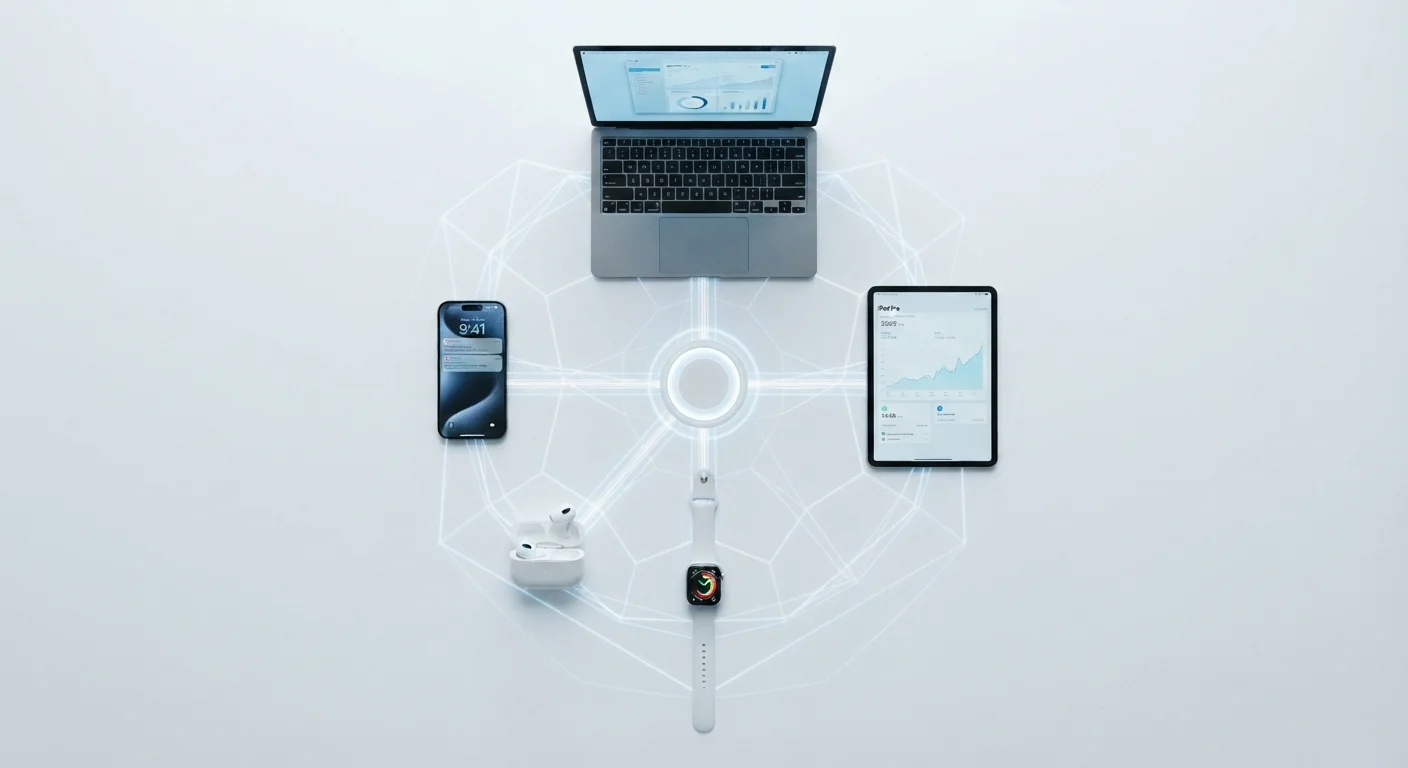
You'd think that in an era of wireless everything, getting a smartwatch to sync with a laptop from a different brand would be trivial. It isn't — and the reasons are more structural than technical. Most major device manufacturers have spent years building ecosystems: tightly integrated stacks of hardware, software, and services that work best together and, by design or by consequence, work poorly with competitors.
This isn't purely cynical strategy. When one company controls the phone, the operating system, the watch firmware, and the cloud service, it can build features that are genuinely fast and reliable. The tradeoff is that those features rarely reach beyond the brand's own products. Wireless technologies like Bluetooth and Wi-Fi provide a hardware foundation that most devices share, but the software layer sitting above them is where ecosystems diverge sharply.
3+
Average number of connected devices per U.S. adult
Pew Research Center surveys consistently find U.S. adults own multiple internet-connected devices, increasing the likelihood of cross-brand compatibility challenges.
Matter
Cross-brand smart home standard backed by 550+ companies
The Connectivity Standards Alliance reports that the Matter protocol has been backed by over 550 member companies aiming to reduce smart home fragmentation.
What Gets Locked Inside a Single Ecosystem
Some of the most useful cross-device features are effectively walls, not bridges. Consider the following capabilities that are typically restricted to devices from the same manufacturer:
- Seamless handoff: Starting a task on a phone and continuing it on a laptop without any manual steps.
- Instant pairing: A new wireless earbud connecting to all your devices the moment you open the case.
- Unified clipboard: Copying text on one device and pasting it on another automatically.
- Cross-device notifications: Seeing and dismissing phone alerts from a watch or tablet without a third-party app.
- Proximity unlock: A laptop detecting a nearby watch or phone and unlocking itself.
Each of these features relies on proprietary software layers, background services, and sometimes custom chips. Replicating them across brands isn't simply a matter of adding support — it often requires the cooperation of the other company's operating system, which competitors have little incentive to grant.
Check Before You Buy New Accessories
Before purchasing a smartwatch, wireless earbud, or smart display, verify which phone platforms it explicitly supports — not just which ones it technically connects to. 'Works with Android' and 'full feature support on Android' are often very different things. Manufacturer compatibility pages and independent reviews typically clarify which features require a same-brand phone.
What Actually Works Across Platforms
Not everything is gated by brand loyalty. A number of technologies and approaches function reliably across competing ecosystems:
- Bluetooth and USB standards
- Most peripherals — keyboards, mice, speakers, headphones — connect to any device that supports the relevant standard. A Bluetooth speaker doesn't care whether your phone runs Android or iOS.
- Cross-platform apps
- Productivity tools, note-taking apps, and cloud storage services that publish apps on multiple operating systems let you access the same data from any device. This is among the most practical ways to reduce ecosystem friction.
- Open protocols for smart homes
- The Matter standard, developed collaboratively by major tech companies, is designed so that smart home devices can be controlled by different platforms. Adoption is growing, though not all devices support it yet.
- Web-based tools
- Browser-based applications work on virtually any device with a modern browser, regardless of operating system.
If you're thinking about how this intersects with your app setup, managing your app choices deliberately can meaningfully reduce how dependent you are on any single platform's ecosystem.
Making Practical Decisions Within the Ecosystem Reality
Understanding the ecosystem you're already in is the most useful starting point. If your phone runs Android and you use a Windows laptop, you're likely already working across two ecosystems — and you've probably developed workarounds without realizing it. The question isn't usually how to escape ecosystems entirely, but how to move between them with less friction.
A few principles tend to hold up in practice:
- Anchor to your phone's ecosystem when buying accessories. Smartwatches and wireless earbuds in particular offer dramatically more features when matched to the same brand as your phone.
- Use neutral cloud storage for files you need everywhere. Data stored in one company's proprietary cloud is harder to access from a competitor's device.
- Choose apps with multi-platform track records. Tools that have been available on multiple platforms for years are more likely to remain accessible if you change devices.
- Check compatibility before purchasing smart home devices. Look for Matter certification or confirmed support for the platform you use.
For a broader look at how to extend the useful life of what you already own, getting more from your existing devices is worth exploring before any new purchase. The ecosystem problem is real, but navigating it thoughtfully makes a significant difference.
“The most valuable thing you can do before buying a new device is understand what ecosystem you're already in — because that decision shapes every accessory and service choice that follows.”
— Tech & Gadgets Editorial Team, Editorial analysis on everyday technology decisions
Frequently Asked Questions
They can share some functionality — you can transfer files via USB, use cross-platform apps like Google Drive, and connect Bluetooth accessories. However, deep integration features like automatic hotspot switching, shared clipboard, or unified notification mirroring typically don't work between Android and Apple devices.
Bluetooth, Wi-Fi, and USB standards are broadly cross-platform and allow basic connectivity between most devices. Open protocols like Matter (for smart home devices) are also designed to work across different brand ecosystems. Proprietary wireless features, however, are usually brand-specific.
You can reduce lock-in by choosing cross-platform apps, storing data in open or neutral cloud services, and avoiding features that only work within one brand. Full independence is difficult in practice, but a mix of deliberate app choices and open standards can meaningfully reduce dependence.
Closed ecosystems encourage customers to keep buying from the same manufacturer, since switching means losing convenient features. They also allow companies to deliver tighter, more reliable integration between their own hardware and software, which genuinely benefits users who stay within one brand.
They have historically been worse. Smart home devices from different manufacturers often required separate apps and couldn't communicate. The Matter standard, backed by major tech companies, is designed to improve cross-brand smart home compatibility, though adoption is still uneven.
Cloud storage services that offer apps on multiple platforms — such as those using standard web protocols — are the most reliable approach. Email remains universally compatible. Bluetooth file transfer and USB connections also work between most devices, though speeds and ease vary.
The content on this site is for informational purposes only and is not a substitute for professional advice. Always consult a qualified professional for guidance specific to your situation.