

Why Home Grooming Matters Beyond Appearances
Grooming is one of the most consistent forms of physical contact between owner and pet — and it does far more than keep a coat looking tidy. Regular brushing, nail care, and ear inspection help identify early signs of parasites, skin conditions, infections, and structural changes that might otherwise go unnoticed between vet visits. The Pet Health & Wellness pillar consistently underscores that observation is one of the simplest tools owners have.
Home grooming also reduces stress for the pet over time. Animals that are regularly handled and accustomed to basic care procedures tend to tolerate veterinary exams with less anxiety. Pair these habits with a broader year-round health planner to cover everything from flea prevention to dental hygiene in one organized system.
Build Grooming Into a Broader Wellness Habit
Grooming sessions are an ideal time to check for lumps, parasites, unusual odors, or changes in coat condition. Keeping a brief mental note of what you observe can be genuinely useful when you visit the vet. See our annual vet visit preparation checklist for what to record and share at appointments.
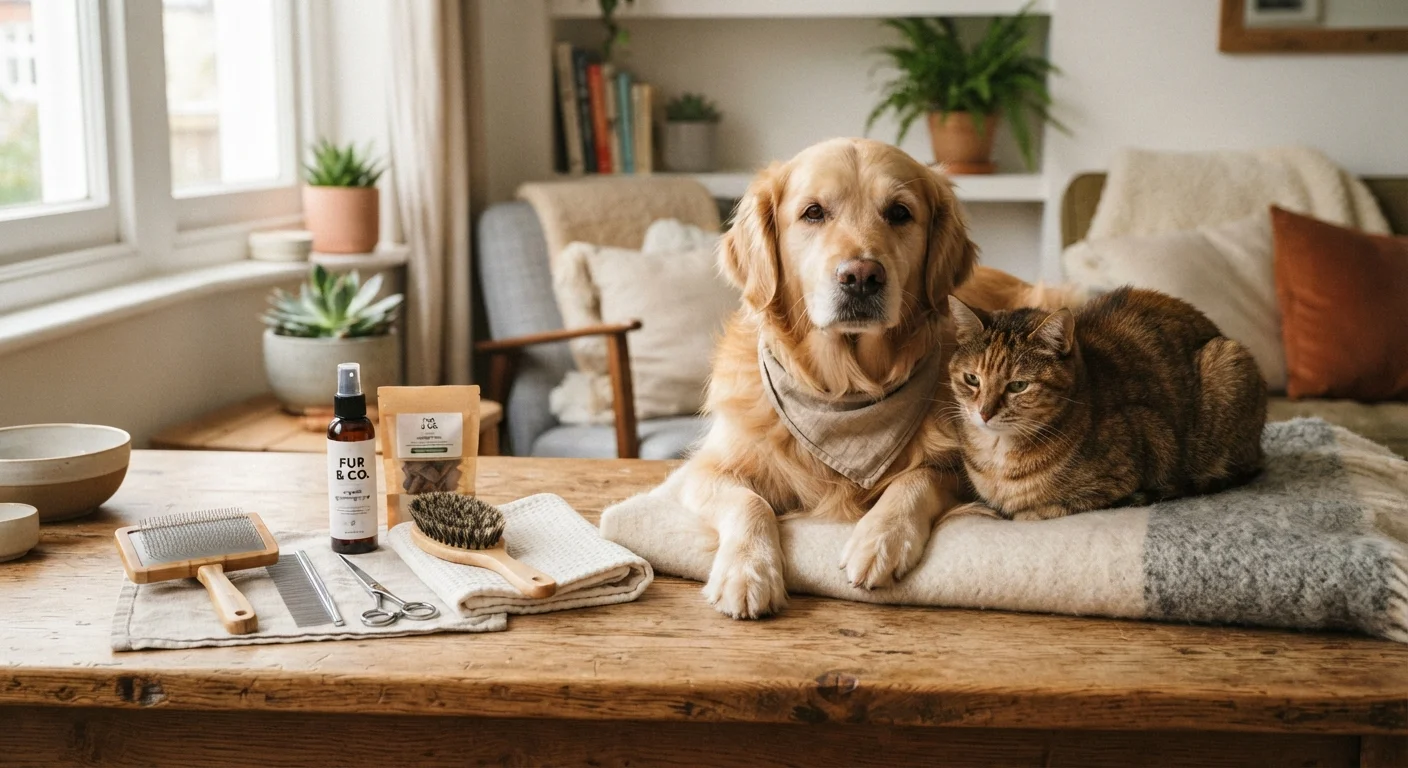
Before beginning, gather everything you need. Tools and preparation make the process smoother for every species.
Slicker brush or species-appropriate comb
Removes loose fur, detangles coats, and distributes natural oils across the skin.
Pet-safe nail clippers or guillotine trimmers
Trims overgrown nails to a safe, comfortable length without splitting.
Species-specific shampoo
Cleanses skin and coat without disrupting the animal's natural pH balance.
Cotton balls or gauze pads
Used with veterinarian-approved ear cleaner to gently wipe the outer ear canal.
Styptic powder
Stops minor bleeding quickly if a nail is accidentally trimmed too short.
Non-slip mat
Provides a stable, secure surface during bathing to reduce pet anxiety.
Small treats
Positive reinforcement during grooming helps pets associate the process with reward.
Make sure your workspace is ready and that you've covered the essentials below before starting.
What you will need
Step-by-Step Grooming Routine
Follow these steps in order for the most effective and least stressful experience. You do not need to complete every task in a single session — splitting nail trimming, bathing, and ear cleaning across different days is perfectly reasonable, especially with anxious or young pets.
Never Use Human Products on Pets
Human shampoos, conditioners, and nail polish removers can be toxic or severely irritating to animals. Always use products formulated specifically for the species you are grooming. When in doubt, ask your veterinarian before introducing any new grooming product to your routine.
Introduce tools and handling before the first full session
Let your pet sniff and investigate grooming tools before you use them. Handle paws, ears, and the muzzle area gently during regular interactions so these zones don't feel alarming when grooming begins. For puppies and kittens, brief daily handling sessions during the first months of life build lasting tolerance.
Brush the coat before bathing
Always brush before a bath — water tightens tangles and mats, making them harder to remove. Work from the head toward the tail, brushing in the direction of hair growth. Use a slicker brush for dogs with medium or long coats; a fine-toothed comb or rubber grooming mitt suits short-haired cats. Most cats do not require bathing unless soiled or instructed by a vet — brushing alone is typically sufficient.
For small animals such as guinea pigs, use a soft-bristled toothbrush or dedicated small-animal brush. Rabbits are fastidious self-groomers but benefit from gentle brushing during heavy moult seasons to prevent ingested fur buildup.
Bathe dogs using lukewarm water and pet shampoo
Place a non-slip mat in the tub or basin. Wet the coat thoroughly with lukewarm water — avoid the ears and eyes. Apply a small amount of pet-formulated shampoo, lather from neck to tail, then rinse completely. Residual shampoo irritates skin, so rinse longer than you think necessary. Towel dry well and keep the dog in a warm room until fully dry.
Trim nails carefully and stop at the quick
The quick is the blood vessel inside the nail — cutting into it causes pain and bleeding. On light-colored nails, the quick appears as a pink region. On dark nails, trim small increments at a time and look for a dark dot in the center of the cut surface, which signals you are near the quick. Clip one nail, reward, and pause if needed. For dogs, trim every three to four weeks; cats typically need trimming every two to three weeks. Small animals like rabbits may need monthly trimming.
Clean ears gently using a veterinarian-approved method
Use a veterinarian-approved ear cleaner and dampen a cotton ball — never insert cotton swabs into the ear canal. Wipe only the visible outer ear flap and the accessible ridge of the canal. Healthy ears are pale pink and odor-free. Ear cleaning is typically needed monthly for dogs; cats rarely require it. Do not clean ears more frequently than recommended, as over-cleaning can cause irritation.
End every session positively and observe for anything unusual
Finish with calm praise and a treat, regardless of how much you completed. Over time this teaches your pet that grooming ends well. As you wrap up, take a moment to check for fleas, ticks, skin redness, unusual lumps, or changes in coat quality. These observations feed directly into the daily habits that support long-term pet wellbeing and are worth sharing with your vet at routine checkups.
Stop If Your Pet Shows Distress
Growling, hissing, freezing, or attempting to bite are signs your pet has reached its limit. Forcing the session risks injury to both of you and creates lasting negative associations with grooming. End calmly, give your pet space, and try again in shorter sessions over several days.
Outdoor pets may need more frequent grooming checks due to exposure to mud, plants, and wildlife. For context on how lifestyle affects care needs, see our guide on indoor vs. outdoor pets.
The content on this site is for informational purposes only and is not a substitute for professional advice. Always consult a qualified professional for guidance specific to your situation.