

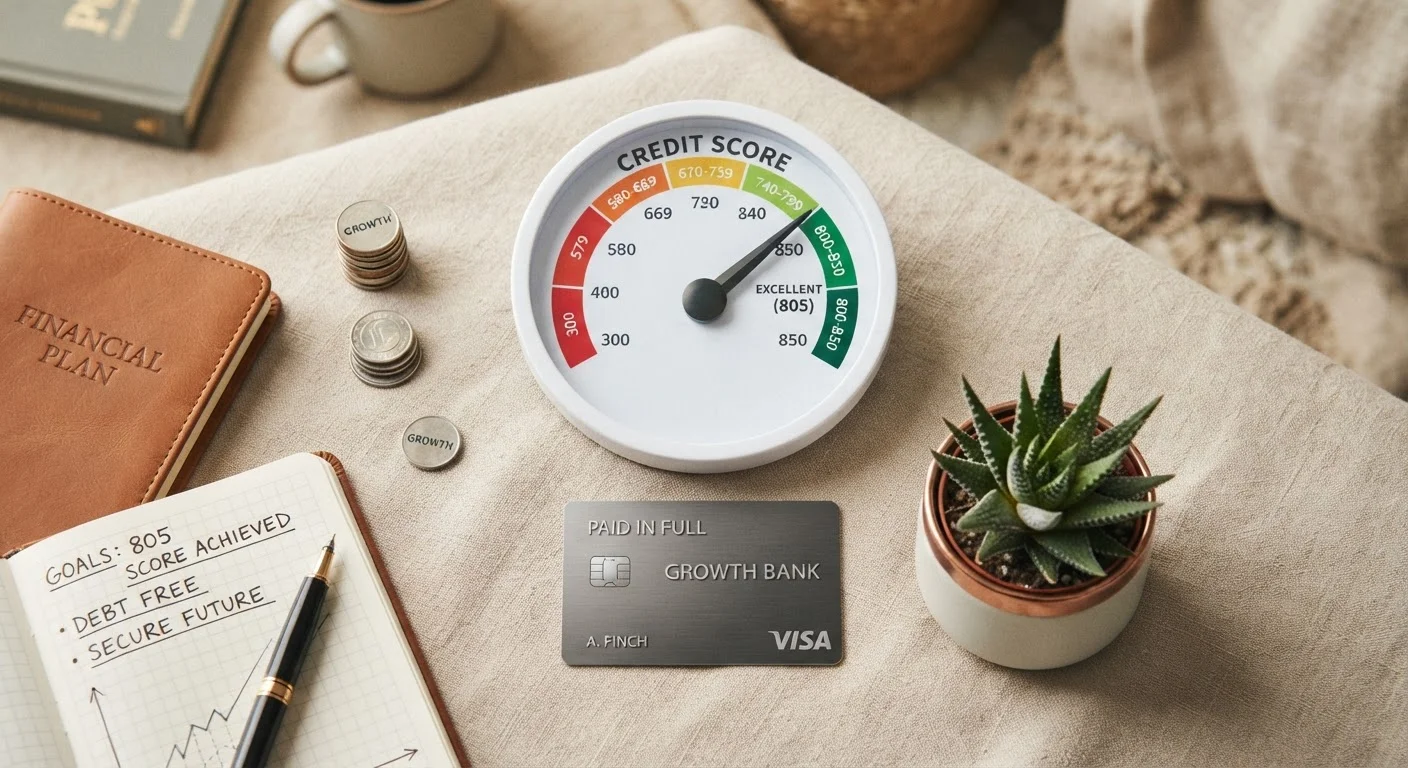
The Core Factors That Shift When You Pay Off Debt
Your credit score isn't a single measurement — it's a weighted calculation based on five core factors: payment history, credit utilization, length of credit history, credit mix, and new credit inquiries. When you pay off a debt, you're not pulling one lever in isolation. You're potentially shifting several at once.
The most impactful factor for most people is credit utilization — the percentage of your available revolving credit you're currently using. Scoring models generally reward keeping this figure below 30%, and even more so below 10%. Paying down a credit card balance directly lowers this ratio, which often produces the clearest and fastest score improvement.
Installment loans — auto loans, student loans, personal loans, mortgages — work differently. Because these don't have a revolving credit limit, they don't affect utilization. Paying one off closes the account, which can slightly reduce your credit mix and may shorten your average account age. For people with limited credit history, this can cause a small, temporary score dip.
Scores Don't Update in Real Time
Your credit score reflects information that has already been reported by your lenders to the credit bureaus. A payment made today won't show up in your score until your creditor reports it — typically at the end of the billing cycle. Allow one to two months after a major payoff before expecting your score to reflect the change.
Why the Type of Debt Matters
The distinction between revolving debt and installment debt is one of the most important — and least understood — parts of credit scoring. Common myths about debt often treat all debt as identical, but scoring models don't.
- Credit cards and lines of credit (revolving): Paying these down typically produces the most immediate positive score effect, because utilization drops in real time as balances fall.
- Auto loans, student loans, mortgages (installment): Regular on-time payments build payment history over the life of the loan. Paying these off fully is financially beneficial, but the score impact is more neutral or occasionally slightly negative in the short term.
- Collections accounts: Outcomes vary by scoring model. Newer versions of FICO and VantageScore tend to disregard paid collections, while older models may still weigh them — even after payoff.
Understanding which bucket your debt falls into helps set realistic expectations for what your score will do next.
Prioritize High-Utilization Cards First
If your goal is to improve your credit score while paying down debt, focus on revolving accounts — especially those near or over their credit limits — before targeting installment loans. Reducing card balances has the most direct and immediate impact on your utilization ratio, which is one of the largest scoring factors. Even partial paydowns can move the needle noticeably.
What Closing Accounts Can Do to Your Score
Many people instinctively want to close an account the moment it's paid off. It feels tidy. But closing a credit card — even one with a zero balance — can unintentionally hurt your score in two ways.
First, it reduces your total available credit, which raises your utilization ratio on any remaining balances. If you have a $500 balance spread across $5,000 in total credit, your utilization is 10%. Close a card that held $2,000 of that limit, and your utilization jumps to nearly 17% overnight — without you spending a dollar more.
Second, closing an older account can shorten your average account age. Length of credit history accounts for roughly 15% of a FICO score, and older accounts contribute meaningfully to that average.
The general guidance from financial educators is to keep paid-off accounts open unless there's a specific cost reason — such as a high annual fee — to close them. A dormant card with a zero balance and no fee is quietly helping your score just by existing. For more on how debt obligations connect to lender decisions, see our overview of debt-to-income ratio.
Setting Realistic Expectations After Payoff
Paying off debt is always a sound financial move. But treating your credit score as the only yardstick for success can lead to frustration when the number moves less than expected — or temporarily dips.
A few grounding principles help here. Score changes typically appear within one to two billing cycles once the creditor reports the payoff to the bureaus. If you're paying off multiple accounts over time, the cumulative effect tends to compound positively — lower balances, a cleaner payment history, and a healthier financial profile overall.
It's also worth remembering that your credit score is a tool, not a destination. Reducing debt frees up cash flow, lowers interest costs, and reduces financial stress — outcomes that don't show up in a three-digit number but matter just as much. If you're curious about why progress can sometimes stall, common patterns that slow debt repayment are worth understanding too.
30%
Credit utilization threshold commonly cited as a score benchmark
Credit scoring educators widely recommend keeping revolving utilization below 30% — and ideally below 10% — for the strongest score impact.
~35%
Share of FICO score attributed to payment history
According to FICO's published scoring breakdown, payment history is the single largest component of a standard FICO score.
1–2 cycles
Typical time for payoff to appear on credit report
Most creditors report account updates to the major bureaus once per billing cycle, meaning changes can take four to eight weeks to be reflected in scores.
This article is for general informational and educational purposes only and does not constitute personalised financial advice. For guidance specific to your situation, consult a qualified financial professional.
Frequently Asked Questions
In most cases, yes. Paying off credit card balances reduces your credit utilization ratio, which is one of the most heavily weighted factors in your score. The lower your balances relative to your credit limits, the better your utilization looks to scoring models.
Paying off an installment loan — like a car loan or personal loan — closes that account, which can reduce your credit mix and shorten your average account age. These temporary dips are usually small and tend to recover as your remaining accounts age and your payment history continues to build.
Most lenders report account changes to credit bureaus once per billing cycle. Once reported, scoring models recalculate fairly quickly. Generally, expect to see changes reflected within one to two months of the payoff date.
Not necessarily. Keeping a paid-off credit card open preserves your available credit limit, which keeps your utilization ratio lower. It also maintains the account's age, which helps your score over time. Consider keeping accounts open unless there's a compelling reason — like an annual fee — to close them.
It depends on the scoring model. Older models may still count a paid collection negatively. Newer FICO and VantageScore versions increasingly ignore paid collections entirely. It's still generally worth paying off collections, but don't expect a dramatic score jump with older scoring models.
Yes, in multiple ways. Lower outstanding balances improve your credit utilization, and reduced monthly debt obligations lower your debt-to-income ratio — a key metric lenders evaluate separately from your credit score. Both factors strengthen your borrowing profile.
The content on this site is for informational purposes only and is not a substitute for professional advice. Always consult a qualified professional for guidance specific to your situation.