

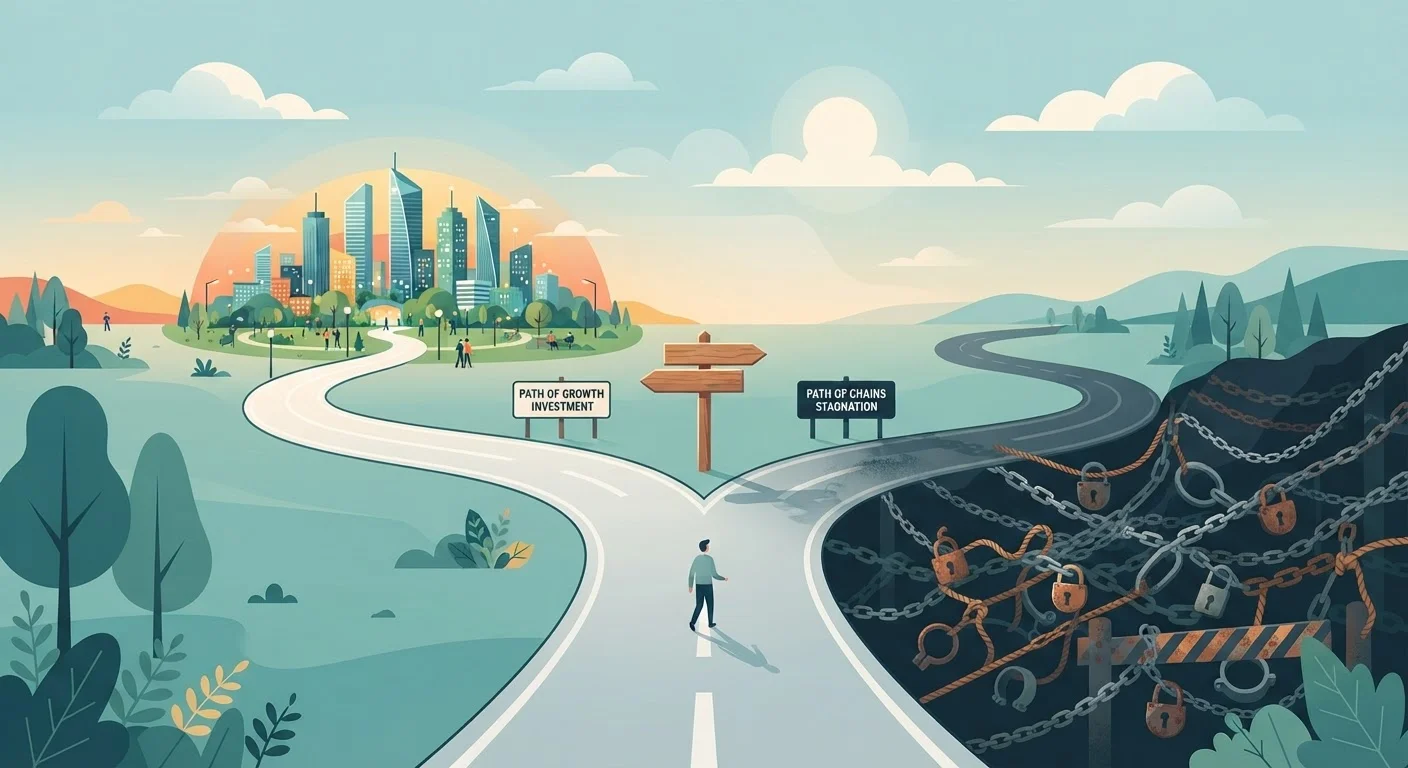
Option A
Good Debt
Borrowing that can build long-term financial value.
Best for: Individuals investing in assets or credentials that are likely to increase earning power or net worth over time.
Option B
Bad Debt
Borrowing that tends to cost more than it returns.
Best for: Understanding which financial obligations to prioritize eliminating first in a debt repayment plan.
What Makes Debt 'Good' or 'Bad'?
The good debt vs. bad debt framework isn't about moral judgment — it's a practical lens for evaluating whether a borrowing decision is likely to improve or worsen your financial position over time. At its core, the distinction comes down to purpose and return.
Good debt is typically used to acquire something that holds or grows in value, or that meaningfully increases your earning capacity. A mortgage on a reasonably priced home, a federal student loan for a high-demand credential, or a small business loan used to generate revenue are classic examples. The logic: if what you borrow for produces more financial value than the cost of borrowing (interest + fees), the debt can work in your favor.
Bad debt finances consumption — things that lose value immediately or provide no financial return. High-interest credit card balances, payday loans, and financing for luxury goods or vacations fall into this category. Here, you're paying a cost (interest) without any corresponding financial gain.
Interest rate is one of the clearest signals. Debt carrying a low, fixed rate on an appreciating or income-generating asset looks very different from revolving debt at 20–30% APR on depreciating goods. Some common beliefs about debt actually blur this distinction, making it harder to act strategically.
| Criterion | Good Debt | Bad Debt |
|---|---|---|
| Primary purpose | Build value or earning power | Finance consumption or lifestyle |
| Typical interest rate | Lower, often fixed | Higher, sometimes variable |
| Asset outcome | Appreciates or generates income | Depreciates or yields no return |
| Common examples | Mortgage, student loan, business loan | Credit card balance, payday loan, auto loan on luxury vehicle |
| Net worth impact (if managed well) | Can be positive over time | Generally negative |
| Repayment priority | Maintain on schedule; don't rush if rate is low | Eliminate aggressively |
Why Context Changes the Calculation
The good/bad labels are useful starting points, but they're not absolute. A student loan can be good debt for one borrower and bad debt for another — depending on the interest rate, the field of study, the total amount borrowed relative to expected earnings, and the borrower's overall financial situation.
Similarly, a mortgage becomes problematic if the payment stretches beyond what your income can comfortably support, or if it's taken out at a moment when your job security is uncertain. Your debt-to-income ratio — the share of your gross monthly income going toward debt payments — is one of the most useful numbers for assessing whether any individual debt load, good or bad, is manageable.
The framework is also dynamic. Debt that starts as bad can get worse if you ignore it; debt that starts as good can sour if circumstances change — job loss, a housing market decline, or an interest rate reset on a variable loan. Treating any debt as permanently fine is a risk.
~$1.14T
US credit card debt outstanding
According to Federal Reserve data, US credit card balances — a primary source of high-rate bad debt — have exceeded one trillion dollars in recent years.
20–30%
Typical credit card APR range
Many credit cards carry annual percentage rates in this range, making unpaid balances among the most expensive forms of consumer debt available.
36%
DTI threshold commonly flagged by lenders
Many lenders consider a debt-to-income ratio above 36% a signal of elevated financial strain, though guidelines vary by loan type and lender.
How to Apply This Framework in Practice
Once you understand the distinction, you can use it to make more deliberate borrowing decisions and to sequence your repayment priorities. A practical approach:
- Before borrowing: Ask what financial return — in earnings, equity, or reduced future costs — this debt is expected to produce. If the honest answer is none, it's likely bad debt worth avoiding or minimizing.
- When managing existing debt: Prioritize eliminating high-rate, non-productive debt first. The debt snowball and debt avalanche methods offer structured approaches for doing this systematically.
- When juggling debt and savings: This is one of the more nuanced decisions in personal finance. Weighing debt repayment against saving simultaneously depends on interest rates, emergency fund status, and employer match opportunities.
It's also worth recognizing that staying stuck in debt is often pattern-driven, not simply a matter of effort. Understanding which debts to target — and why — is what makes a repayment plan sustainable.
The 'Good Debt' Label Is Not a Free Pass
Calling something good debt doesn't mean it's risk-free or automatically worth taking on. Even a mortgage or student loan can become a financial burden if the terms are unfavorable, the amount is excessive relative to income, or circumstances change unexpectedly. Use the framework to ask better questions before borrowing — not to rationalize debt you're uncertain about.
This article is for general informational purposes only and does not constitute personalized financial advice. Consult a qualified financial professional before making decisions based on your individual circumstances.
The content on this site is for informational purposes only and is not a substitute for professional advice. Always consult a qualified professional for guidance specific to your situation.