

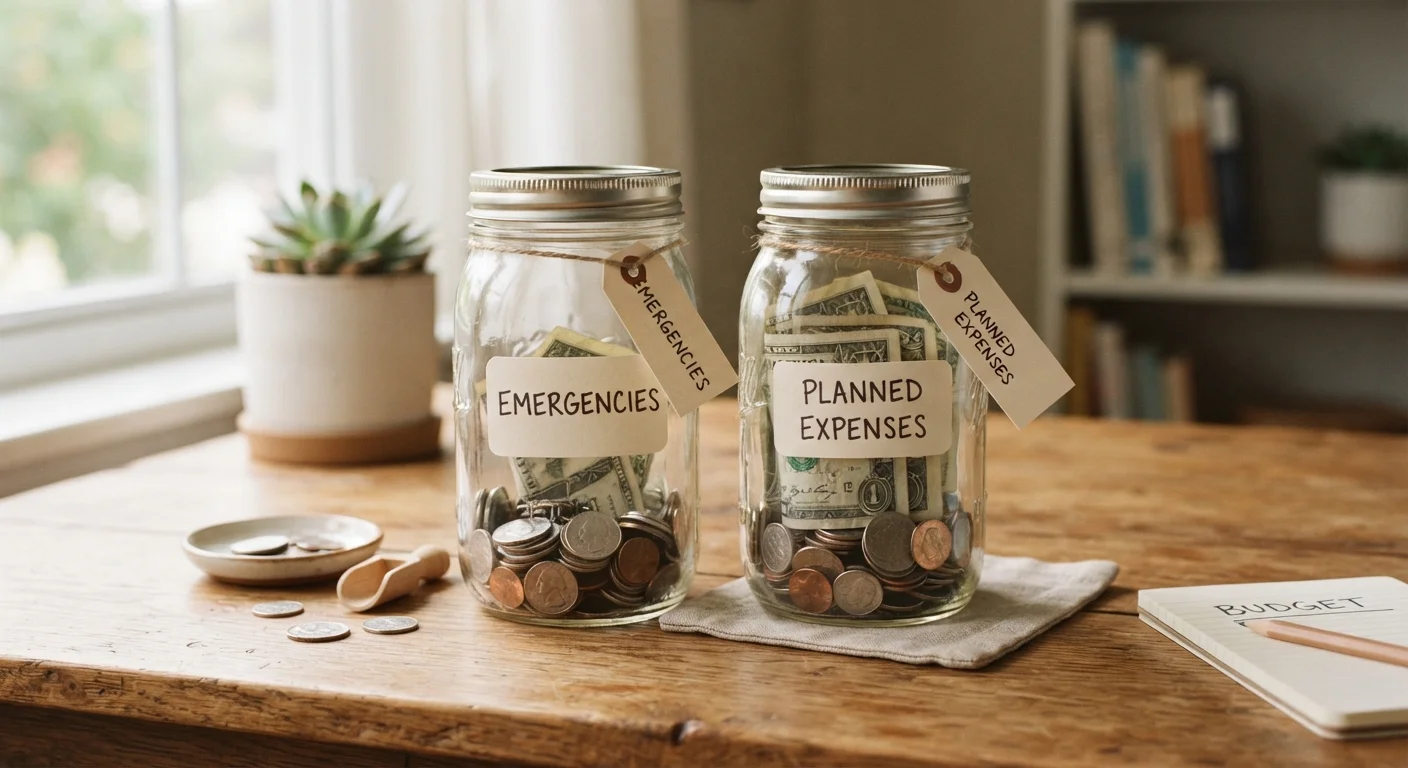
Option A
Emergency Fund
Your financial safety net for the unpredictable.
Best for: Anyone who wants a cash buffer to cover unexpected events like job loss, medical bills, or urgent car or home repairs.
Option B
Sinking Fund
A purpose-built savings pool for planned irregular expenses.
Best for: People who want to smooth out predictable but infrequent costs — annual insurance premiums, holiday gifts, vehicle maintenance — without derailing their monthly budget.
What Each Fund Is Actually Designed to Do
Both an emergency fund and a sinking fund involve setting money aside — but that's where the similarity ends. They're built for fundamentally different financial situations, and conflating them leads to a common problem: spending your emergency money on planned expenses, leaving nothing for true emergencies.
An emergency fund is a cash reserve for events you cannot predict or schedule. Job loss, a sudden illness, an unexpected home repair, or a major appliance failure — these are the kinds of shocks it's designed to absorb. Because the timing and amount are unknown, the fund needs to be large enough to carry you through a realistic worst-case scenario. The widely cited guideline is three to six months of essential living expenses, though the right amount depends on your income stability and personal circumstances. For a deeper look at sizing and account selection, see our guide to emergency funds.
A sinking fund is a savings pool earmarked for a specific, anticipated cost. The name comes from accounting — it means money set aside over time to meet a future obligation. In personal finance, a sinking fund might cover holiday gifts, a car registration fee, annual insurance premiums, or a planned vacation. These events aren't surprises; they're just irregular. A sinking fund turns a large, infrequent outflow into a small, predictable monthly contribution. Learn more about how sinking funds prevent budget blowouts.
| Criterion | Emergency Fund | Sinking Fund |
|---|---|---|
| Purpose | Cover unexpected financial shocks | Cover planned irregular expenses |
| Predictability of use | Unknown — could be never | Known — specific event or date |
| How it's sized | 3–6 months of essential expenses | Target cost ÷ months until needed |
| Number of funds | Typically one | One per distinct goal (multiple common) |
| When it's replenished | After an emergency draw-down | Resets and restarts after each use |
| Example use case | Sudden job loss, medical emergency | Annual car registration, holiday gifts |
How to Size and Use Each One
Sizing an emergency fund starts with calculating your essential monthly expenses — rent or mortgage, utilities, groceries, insurance, minimum debt payments — and multiplying by your target number of months. Someone with a stable salaried job might target three months; a freelancer or single-income household might aim for six or more. The goal is a fixed target you work toward steadily, then maintain.
Sizing a sinking fund is more straightforward: identify the cost, set a deadline, and divide. If you expect to spend $1,200 on holiday gifts and travel in December and it's currently June, you need to save $200 per month for six months. You can run multiple sinking funds simultaneously — one for each distinct goal — often within sub-accounts or labeled buckets inside a single savings account.
~57%
Americans unable to cover a $1,000 emergency
A Bankrate survey found that fewer than half of U.S. adults could pay an unexpected $1,000 expense from savings without borrowing.
3–6 months
Recommended emergency fund size
Most mainstream financial guidance suggests covering three to six months of essential living expenses, with the higher end suited to variable-income households.
Both funds should sit in liquid, accessible accounts — a high-yield savings account is a common choice. Keeping them in separate accounts (or clearly labeled sub-accounts) helps prevent accidental mixing. The discipline of separation is as important as the saving itself. For guidance on balancing saving with debt repayment, see Saving and Debt Repayment at the Same Time.
Building Both Into Your Budget
Most personal finance frameworks recommend building a starter emergency fund — often one month of expenses — before aggressively funding other goals. Once that baseline exists, you can begin layering in sinking funds for your most immediate irregular expenses while continuing to grow the emergency fund toward its full target.
Within a structured budget, both funds function as non-negotiable line items, just like rent or groceries. Automating contributions — scheduling a transfer on payday — removes the temptation to skip a month. Many people find it useful to list every irregular annual expense they can recall, total it, divide by 12, and treat that figure as their aggregate sinking fund contribution. The distinction between short-term and long-term savings goals can also help you decide how to prioritise when money is limited.
What Counts as an 'Emergency'?
A genuine emergency is unexpected, necessary, and urgent — a medical bill, a sudden job loss, or a critical home repair. Planned travel, holiday spending, or a known annual expense are not emergencies, even if they feel urgent. Keeping a clear personal definition prevents sinking fund expenses from eroding your emergency reserve over time.
This article is for general informational and educational purposes only and does not constitute personalised financial advice. Your individual circumstances vary — consider consulting a qualified financial adviser for guidance tailored to your situation.
The content on this site is for informational purposes only and is not a substitute for professional advice. Always consult a qualified professional for guidance specific to your situation.