

Option A
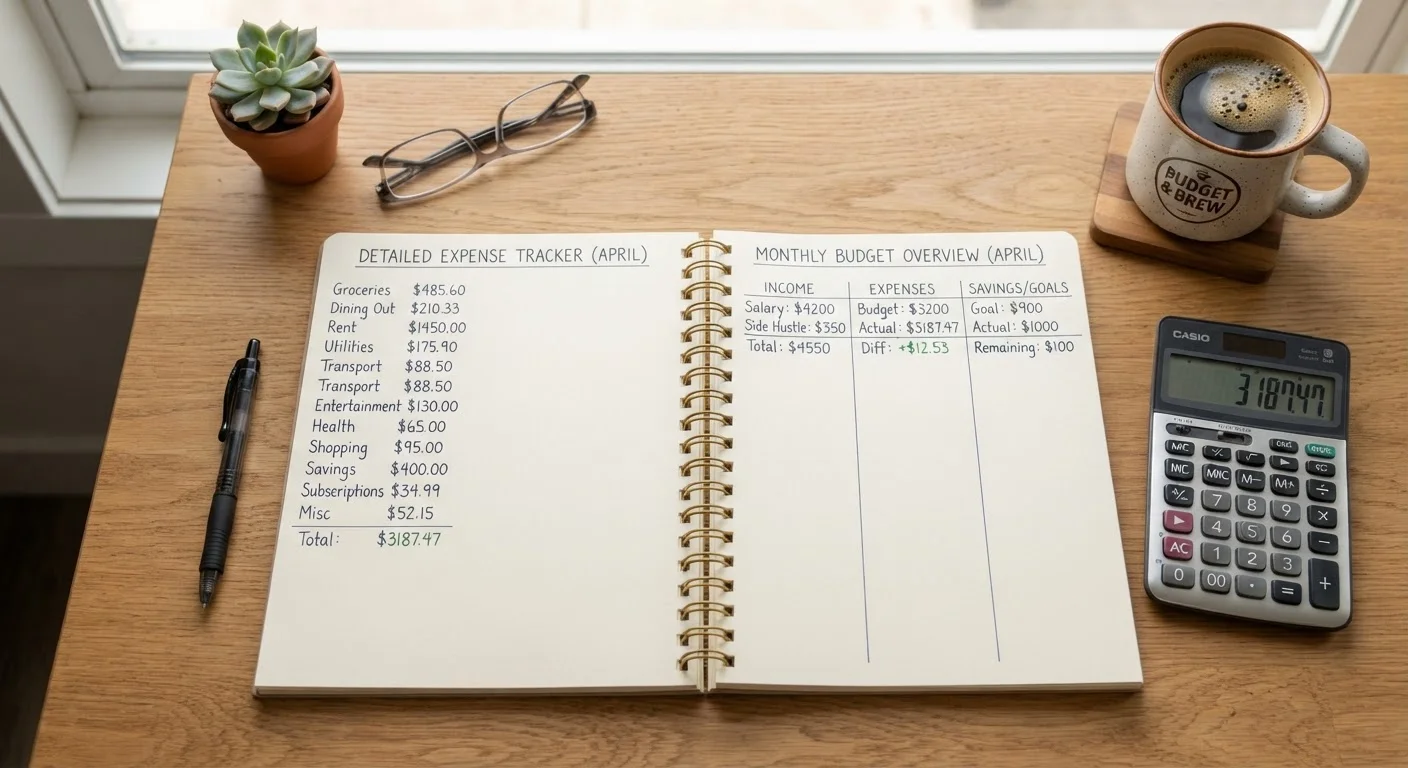
Zero-Based Budgeting
The detail-oriented, every-dollar-accounted-for approach.
Best for: People who want granular control over their spending and are willing to invest time each month building a fresh budget from scratch.
Option B
The 50/30/20 Rule
The flexible, low-maintenance percentage-based framework.
Best for: People who want a simple, lasting structure without tracking every individual expense category.
How Each Method Actually Works
Understanding the mechanics of each framework is the clearest way to see where they differ — and where they agree.
Zero-based budgeting (ZBB) starts with your total monthly income and works downward until every dollar is assigned to a category: rent, groceries, utilities, car insurance, entertainment, savings, debt payments, and so on. The goal is to reach exactly zero — not meaning you've spent everything, but that no dollar is unaccounted for. Money earmarked for savings is still "spent" in the plan; it's just directed toward a savings goal rather than a purchase. You repeat this exercise every month, which makes ZBB particularly responsive to life changes.
The 50/30/20 rule takes a bird's-eye approach. After-tax income is divided into three percentages: 50% to needs (housing, utilities, groceries, minimum debt payments), 30% to wants (dining out, subscriptions, travel), and 20% to savings and additional debt repayment. You don't need to list every sub-category — just confirm your spending lands roughly within each band. Learn more about how this framework is structured in our full 50/30/20 breakdown.
| Criterion | Zero-Based Budgeting | 50/30/20 Rule |
|---|---|---|
| Core concept | Assign every dollar a job; balance = zero | Split income into three percentage bands |
| Setup time | 30–60 min per month | Under 15 min per month |
| Level of detail | High — individual expense categories | Low — three broad buckets |
| Flexibility for variable income | Strong — rebuilt monthly | Moderate — percentages shift with income |
| Best for debt payoff | Yes — surplus goes directly to debt | Partial — capped by the 20% band |
| Beginner-friendly | Moderate learning curve | Very accessible |
| Risk of abandonment | Higher if time is scarce | Lower — minimal maintenance required |
Time Investment and Ongoing Effort
One of the most practical factors in choosing a budgeting method is how much time you're realistically willing to commit.
Zero-based budgeting typically requires a dedicated session at the start of each month — sometimes 30 to 60 minutes — to draft a new plan. You'll also need to check in regularly throughout the month to log actual spending against your plan and make adjustments. Many ZBB practitioners use apps or spreadsheets to reduce the friction, but the method is inherently hands-on.
The 50/30/20 rule, by contrast, can be set up in under 15 minutes and reviewed monthly with a quick bank statement scan. Because the categories are broad, small overspends in one sub-category often balance out within the same bucket without requiring a full replanning session.
No Method Works Without Honest Numbers
Both zero-based budgeting and the 50/30/20 rule rely on accurate income and spending figures. Before committing to either framework, spend one month simply tracking where your money goes — without judgment. That baseline data will make whichever method you choose far more effective and realistic.
If your goal is a budget you'll still be following six months from now, sustainability matters as much as precision. Our guide on building a budget you'll actually stick to covers the behavioral habits that separate one-week planners from long-term savers.
When Each Framework Falls Short
Neither method is without drawbacks, and knowing where each one struggles helps you set realistic expectations.
Zero-based budgeting limitations: The monthly rebuild is its strength and its weakness. When life is busy — tax season, a new job, a family change — skipping the planning session can cause the whole system to collapse. It can also feel overwhelming if you're new to budgeting and aren't yet sure what your regular expense categories even are.
50/30/20 rule limitations: The three-bucket structure assumes your income is high enough to cover 50% in needs comfortably. In high cost-of-living areas, housing and utilities alone can exceed 50% of take-home pay, leaving the framework feeling more aspirational than actionable. The broad categories also make it easier to rationalize borderline spending as a "want" rather than confronting it directly.
~1 in 3
US adults who follow a budget regularly
Surveys by Gallup and similar polling organizations have consistently found that fewer than half of American adults maintain a formal household budget.
50%+
Of income spent on housing in major metros
In high cost-of-living cities, housing costs alone can exceed the entire 50% 'needs' allocation of the 50/30/20 rule, according to US Census Bureau housing data.
For a wider perspective on how these approaches compare to other popular systems — such as envelope budgeting or Pay Yourself First — see our comparison of the main budgeting methods.
Choosing the Right Fit — or Combining Both
Choosing between zero-based budgeting and the 50/30/20 rule doesn't have to be permanent. Many people use 50/30/20 as an entry point — it creates structure without demanding mastery — and then shift to zero-based budgeting when they're ready for more precision or are chasing a specific financial goal like eliminating high-interest debt or saving for a down payment.
A hybrid approach is also workable: use the 50/30/20 percentages as guardrails at the category level, then break your "needs" and "wants" buckets into detailed line items using zero-based logic. This preserves simplicity at the top level while adding accountability at the spending level.
Whatever framework you choose, the single biggest predictor of budgeting success is honest, consistent tracking. A 50/30/20 plan reviewed monthly will outperform a meticulously crafted zero-based budget that's abandoned by week two. Explore more foundational guidance through our end-to-end personal budgeting guide or browse quick daily habits at our Everyday Money Tips.
This article is for general informational and educational purposes only and does not constitute personalized financial advice. Consider consulting a qualified financial adviser for guidance tailored to your individual circumstances.
The content on this site is for informational purposes only and is not a substitute for professional advice. Always consult a qualified professional for guidance specific to your situation.